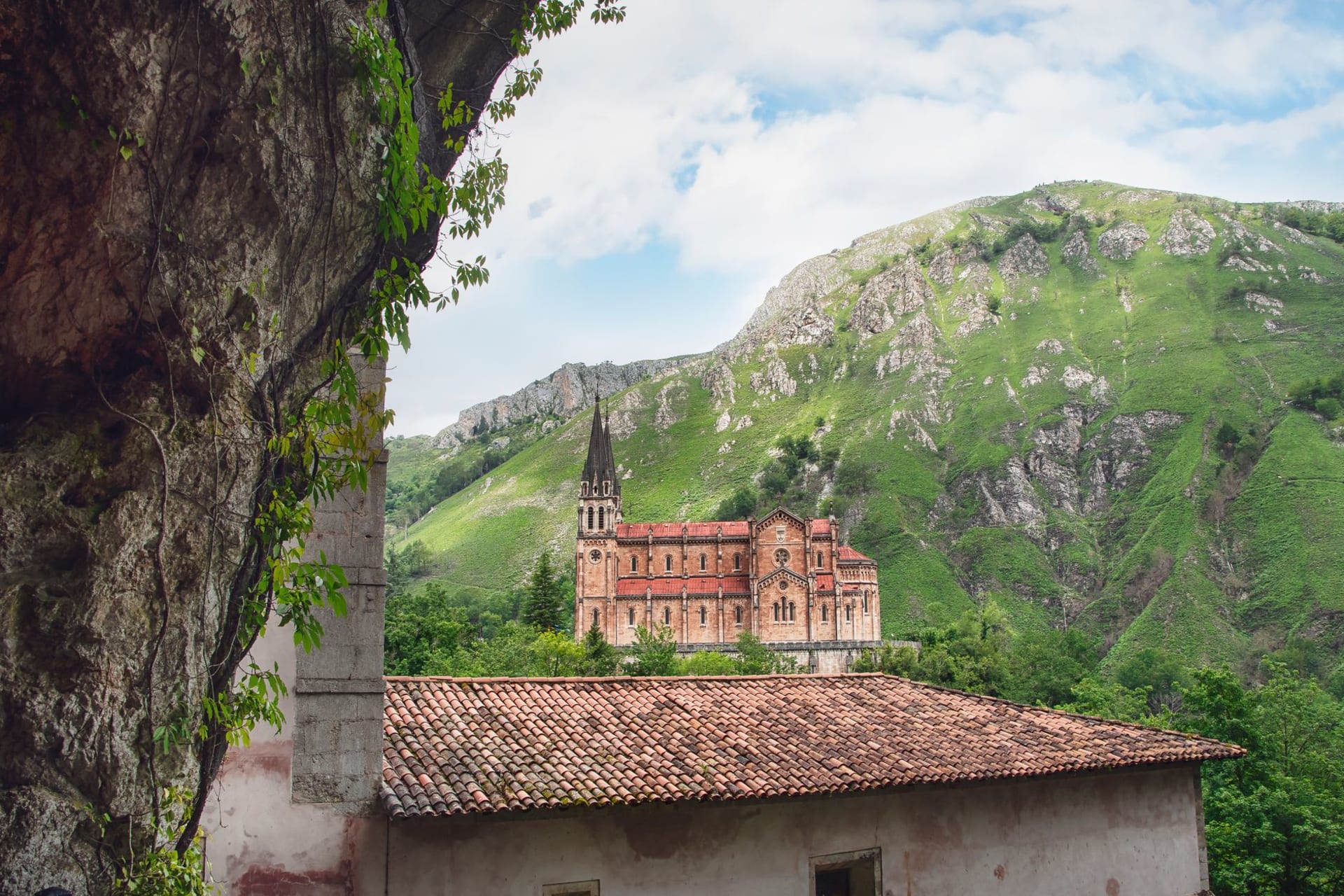
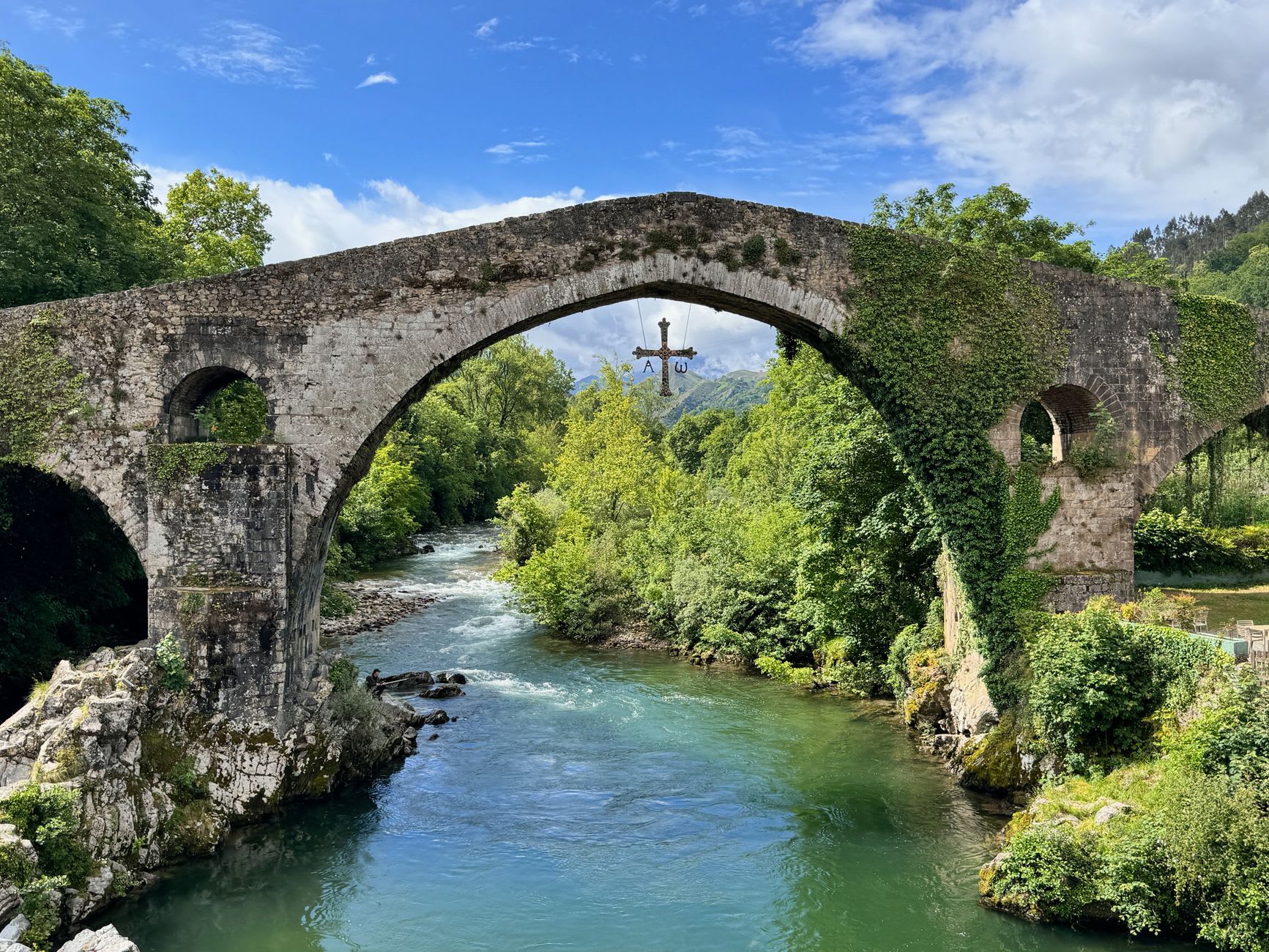
The medieval bridge at Cangas de Onís is not a gentle introduction. You come around a bend on the road from Oviedo, the Sella river appears below, and the humpbacked stone arch — five centuries old, hung with a replica of the Cruz de la Victoria — curves over water that is so startlingly turquoise-green it looks like someone has backlit it from below. I stopped walking in the middle of the bridge on my first crossing, partly because the view required it and partly because a group of kayakers were shooting the small rapid beneath me and the combination of the ancient stone, the green water, and the bright boats seemed to require a moment of full attention.
Cangas de Onís was the first capital of the Kingdom of Asturias in the 8th century, which gives it an old claim to historical importance that it carries lightly. The town is small, the streets are straightforward, and its primary current function is as the jumping-off point for the Picos de Europa. But it earns its own afternoon. The Monday market fills the main square and the surrounding streets with vendors selling local produce — Cabrales and Gamonéu cheese, honey from mountain hives, the rough linen products that the hill villages still make, dried beans of varieties you won’t find in any supermarket. I bought a jar of chestnut honey and ate a third of it standing at the stall.
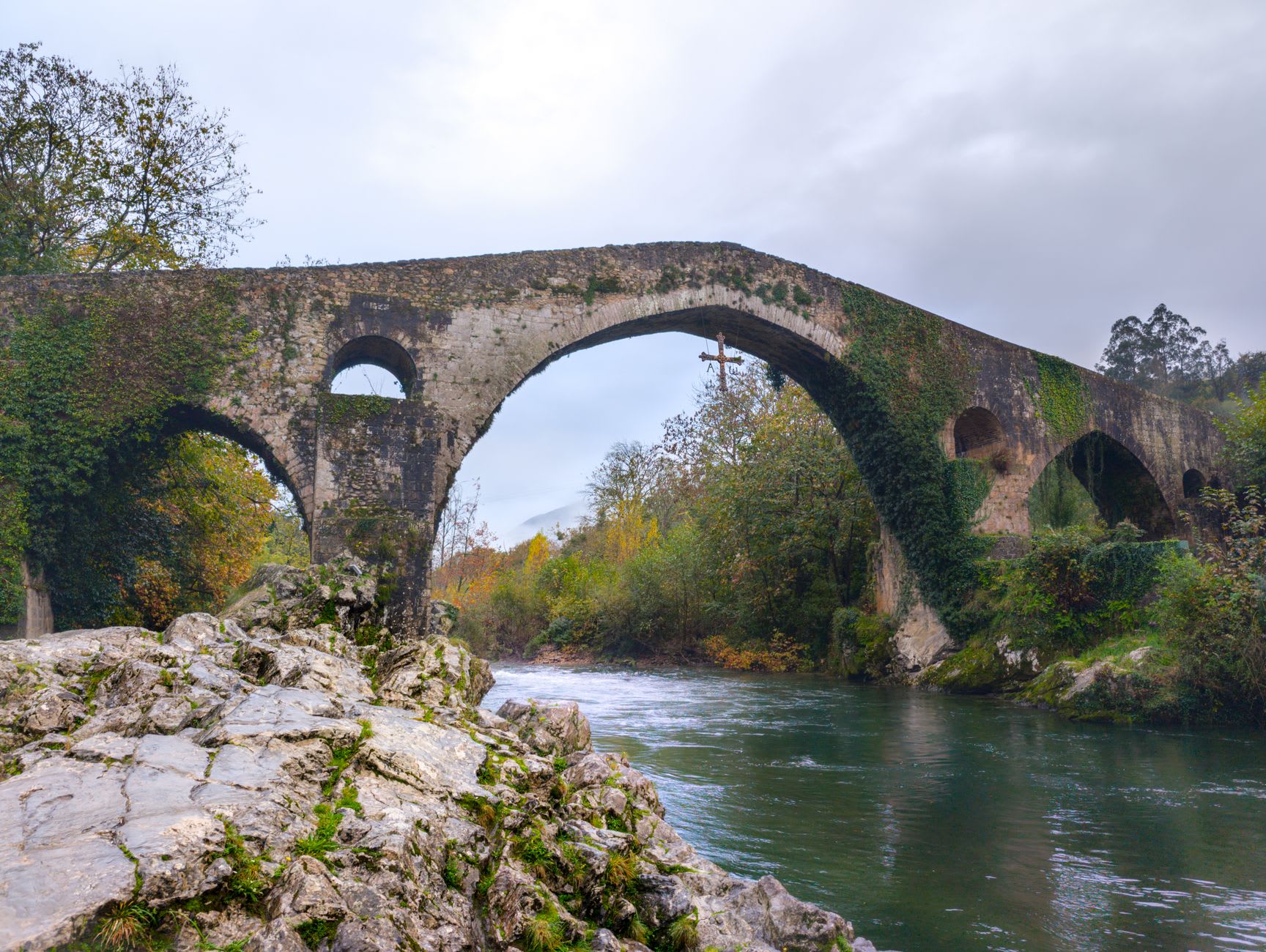
The river here is the Sella, which begins in the high Picos and runs west to the coast, and in summer the stretch around Cangas de Onís fills with inflatable kayaks piloted by people who have clearly never been in an inflatable kayak before. This is not a criticism — the river is gentle enough at this point that the lack of experience matters only for your sense of dignity, and the turquoise water and the forest on both banks makes even the most chaotic self-directed kayak trip feel like something from a better film than the one you’re usually in.
The Capilla de Santa Cruz sits on the edge of town, a pre-Romanesque chapel from the 8th century that was built around an even older dolmen — a megalithic burial chamber that the early Asturian Christians incorporated into their new building rather than destroying it. I find this kind of layered history deeply satisfying: the idea that people in 700 AD looked at something two thousand years old and thought not “clear this away” but “build around it.” The chapel is small and dark inside and smells of cold stone and candle wax, and the dolmen is visible through a glass panel in the floor.
The restaurants along the main street do the complete Asturian repertoire without any particular deviation: fabada, cachopo (a vast breaded veal cutlet stuffed with cheese and ham, approximately the size of a small laptop), cider, and for dessert arroz con leche that is slow-cooked and served in clay bowls and is, inexplicably, one of the best versions of rice pudding I have eaten anywhere.
When to go: May and June for the clearest river water and uncrowded trails into the Picos. The Monday market runs year-round, which makes any Monday a good arrival day. July and August are busy but functional. The bridge at dusk in October, when the beech forests above the town have turned gold and the light comes sideways through the valley, is worth planning a trip around.