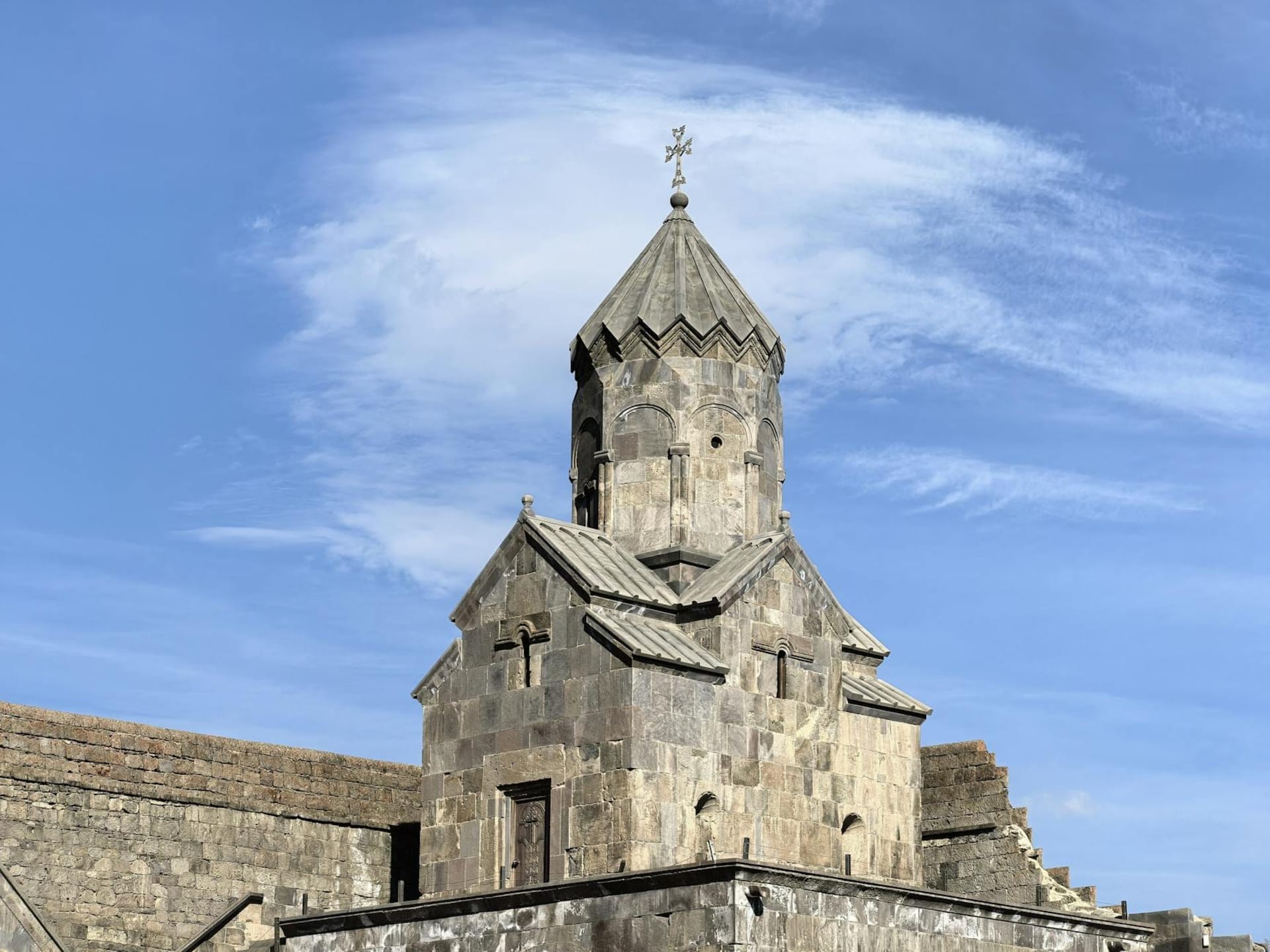
Reached by the world's longest non-stop double track cable car, Tatev overlooks a jaw-dropping gorge.
The gondola leaving Halidzor station swings out over nothing — a 5.7-kilometer wire stretched across the Vorotan Gorge, the canyon floor a sheer 320 meters below. Lia grabbed my arm without a word. Neither of us had quite registered the scale of it until that first lurch into open air.
Suspended Between Centuries
The Wings of Tatev cable car holds the Guinness record for longest non-stop double-track reversible aerial tramway in the world, a sentence that sounds like marketing copy until you are actually inside it, watching beech forest fall away beneath your feet and the ancient monastery emerging on its basalt cape ahead of you. The crossing takes twelve minutes. I spent most of them looking straight down into the river threading through the gorge like a grey ribbon someone had dropped and forgotten.
Tatev Monastery itself dates to the ninth century. The main Church of Saint Paul and Peter — Surb Poghos-Petros — anchors the compound with its dark tuff walls and the faint smell of candlewax that drifts through the entrance even on cold mornings. The khachkars lining the courtyard are so weathered that the carved lacework has softened into something almost organic, as though the stone is slowly returning to the landscape around it. A resident monk was sweeping the flagstones when we arrived, and the scrape of his broom across cold stone was the only sound for a long moment.
The Shaking Pillar
What stopped me entirely was the Gavazan column — a 26-meter freestanding hexagonal pillar in the monastery courtyard, built in 904. A sign explains that it was engineered to sway in earthquakes, acting as a seismic early-warning device for the monks. I pushed it lightly with one hand, half-expecting nothing. It moved. Barely, but it moved — a slow, deliberate pendulum swing, nine centuries old and still functioning. I stood there longer than made sense, pressing my palm flat against the stone.
Bread, Wine, and the Road Back
The village of Tatev below the gorge is quieter than Goris, the nearest town of any size. We ate at a table outside a family guesthouse — lavash pulled fresh from a tonir oven, a clay pot of spas soup thick with wheat and yogurt, a carafe of local red wine the color of garnets. The afternoon light on the canyon walls was the reddish-gold specific to late autumn in the Armenian highlands, and I understood why painters kept coming here.
When to go: Late May through early October offers the clearest skies and passable roads; September is ideal — the gorge turns amber and the summer crowds have thinned without the winter cold closing in.