The Forest Everyone Told Me to Skip
Every traveler I met in Yerevan had the same advice: Dilijan is pretty but you don’t need more than a few hours. I stayed three days. The town sits in a fold of the Tavush region where the mountains are rounded and heavy with forest — actual temperate forest, not the scrubby hillsides you see south of the capital. Beech, oak, hornbeam. The canopy closes over the roads out of town and the light goes green and diffuse, like being underwater.
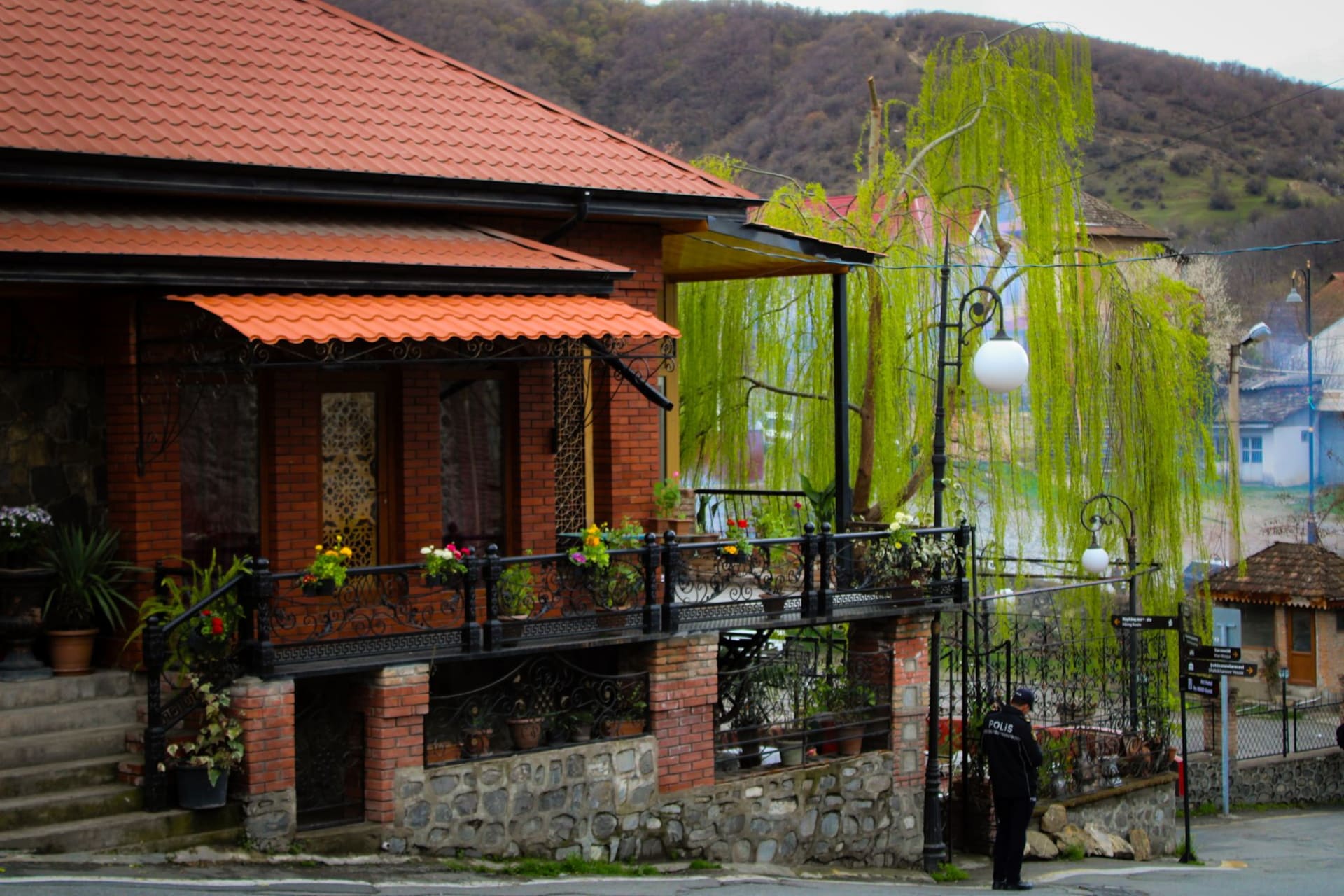
The old quarter, Sharambeyan Street, is a single restored lane of nineteenth-century merchant houses turned into workshops and small museums. It’s touristy in a mild, unhurried way — a ceramicist working at a wheel behind an open window, a woman selling churchkhela from a tray balanced on her forearm. I bought a small clay bowl I still use for keys. The rest of town is Soviet blocks and guesthouses, which is fine. Nobody comes to Dilijan for the architecture.
Parz Lake and What Happens After
The lake is a short drive into the national park and genuinely worth the trip — dark water ringed by forest, a snack stand selling dried fruit and packaged cookies, a path around the perimeter that takes about forty minutes. What I didn’t expect was the trail that continues beyond it, climbing through forest to a ridge where the trees thin out and you can suddenly see the full sweep of the Aghstev River valley below. I had packed lunch by accident — just a bread roll from the guesthouse — and ate it on a boulder looking at cloud shadows moving across the ridgeline.
The national park has better hiking than it gets credit for. Trails connect monasteries and ridgelines across a serious chunk of terrain. Bring a paper map or download the route offline; signal drops the moment you step off the main road.
Eating and Sitting Still
There’s a small restaurant near the historic quarter — the kind of place with no menu visible from outside, where you’re handed a laminated card with photos — where I ate the best trout I’ve had in the Caucasus. It arrived deboned, with mashed potato and pickled vegetables, and cost less than I’d pay for a coffee in Mexico City. A group of Russian tourists at the next table were celebrating something loudly and a child was running circuits around the tables. The owner looked unbothered.
Dilijan has a quiet pull. It’s not a destination so much as a place to slow down between destinations. I sat on my guesthouse porch the second morning and watched fog lift off the trees for an hour before I did anything else.
Getting There
Marshrutkas run from Yerevan’s Kilikia bus station most mornings, roughly two and a half hours. Shared taxis are faster and not much more expensive. The road climbs through increasingly dramatic scenery after the Sevan pass — mountains going from bare to forested as you descend toward Dilijan. If you’re heading north to Haghpat or Sanahin, Dilijan makes a logical midpoint stop rather than a detour.
When to go: Late May through October for hiking. The forest turns extraordinary in early October — amber and copper beech leaves against mist — and the trails are uncrowded. Avoid January and February unless you specifically want snow and empty guesthouses.