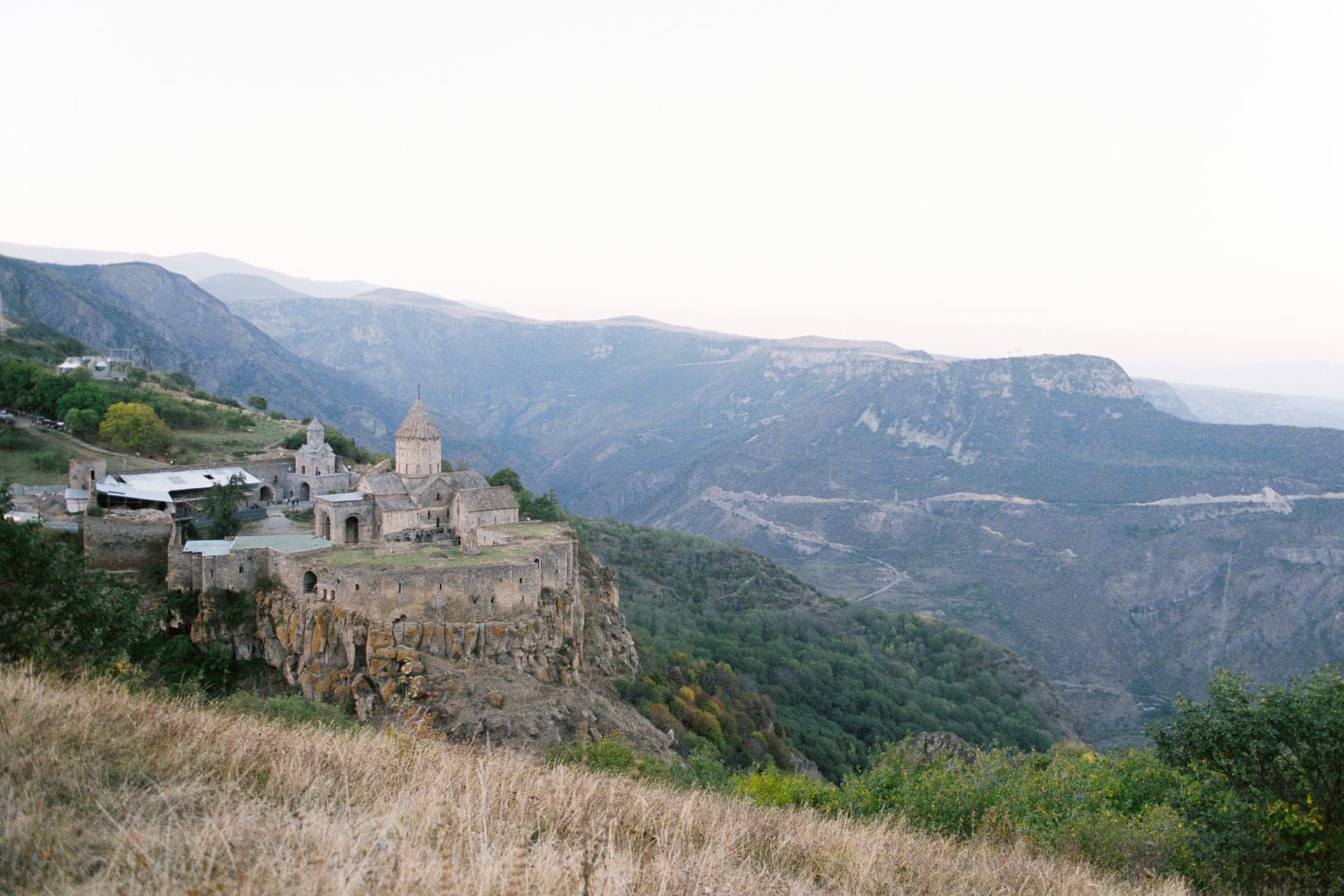
Debed Canyon
"The train through the canyon runs twice a day and costs almost nothing. I took it both directions."
A deep river gorge in Armenia's far north where two UNESCO-listed monasteries cling to forested cliffs and a Soviet-era railway threads the valley below like something from another century.

North of Everything
Most itineraries in Armenia anchor on Yerevan and radiate south: Khor Virap, Noravank, Tatev. The Debed Canyon, in the Lori region near the Georgian border, requires a deliberate decision to go in the opposite direction and it rewards that decision completely. The canyon is formed by the Debed River cutting through the Caucasian ranges, the slopes dense with hornbeam and oak, the walls rising steeply enough that sunlight reaches the river for only a few hours each day.
The town of Alaverdi sits at the canyon bottom, a former Soviet copper-smelting city that has struggled since the plant’s decline. It’s not a beautiful town, but it has guesthouses, a market, and a cable car that climbs improbably from the valley floor to the monastery of Sanahin on the plateau above. The cable car is old and the views through the scratched plexiglass are vertiginous and wonderful.
Haghpat and Sanahin
The two monasteries at either end of this stretch of canyon are both UNESCO World Heritage Sites. Haghpat, built in the tenth and thirteenth centuries, is the larger and arguably more architecturally refined — a complex of interconnected churches, gavits (antechambers), and refectories on a promontory above a side valley. The stone is the same warm volcanic tuff used across Armenia, but here it has weathered to a deep amber. Khachkars — intricate carved stone crosses — lean against walls and cluster in graveyards with the casual density of a country where religious art is simply part of the landscape.
Sanahin, on the plateau above Alaverdi, is more austere and sits in an actual village, houses pressed close against the monastery walls. Children were playing in the courtyard when I visited, using a gravestone as a bench. An old man was feeding cats near the entrance to the main church. The sacred and the domestic occupy the same space here without apparent friction.
The Railway and the Canyon Walk
The Yerevan–Tbilisi railway runs through the Debed Canyon and there’s a regional train service that stops at Alaverdi and the smaller stations along the gorge. The train is infrequent, slow, and cheap, and traveling on it through the canyon — windows open, forested cliffs rising on both sides, the river appearing and disappearing below — is one of the more pleasurable things I did in Armenia. I sat in an almost-empty car with two Georgian men who offered me walnuts from a bag and I accepted and we watched the canyon together without needing to say much.
There are hiking trails connecting the two monasteries along the canyon rim and through the forest below. The Haghpat to Sanahin walk takes about two hours and passes through mixed forest with views down into the gorge. It’s not well-signed but the route is clear enough if you’ve downloaded a map.
Getting There
Most travelers reach Debed Canyon by marshrutka from Yerevan’s Kilikia station to Alaverdi — about three hours through increasingly dramatic mountain scenery. The train option exists but scheduling is limited. Many people combine this trip with a border crossing into Georgia, continuing north to Sadakhlo or Tbilisi; the canyon is on that route naturally.
When to go: May through October, with late September and October being exceptional — the forest goes through a full autumn progression and the monasteries appear to float in a sea of color. Avoid the canyon in heavy rain; the roads narrow and the slopes shed debris. Winter closes some trail access and guesthouse options thin out considerably.
Keep exploring
More from Armenia
 armenia
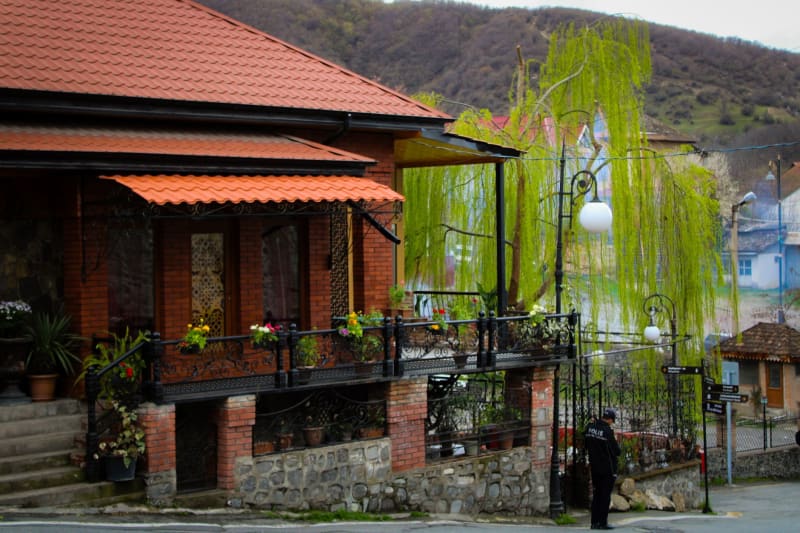
Dilijan
A small forest town in northern Armenia where Soviet-era sanatoria dissolve into beech woods and the air smells permanently of pine resin and wood smoke.
Explore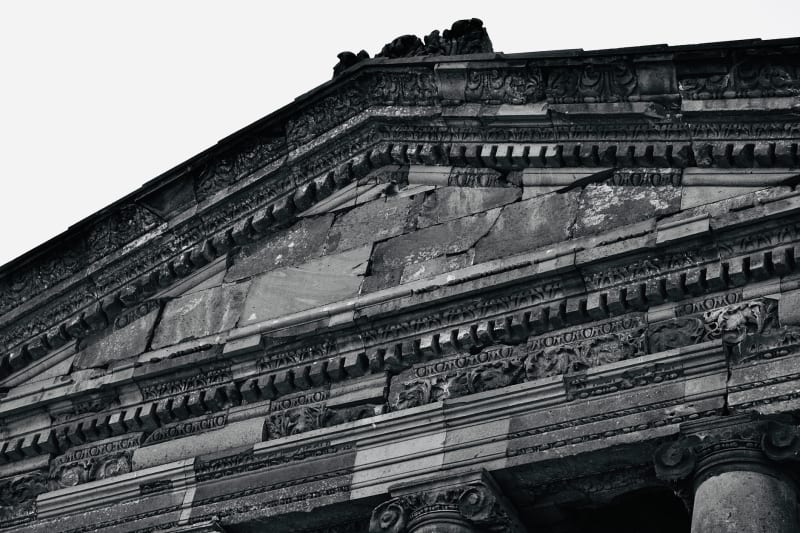 armenia
Garni
A pagan Greco-Roman temple perched above a volcanic basalt gorge, impossibly intact, impossibly strange, twenty minutes from Yerevan.
Explore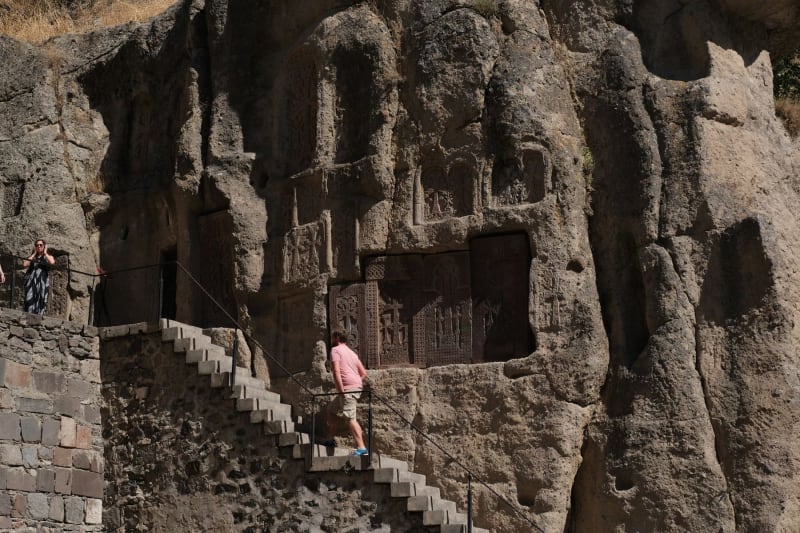 armenia
Geghard Monastery
A medieval monastery partly carved from a cliff face in a gorge — UNESCO heritage, still active with prayer.
Explore armenia
Gyumri
Armenia's battered second city, rebuilt in black tuff stone after a devastating earthquake, where Soviet grandeur and café culture coexist with a dark sardonic humor that locals wear like a second skin.
Explore armenia
Jermuk
A faded Soviet spa town high in the Vayots Dzor mountains, where mineral water steams from public taps and a waterfall they call the Mermaid's Hair drops off a gorge edge.
Explore armenia
Khor Virap
A monastery on a volcanic hill above the Ararat plain where, on clear mornings, a snow-capped mountain that no longer belongs to Armenia dominates the entire sky.
Explore