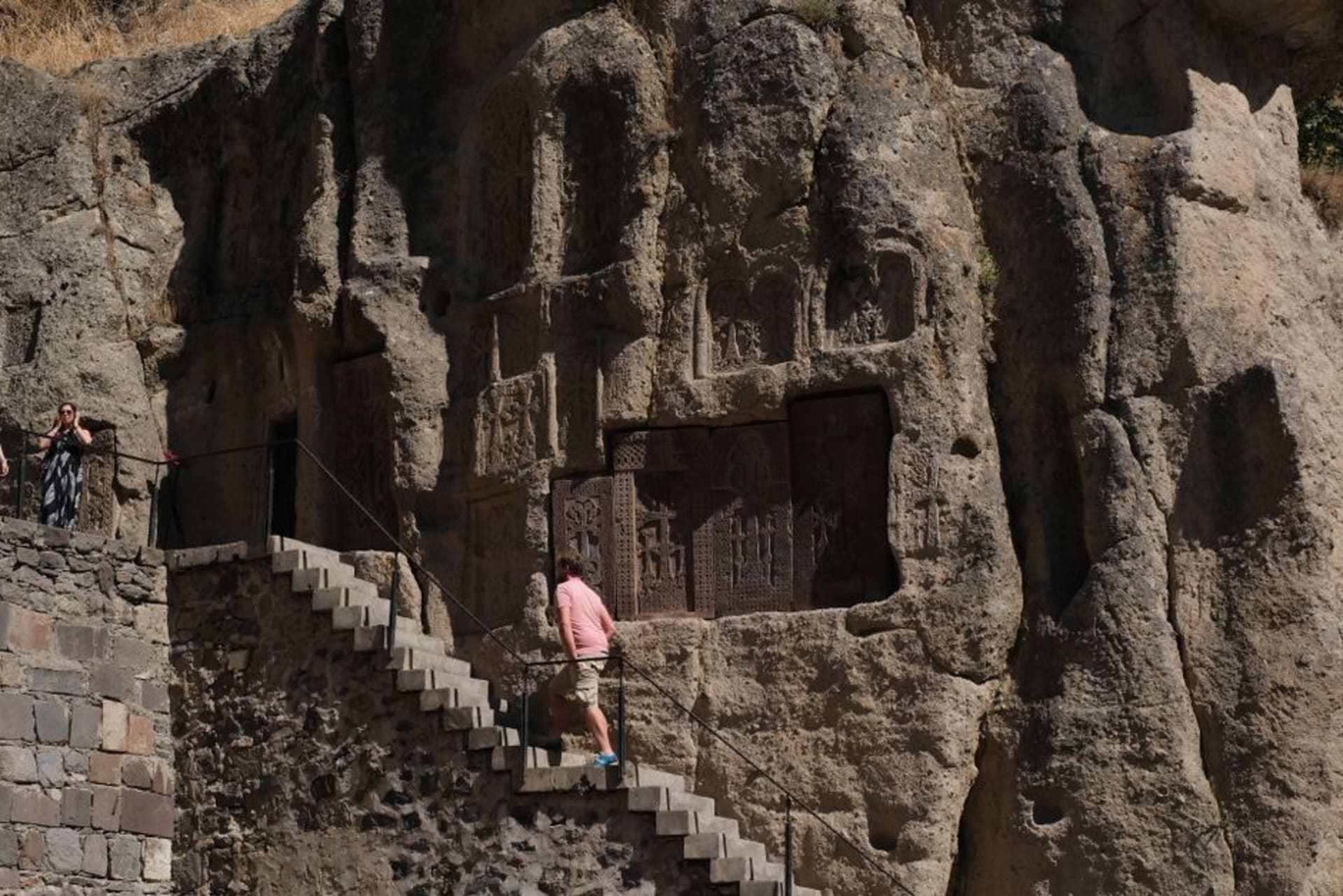
Areni
"Six thousand years of winemaking, and the best glass I had was poured by a man who still crushes the grapes with his feet."
A village in the Arpa River valley where locals still press Areni Noir grapes a few steps from the world's oldest known winery.
Lia and I almost drove past Areni. On the map it’s barely a dot in Vayots Dzor province, wedged between canyon walls where the Arpa River has spent a few million years cutting its way through rock. We only stopped because a friend in Yerevan had scribbled “the oldest winery on earth” next to the name, and I couldn’t let that go unchecked. What I didn’t expect was how quietly the village wears that fact. There’s no giant sign, no gift shop shaped like a wine bottle. Just a cave in the hillside, a family-run tasting room down the road, and grapevines climbing every terrace in sight.
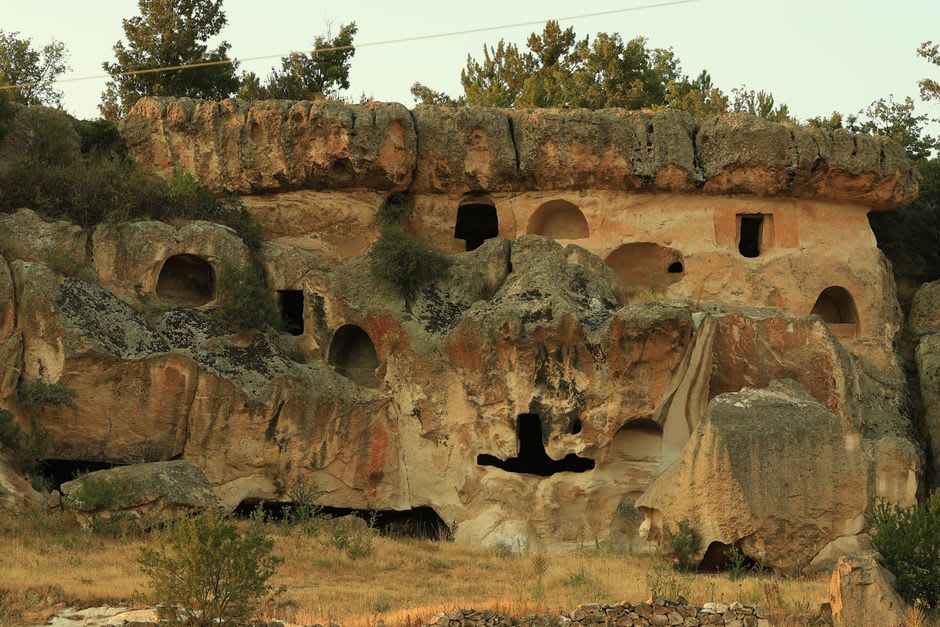
The cave is the reason anyone finds Areni at all. Areni-1, as archaeologists call it, is where a team digging between 2007 and 2011 uncovered a wine press, fermentation vats, and storage jars dated to around 4100 BCE — the oldest complete winemaking setup ever found. I stood at the entrance trying to picture someone crushing grapes with their feet in that exact spot six thousand years before Lia and I were born, and it genuinely gave me chills. The same cave, in a separate chamber kept dry and cool for millennia, also produced the oldest known leather shoe, a single sturdy sandal that looked almost wearable. Our guide showed us photos on her phone since the actual shoe now lives in a museum in Yerevan, but even secondhand it was one of those moments that reorders how you think about time.
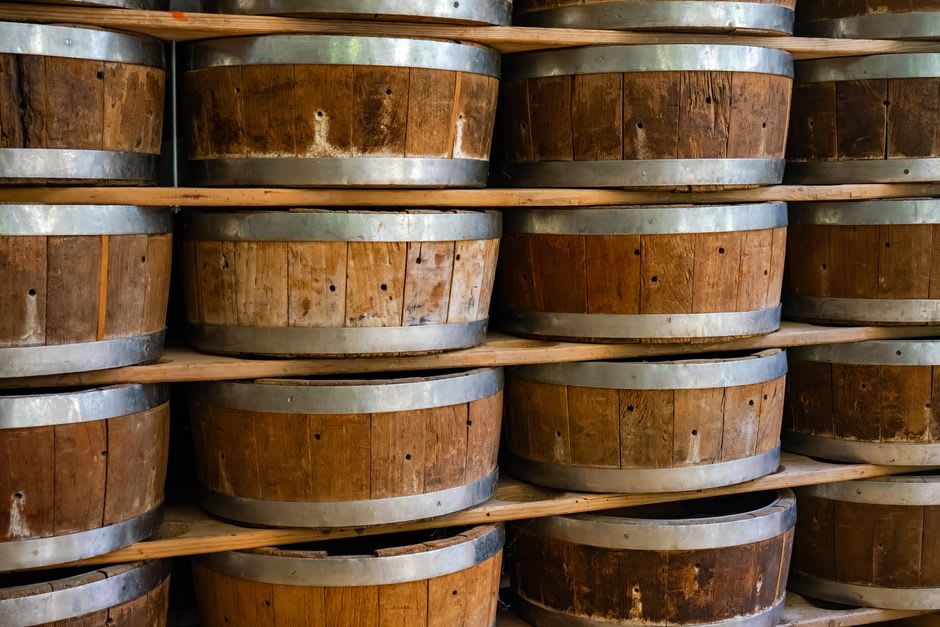
Afterward we walked down into the village itself, where wine is very much a living thing and not a museum piece. We ducked into a small family cellar where an older man — I never caught his name properly, my Armenian is nonexistent and his French wasn’t much better, so we communicated mostly through pouring — handed us glass after glass of Areni Noir, the indigenous red grape that gives the whole region its character. It was darker and earthier than anything I’d had in Mexico or back home in France, with a tannic grip that softened the longer it sat in the glass. He kept refilling before we’d finished, which I’ve come to understand is less hospitality than a genuine expectation that you’ll keep drinking.
We didn’t time our visit for the wine festival, and I regret it a little — everyone we met talked about it like it was the one weekend of the year the whole village turns inside out. But even on an ordinary afternoon, with the canyon walls glowing orange as the sun dropped and monasteries visible on the cliffs above the river, Areni felt like a place where the past hasn’t been tidied away for visitors. It’s just still here, fermenting.
When to go: Aim for early October if you can catch the annual Areni Wine Festival, or come in September during the harvest, when the whole valley smells like crushed grapes.