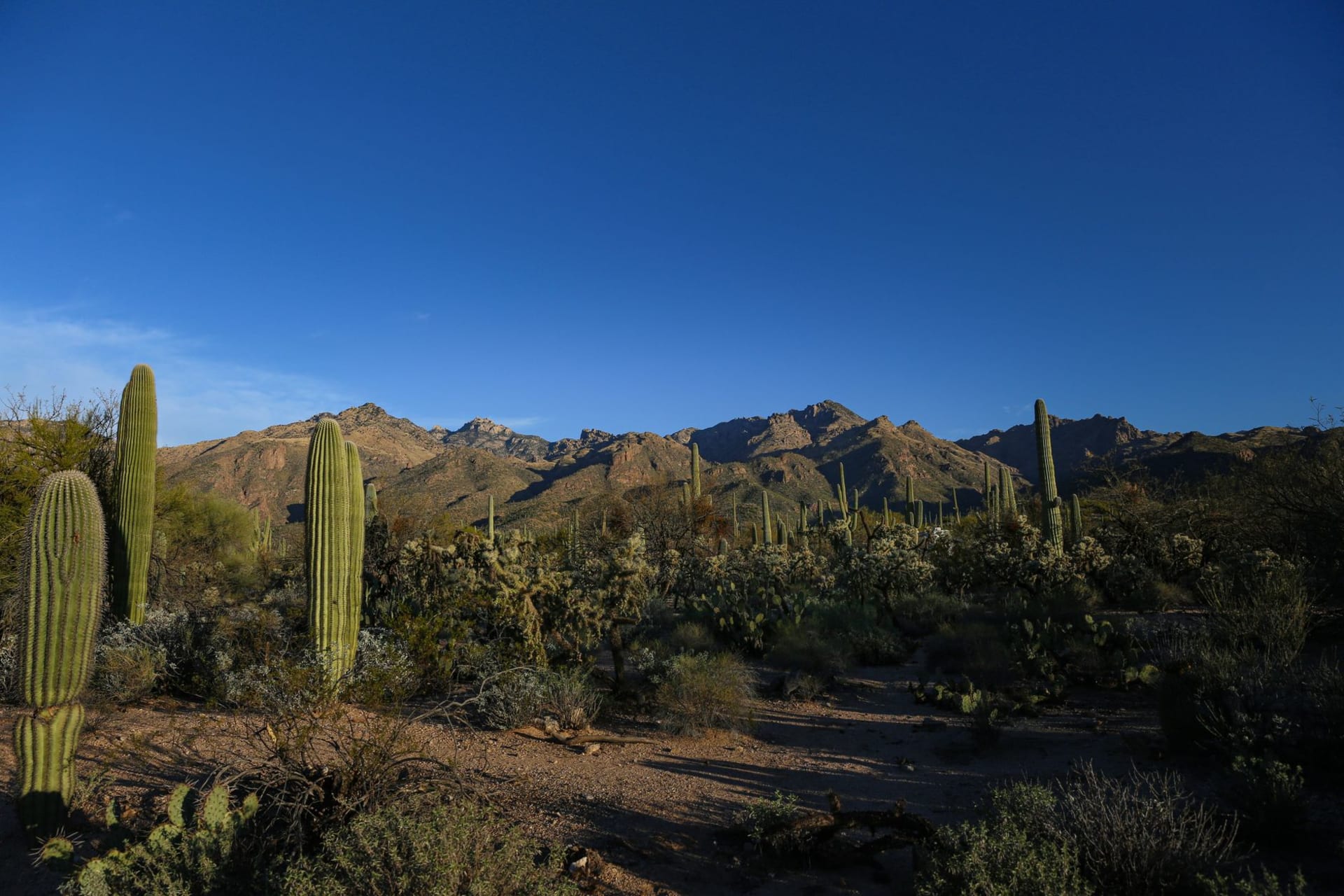
Saguaro National Park
"The saguaro doesn't perform for you. It was here long before you arrived and will be here long after."
The saguaro cactus is the slowest plant I know anything about. It takes ten years to grow an inch. The first arm doesn’t appear until the saguaro is seventy-five years old. The largest ones — the multi-armed individuals you see in the Rincon Mountain District of Saguaro National Park, standing twelve meters tall with a dozen arms reaching skyward — may be 150 or 200 years old. They were saplings before the Civil War. I thought about this often while hiking through the cactus forest in October, when the desert was cooling toward something bearable and the afternoon light was coming in low and raking across the spines and the pleated green columns of the trunks. The whole landscape has a quality of deep patience, a vegetable meditation on long time, and it does something to your nervous system if you let it.
Saguaro National Park is split into two districts on either side of Tucson — the Rincon Mountain District to the east, older and denser with cacti; the Tucson Mountain District to the west, slightly smaller but with some of the finest saguaro forest accessible from a paved road. I spent my time in the Rincon District, where the cactus density reaches what park biologists call a “cactus forest” threshold — individual plants standing close enough together to create shade, the spaces between them filled with palo verde trees and ocotillo and the ferocious jumping cholla whose barbed segments detach at the slightest brush and require pliers to remove from skin.
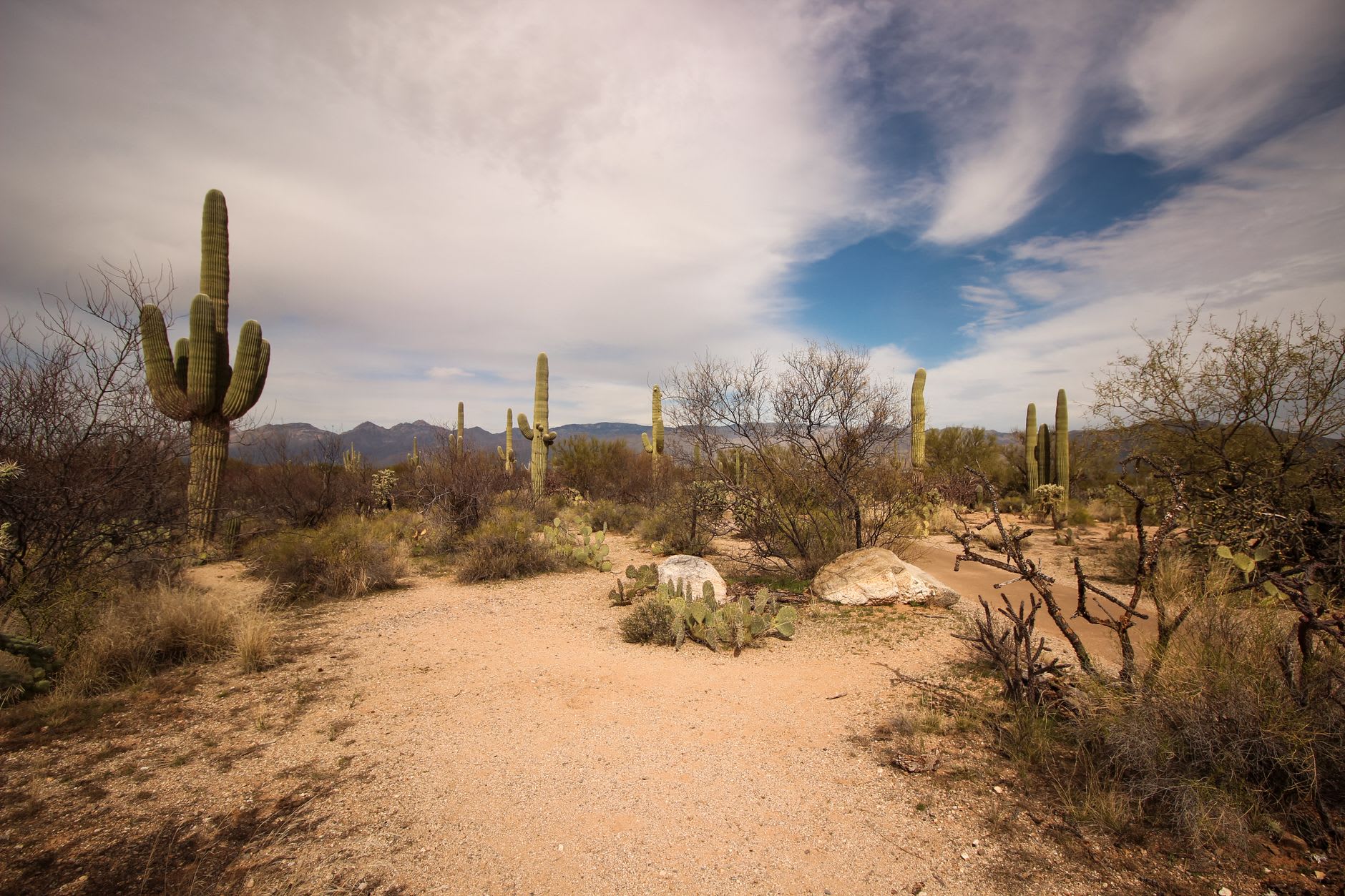
I started the Tanque Verde Ridge Trail at 6am to beat the heat, and in the first kilometer passed a Gila woodpecker working a hole it had drilled in a saguaro trunk, the drumming carrying clearly through the morning silence. Elf owls nest in abandoned Gila woodpecker cavities — the saguaro is an apartment building for the desert, providing shelter for forty or more species of birds and mammals over its lifetime. At the junction where the trail turns uphill toward the Rincon Mountains, a coyote sat twenty meters off the trail and watched me pass with a frank curiosity that made me feel assessed rather than observed. I didn’t stop. Some wildlife encounters are better respected with maintained movement.
Higher on the trail, above the saguaro’s elevation range, the cactus forest gives way to desert grassland and then to the lower edge of oak woodland, the transitions abrupt in the way of sky island ecosystems. The Rincon Mountains are one of several “sky island” ranges in southeastern Arizona — isolated mountain masses that rise from the desert lowlands like islands from a sea, each supporting its own distinct biological community. The altitude range in Saguaro National Park’s Rincon District spans nearly 2,700 meters from the desert floor to the summit of Mica Mountain, through five distinct life zones. You can hike from saguaro desert to mixed conifer forest without leaving the park boundary.
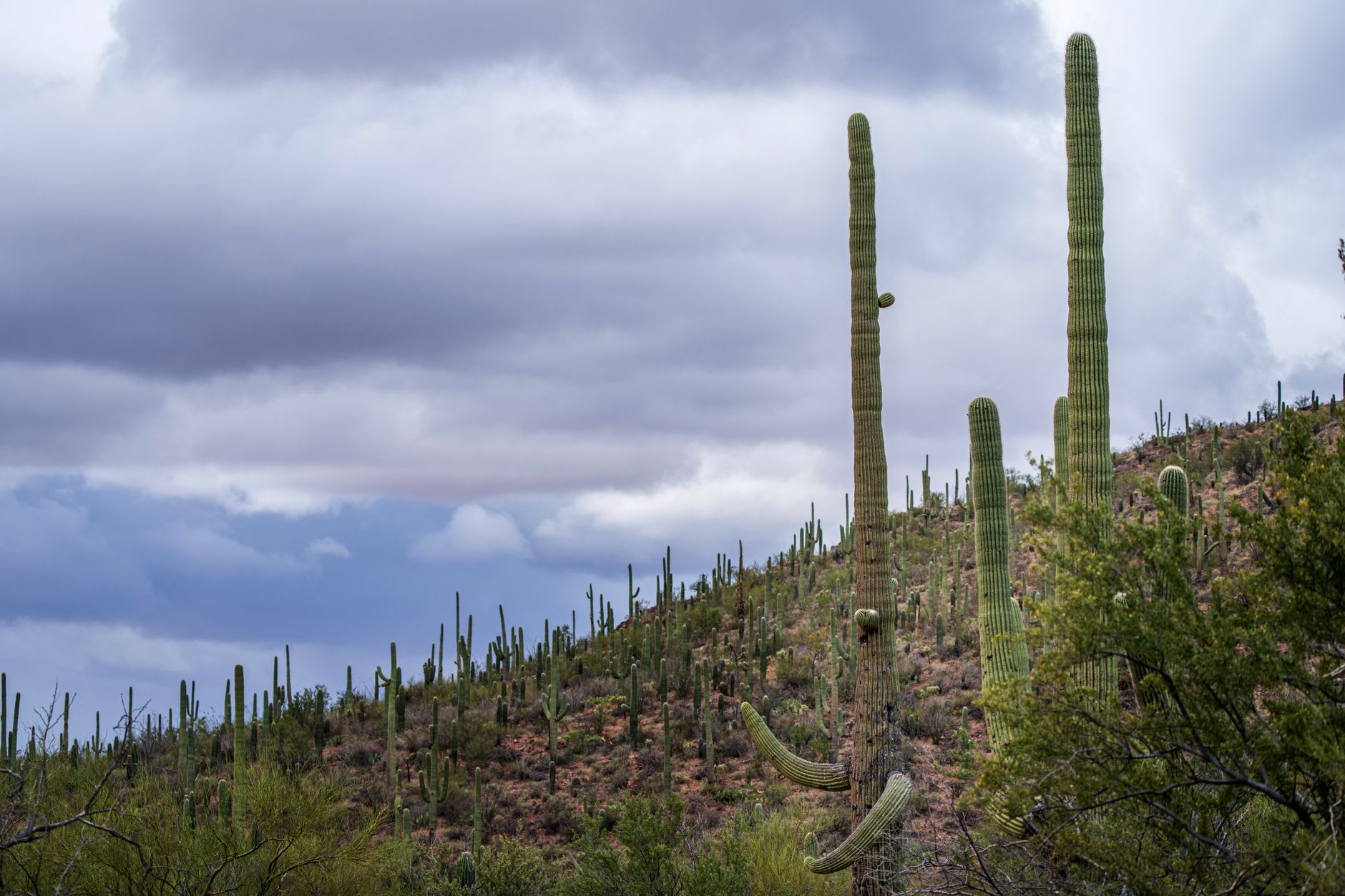
The Cactus Forest Loop Drive in the Rincon District — an 8-kilometer one-way road through the densest part of the park — is worth doing at dawn or dusk even if hiking isn’t on the agenda. At those hours the light comes in horizontally and the saguaros cast long shadows and everything goes orange, and the roadrunners work the verge of the road hunting lizards with a purposefulness that makes you feel you’re the tourist in their commute, which you are. Javelinas — peccaries, pig-like animals with coarse grey hair and impressive tusks — travel in groups through the cactus forest and regard passing hikers with the wary confidence of animals that know they have been here longer than the trails.
When to go: October through April for hiking — temperatures in the 20s Celsius, the desert’s hard light softened by the lower sun angle. Wildflower season peaks in March and April, when Mexican poppies and brittlebush bloom across the flats. The saguaro flowers in May, white blooms appearing at the tips of the arms that are pollinated at night by bats and by day by white-winged doves — a relationship so co-evolved that the dove’s migration timing tracks the saguaro’s flowering. Summer monsoons from July through September bring dramatic skies and temporary greenness, but temperatures exceed 40°C and hiking before 8am becomes a medical necessity.