Americas
Arizona
"I stood at the rim and felt genuinely small for the first time."
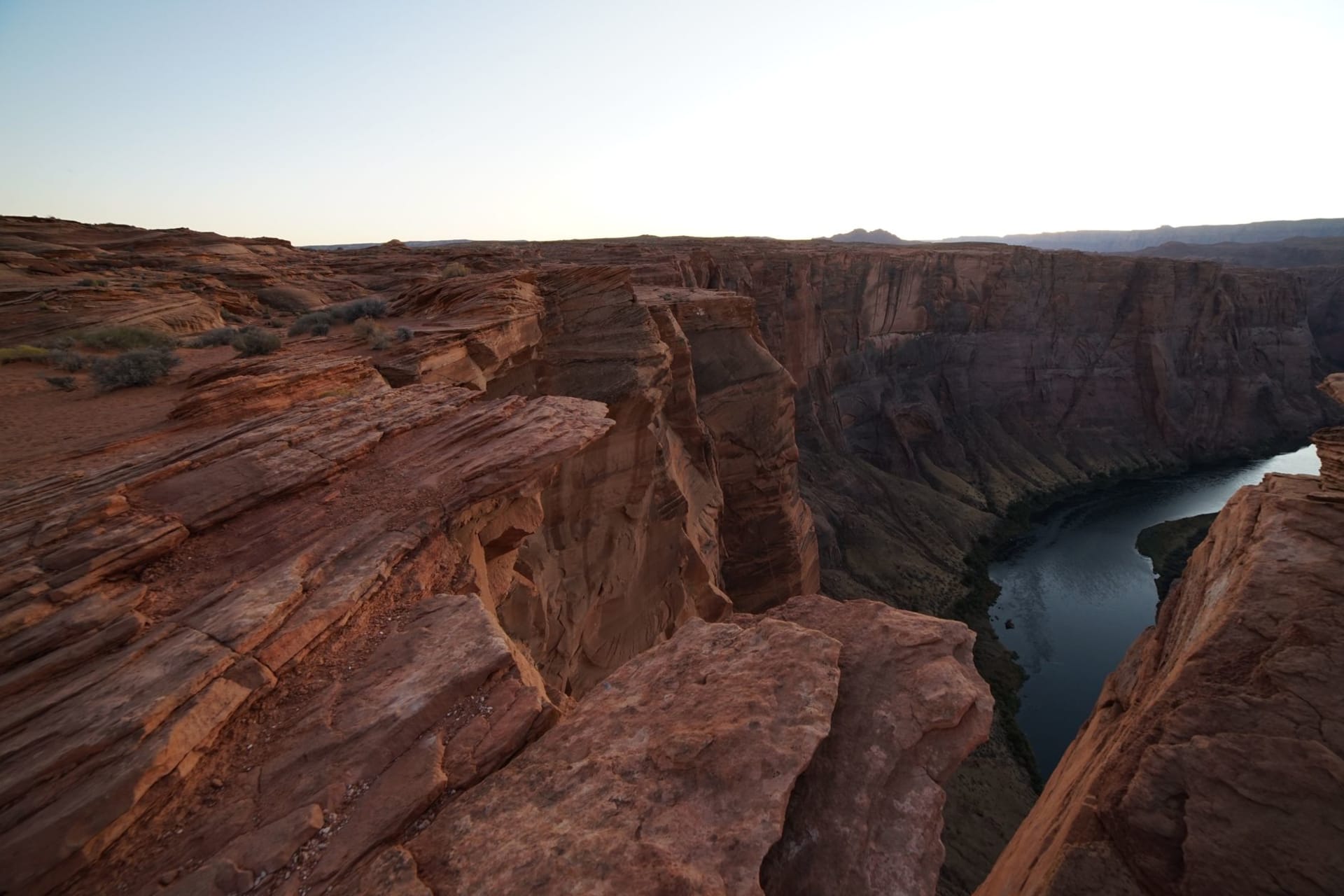
I arrived at the South Rim of the Grand Canyon at dawn, in March, when the snow was still crusted along the trail edges and the canyon was doing what the canyon always does — looking impossible. Not beautiful in any conventional way, just fundamentally wrong in scale, as if someone had peeled back the surface of the earth and forgotten to cover it back up. I have been to a lot of places. Nothing has made me feel more like an insect than standing on the Bright Angel Trail at sunrise, watching the Colorado River catch the first light a thousand meters below.
Arizona is not subtle. Sedona’s red rock formations glow orange and pink in the afternoon in a way that feels almost theatrical — Oak Creek Canyon cuts through them in a slim green corridor that makes no sense after miles of scrubland. Down south, Tucson sits in the Sonoran Desert where saguaro cacti stand six meters tall and the Mexican border is twenty kilometers away, and you can eat the best green chile cheeseburger of your life at a roadside drive-in and watch roadrunners cross the parking lot. In the northeast corner, Monument Valley is exactly what you’ve seen in every Western film — except that being there, with the Navajo guides explaining that the buttes are considered living ancestors, reframes everything you thought you knew about those images. The light hits the Mittens at dusk and turns them the color of a burning coal.
The food caught me off guard. I expected Tex-Mex approximations. What I found in Phoenix and Tucson was something altogether more interesting: Sonoran-style cuisine, which means flour tortillas from Sonora across the border, carne seca, mesquite-grilled meats, and the cheese crisp — a Tucson invention, a flour tortilla stretched flat and crisped under a broiler with melted white cheese — that I ate four times in two days because nothing else made as much sense in the heat. In Scottsdale, the farm-to-desert restaurant scene has grown into something genuinely serious. But honestly, the best thing I ate in Arizona was a $4 tamale from a Navajo woman selling out of a cooler in a parking lot near Monument Valley.
When to go: October through April. Summers are brutal — Phoenix regularly hits 45°C and even at elevation it is relentless. Spring (March to May) is ideal: wildflowers in the desert, snow still possible at the Grand Canyon’s rim, bearable temperatures everywhere. Fall (September to November) is equally good and slightly less crowded.
What most guides get wrong: They send you to the Grand Canyon’s South Rim, point you at the view, and call it done. The canyon is not a view. It’s a place you need to descend into — at least partway, at least once. Day hike down the Bright Angel or South Kaibab trail even two or three miles, sit with your back against a canyon wall, eat a sandwich, watch the light move. The perspective from inside is not the same thing as the perspective from the top. One is a photograph. The other is an experience.