
Flagstaff
"I arrived from Phoenix expecting a waypoint. I stayed three days I hadn't planned."
A mile-high mountain town under ponderosa pines where Route 66 nostalgia, serious astronomy, and craft beer coexist without effort.

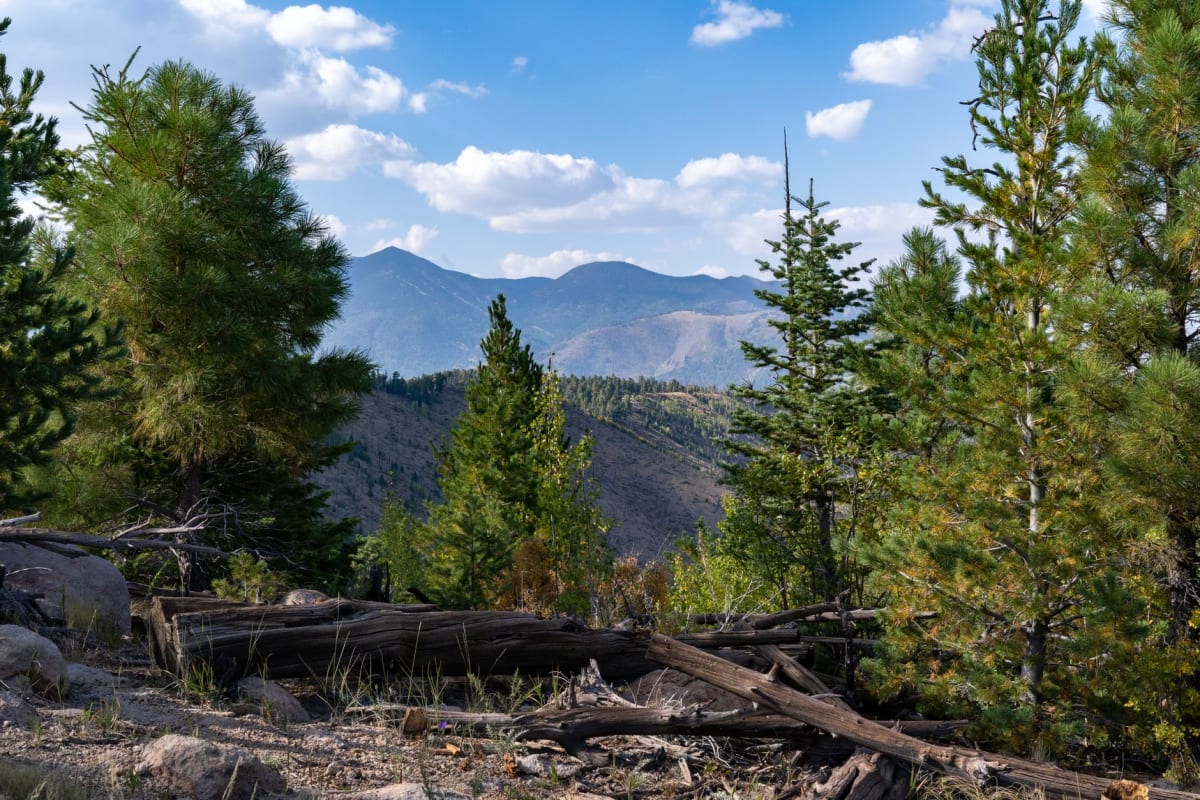
The elevation hits before anything else. Coming up from Phoenix on I-17, the desert scrub gives way to juniper and then ponderosa pine, and somewhere around the 2,000-meter mark the air changes — cooler, thinner, carrying the vanilla-and-resin smell of ponderosa bark that is one of the most distinctive scents in the American West. Flagstaff sits at 2,100 meters above sea level, at the base of the San Francisco Peaks, and in the six years I’ve been coming to Arizona it has consistently surprised me by being the place I didn’t plan to love and always do. It’s a small city of 75,000 people with a state university, a genuine historic downtown, and a dark-sky designation that makes the night here one of the best in the country for stars.
Route 66 — the original highway that once connected Chicago to Los Angeles before the interstates replaced it — runs through the center of Flagstaff, and the stretch near the historic downtown is one of the few places where the nostalgia industry feels earned rather than manufactured. The Weatherford Hotel, built in 1900, still has its pressed-tin ceilings and a ballroom where Zane Grey and Teddy Roosevelt once spent the night. Across the street, the Orpheum Theater shows films and hosts live music in a space that retains its 1917 bones. The neon motel signs that line East Route 66 glow at dusk in a way that feels like a period photograph you can walk inside.
Lowell Observatory sits on Mars Hill above the downtown, a cluster of white telescope domes in the ponderosa forest where, in 1930, Clyde Tombaugh discovered Pluto. I went up on a clear November night for the public telescope program, and the docent — a retired physics teacher with the enthusiasm of someone who has spent forty years pointing at the same sky and never tired of it — showed me the Orion Nebula through a telescope the size of a small car. The nebula resolved into a smudge of pink and gray light that I knew intellectually was a stellar nursery 1,300 light-years away, and knowing that didn’t make the image smaller. It made the dark around it feel more specific.
The hiking outside Flagstaff operates on a scale that the town’s approachable size doesn’t prepare you for. Humphreys Peak, the highest point in Arizona at 3,851 meters, requires a serious day hike and the right conditions, but the Kachina Trail and the Weatherford Trail on the lower slopes of the San Francisco Peaks move through aspen groves and ponderosa forest with views south over a hundred miles of Colorado Plateau. In the other direction, the Walnut Canyon National Monument preserves Sinagua cliff dwellings built into the limestone walls of a canyon that cuts the plateau eight kilometers east of town — small stone rooms built 900 years ago into the overhang of a canyon rim, the mortar still holding, the corn-grinding stones still in their grooves.

The food and drink scene has grown seriously in the last decade, anchored by a craft brewery culture that suits the mountain-town energy. Mother Road Brewing, named for Route 66’s old nickname, makes a Tower Station IPA that tastes of pine and desert air in a way that sounds implausible but isn’t. The Southside neighborhood has a taqueria scene that competes respectably with Tucson — Tacos Los Altos in a strip mall parking lot has been my most reliable meal here, shrimp tacos with a salsa that has actual heat, not the apologetic version. For dinner, Tinderbox Kitchen does farm-to-table with ingredients sourced from the Colorado Plateau in ways that justify the extra expense.
When to go: Summer (June through August) is Flagstaff’s high season and with good reason — the heat that makes the rest of Arizona difficult simply doesn’t reach here, with temperatures in the mid-20s while Phoenix bakes at 45°C. Fall brings aspen colors in October, some of the best in the Southwest. Winter skiing is possible at Arizona Snowbowl on the San Francisco Peaks. Spring can be variable — snow into April — but the wildflowers below the peaks are worth catching.
Keep exploring
More from Arizona
 arizona
Grand Canyon
Two billion years of geological time laid bare in a single wound in the earth — the canyon rewards those who descend.
Explore arizona
Havasupai
Turquoise waterfalls hidden ten miles deep in a Grand Canyon tributary — the hardest place to get into in Arizona and absolutely worth it.
Explore arizona
Kartchner Caverns
A living limestone cave near Benson where dripping water still shapes the stone, kept secret for fourteen years before anyone else got to see it.
Explore arizona
Monument Valley
The buttes that built the mythology of the American West — except that being here rewrites everything you thought those images meant.
Explore arizona
Petrified Forest
A high desert national park in eastern Arizona where two-hundred-million-year-old logs have turned to stone and the Painted Desert glows in bands of rust and lavender.
Explore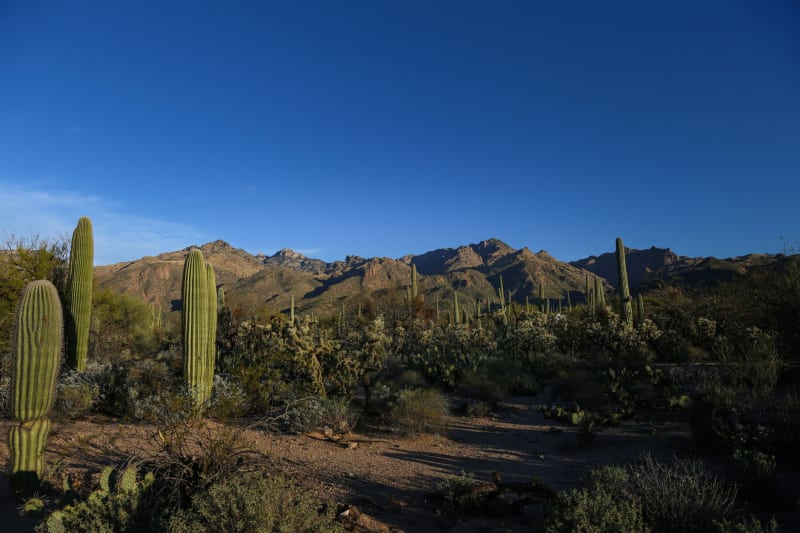 arizona
Saguaro National Park
The Sonoran Desert at its most emblematic — forests of giant cacti that take a century to grow and fill a landscape with a patient, alien beauty.
Explore