Sierra Grande
"The mine closed decades ago. The town decided to become something else instead of disappearing."
A former iron-mining town on Rio Negro's coastal steppe, quietly reinventing itself around diving and wind.
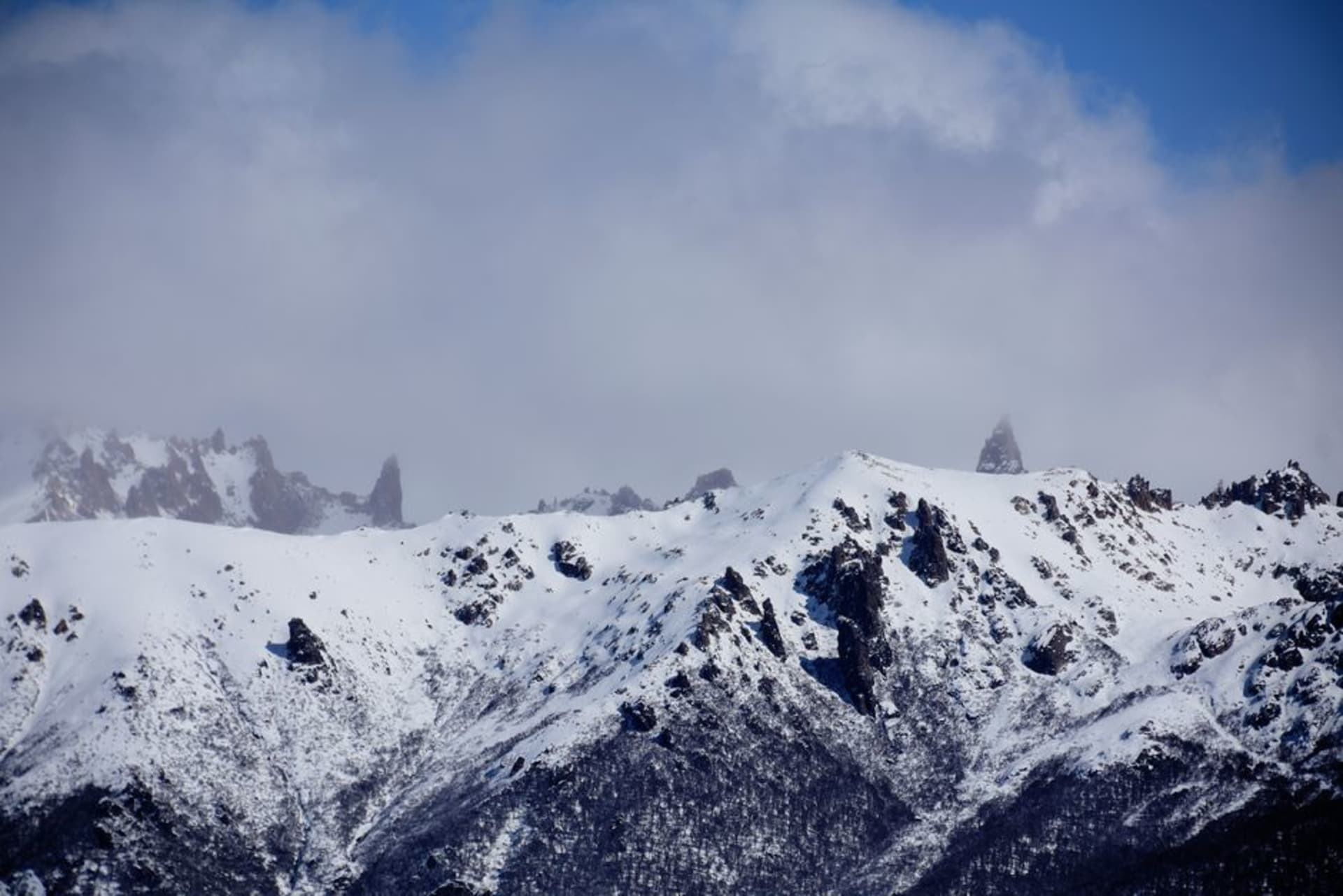
I hadn’t planned to stop in Sierra Grande. It was a fuel stop on the long coastal drive between Puerto Madryn and Las Grutas, a dot on the map with a name that sounded more dramatic than the actual topography — Rio Negro’s coastal steppe here is flat and low, sparse scrub running out toward a horizon interrupted only occasionally by the modest hills the town is named for. But the gas station attendant mentioned, almost in passing, that there was a decommissioned iron mine you could tour, and something about that made Lia and I stay an extra night.
The mine is the reason the town exists at all. Hipasam, the state mining company, developed the iron ore deposit here starting in the 1970s, and for a couple of decades Sierra Grande was a genuine company town, built almost entirely around extraction — housing blocks, a rail line to the port at San Antonio Este, a population that arrived for the jobs and stayed for reasons that outlasted the jobs themselves. The mine closed in 1991 when the economics stopped working, and the town did what a lot of single-industry towns do when the industry leaves: it shrank, argued with itself about what came next, and eventually found an answer nobody would have predicted.
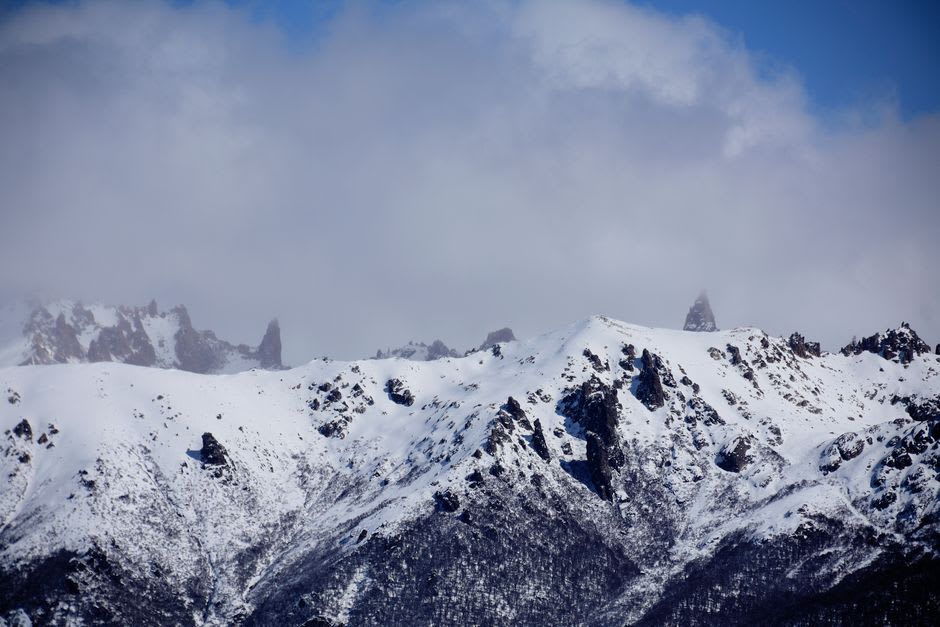
That answer turned out to be diving, of all things, inside the flooded mine shafts themselves. Parts of the old mine complex have been converted into a diving center, with several of the underground galleries and vertical shafts now filled with clear groundwater and open to certified divers exploring what is, effectively, an industrial ruin turned into a controlled underwater cave system. I’m not a diver, so I watched from the surface while a small group geared up at the mine entrance, and even secondhand it was a strange, compelling idea — descending into the same tunnels where men once worked with pickaxes and drills, now silent and full of still, cold water.
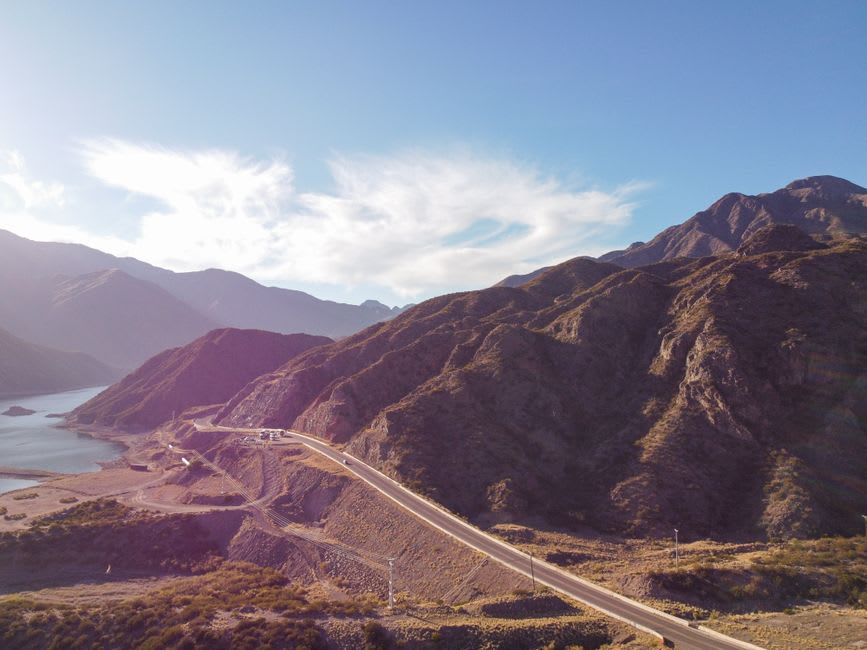
Above ground, the coastline nearby gave us the more accessible highlight. A short drive from town, the Rio Negro coast opens onto long stretches of steppe running straight to cliffs above the Atlantic, with almost nobody on them. We walked a beach south of town at dusk with the wind doing what it always does on this coast — relentless, constant, somehow companionable after enough days in Patagonia to get used to it — and watched a small colony of sea lions further down the shoreline, unbothered by our distance and entirely unbothered, generally, by the fact that almost no tourists make it this far along the coast.
We ate dinner that night at a small parrilla that seemed to double as the town’s social hub, cordero patagonico again, the lamb that seems to taste better the further south you get in Argentina, and talked with the owner about the mine’s second life. He’d worked there as a younger man, before the closure, and now sends his nephew to guide the diving tours. He didn’t seem nostalgic about it exactly. More like satisfied that the place had found a way to keep meaning something.
When to go: October through April for milder coastal weather and calmer conditions for the mine diving excursions, which require advance booking through the local operator. The wind is a constant here regardless of season, and the town itself remains a low-key, unhurried stop best treated as a deliberate detour rather than a drive-through.