Esteros del Iberá
"A capybara the size of a labrador looked up from the lawn, decided I was not worth the effort, and went back to eating."
The marsh that almost nobody mentions
Argentina sells itself on Patagonia and steak and tango, and the Iberá wetlands get left off the brochure almost entirely, which is exactly why I wanted to go. They sprawl across the province of Corrientes, in the humid northeast near the Paraguayan border — nearly thirteen thousand square kilometers of marsh, lagoon, floating island, and flooded grassland, second in South America only to the Pantanal. I based myself in the tiny village of Colonia Carlos Pellegrini, reached by a long red dirt road that turns to soup after rain, on the shore of the Laguna Iberá. There is no real reason to come here except the animals, and the animals are reason enough.
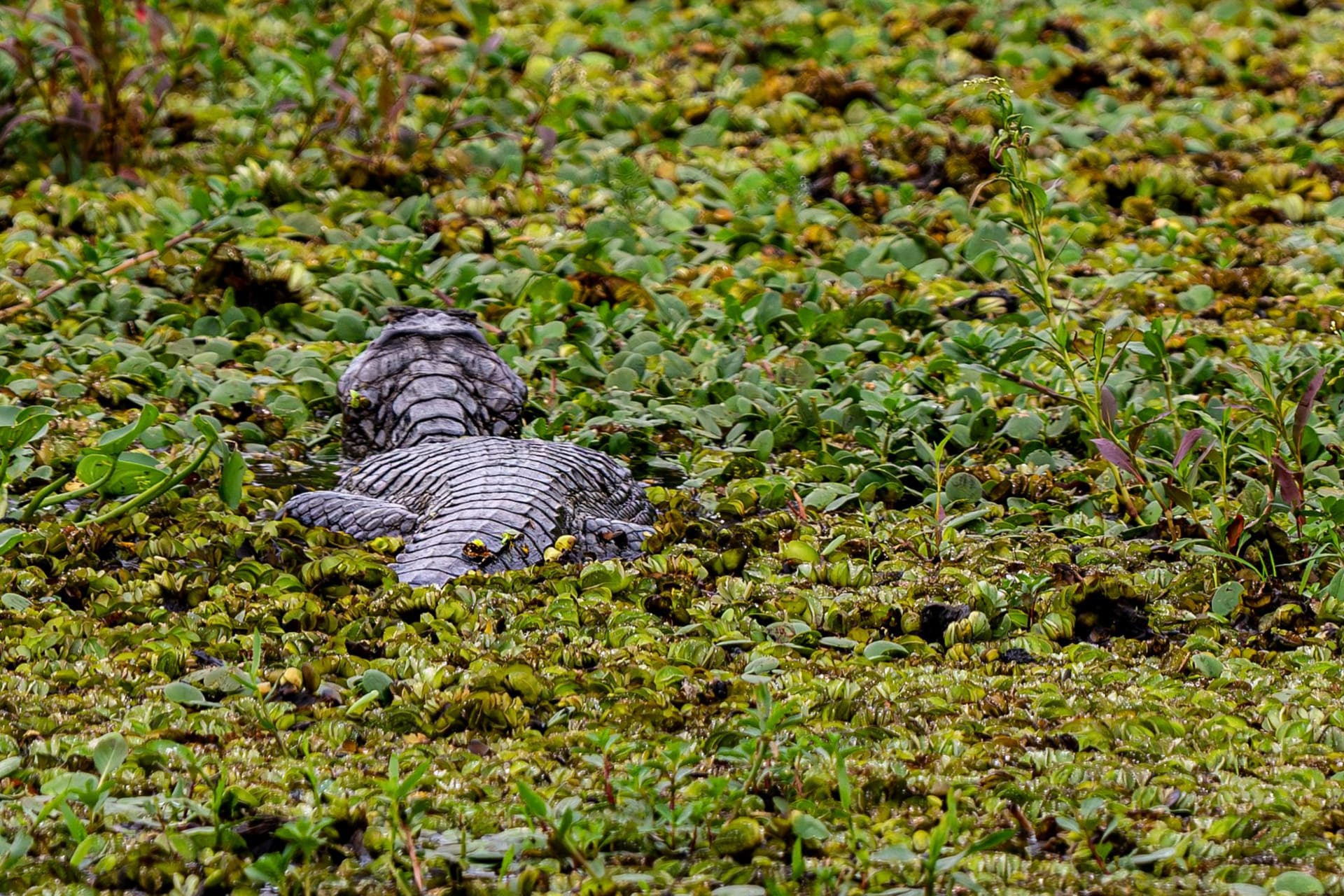
The first afternoon, before I had even unpacked, I walked the road into the village and counted four capybaras grazing the grass beside the lodges like enormous, dignified guinea pigs. Caimans lay in the shallows with their mouths open, doing whatever it is caimans do. Lia, who is harder to impress than I am, went quiet, which is how I know a place is working on her.

On the water at first light
You see the marsh properly from a boat, and you go at dawn because that is when everything is awake and the light is low and gold across the water. Our guide, Hernán, cut the motor at the edge of a floating island — a mat of vegetation thick enough to walk on, drifting on the lagoon — and we sat in the silence while the marsh filled up with sound. Herons, jacanas tiptoeing across lily pads on absurd long toes, a marsh deer wading chest-deep with its ears swiveling, and somewhere out of sight, the low groan of howler monkeys carrying for kilometers.
What makes Iberá remarkable is not just what survives here but what is coming back. This is the heart of one of the largest rewilding projects on the continent, and species hunted out of the region — giant anteaters, pampas deer, peccaries, even jaguars — have been reintroduced over the past two decades. Hernán pointed across the water toward an island where the jaguars are. I did not see one. I did not really expect to. Knowing they were there, breeding, in a place that had lost them, was enough to sit with for a while.

Pellegrini time
The village itself runs on a rhythm dictated by the heat and the animals: boat trips at dawn and dusk, the long flat middle of the day spent in a hammock or on horseback across the drier grassland with a local gaucho. There is no bank, the connection is patchy, and dinner is whatever the family-run posada is cooking — usually grilled meat or river fish, eaten slowly under a sky that, once the generators wind down, fills with more stars than seems fair. It is the kind of place that makes you suspicious of how much of travel is just noise.
When to go: April to October is the cooler, drier window and the most comfortable for spending hours outdoors. Spring, around September and October, is good for newborn animals and bird activity. Summer, December to February, is intensely hot and humid with biting insects, though the marsh is at its lushest. Bring repellent regardless, and do not underestimate the road in after rain.