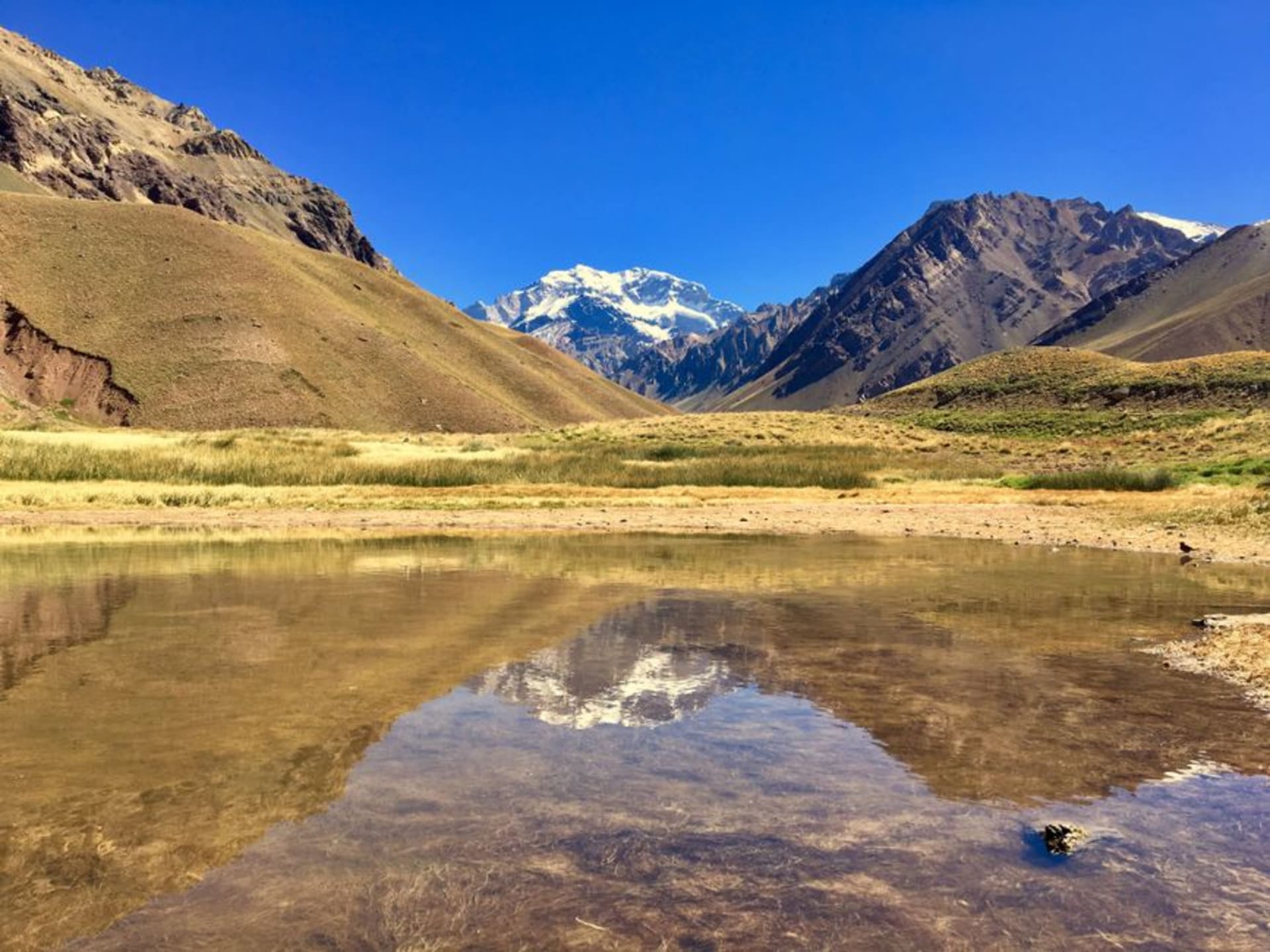
The trekking approach to the Americas' tallest peak, reachable without a summit permit or technical climbing experience.
I want to be clear that neither Lia nor I climbed Aconcagua. What we did was the Confluencia and Plaza de Mulas trek — the base camp approach that requires a permit but no ropes, no technical skill, and no expedition budget — and it was still one of the more physically demanding things either of us had done for a view.
Confluencia and the First Real Look
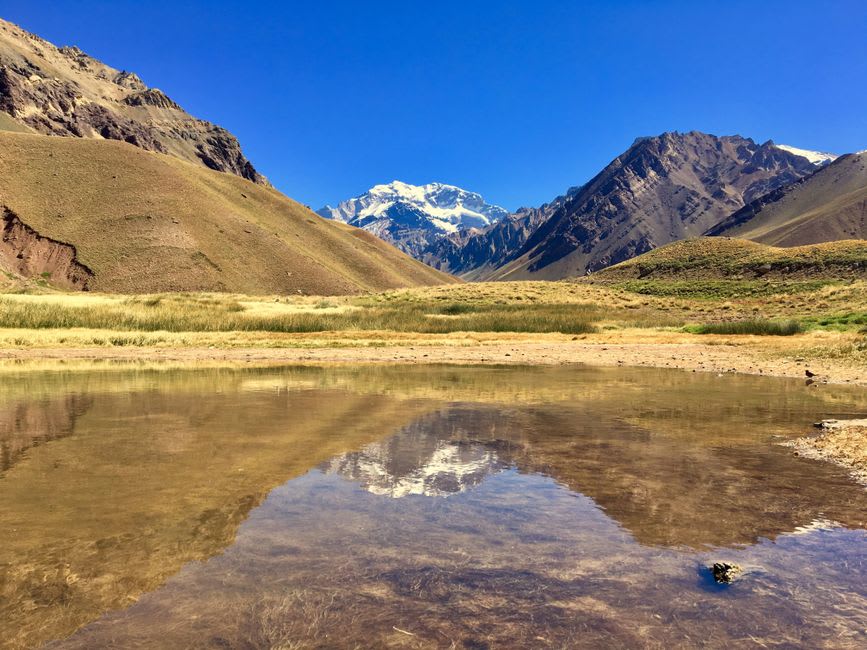
The trailhead sits at Puente del Inca, and the trek to Confluencia camp, at around 3,400 meters, is a relatively gentle first day along the Horcones River valley. It’s here that the mountain first properly reveals itself around a bend in the trail — a wall of ice and rock so large it briefly stops conversation. I’d seen photos for years. Standing there was different in a way I hadn’t anticipated, something closer to intimidation than admiration.
The Push to Plaza de Mulas
The second leg, from Confluencia to Plaza de Mulas base camp at nearly 4,300 meters, is a longer, more punishing day across the Río de las Vacas and Horcones Inferior valleys — dry, windswept, and altitude-thinned enough that Lia and I both stopped talking for long stretches, conserving breath rather than words. Reaching the tents and makeshift infrastructure of base camp, with actual climbers gearing up around us for summit attempts, felt like arriving somewhere genuinely remote, even with a permit office and a small medical post nearby.
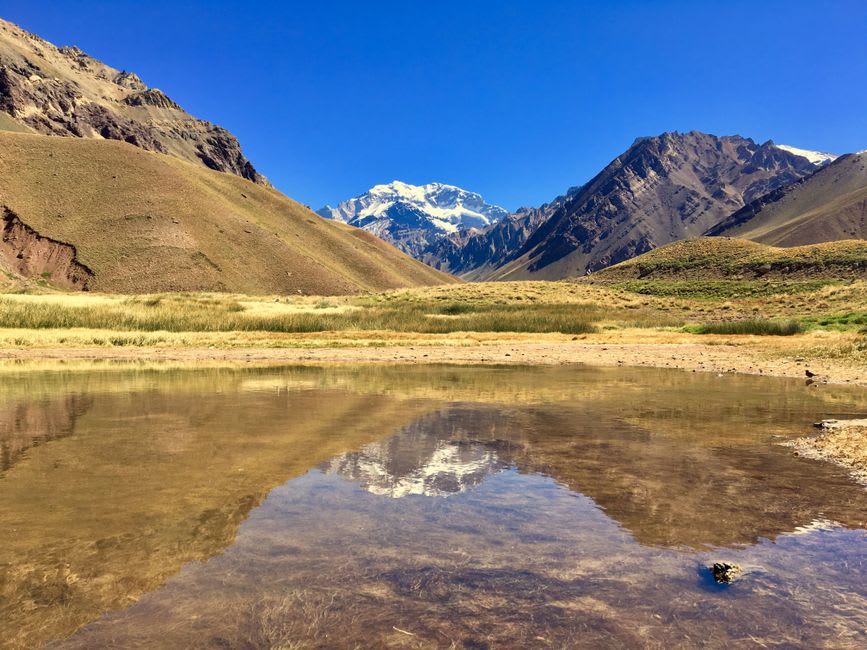
We turned around the next morning, legs sore and lungs grateful, having gone nowhere near the summit and not minding at all.
When to go: Late November through March, within the official park season; permits are required even for the base-camp-only trek and should be arranged in Mendoza in advance.