Shenandoah
"Skyline Drive is eighty miles long and I have never finished it — I always turn off into the valley before the end."
The valley got me first, before the mountains. I had driven south from Washington on I-81 more times than I can count, through that long stretch of Virginia farmland where the Blue Ridge rises on one side and the Alleghenies on the other and the valley between them is so wide and so green and so orderly with its white silos and its red barns that it looks less like a landscape and more like someone’s idea of what a landscape should look like. I have pulled off the highway at Front Royal more times than I intended to, just to sit for a minute in a parking lot and look south down the valley. It does something to you that I cannot explain to people who have not felt it.
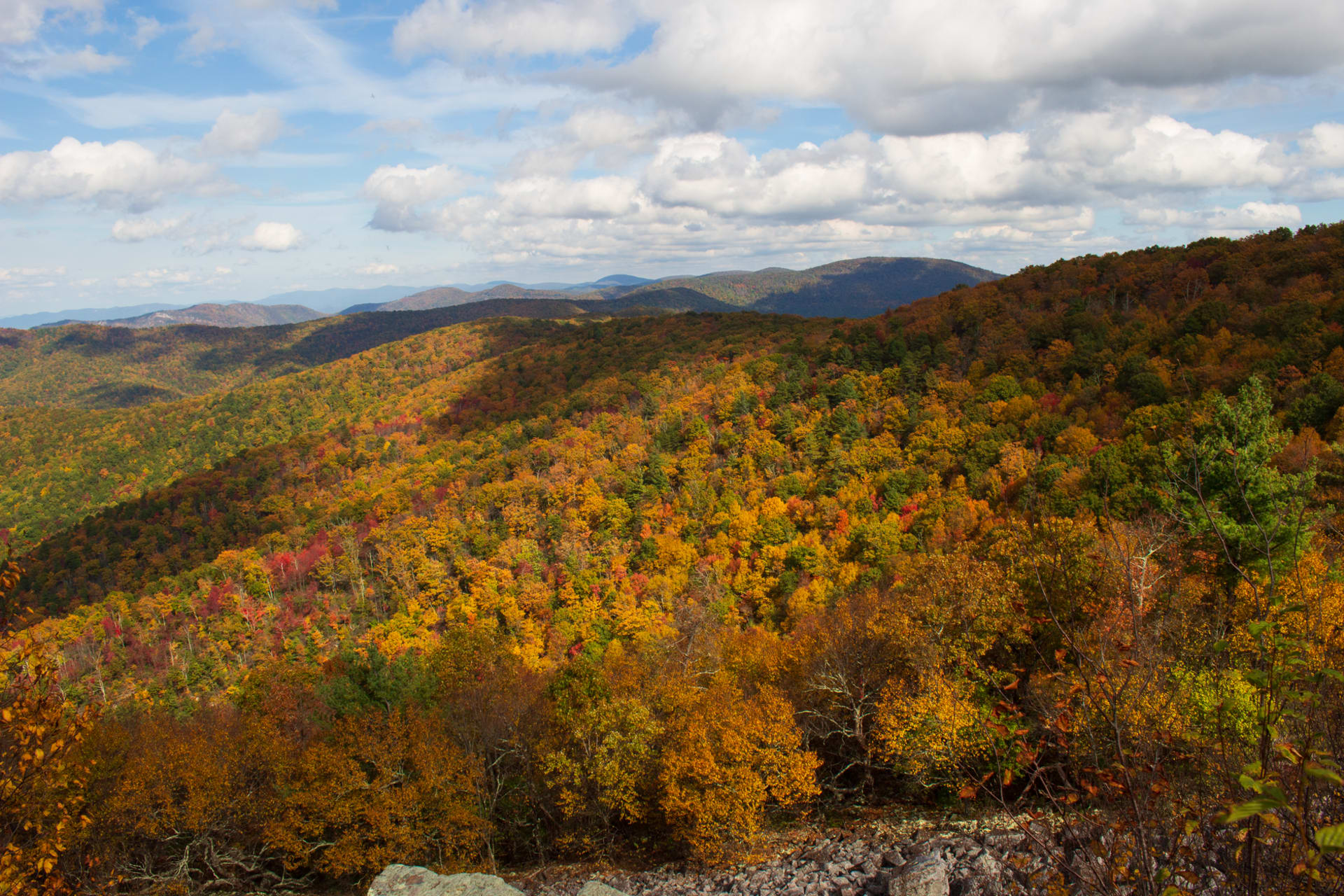
Shenandoah National Park runs along the crest of the Blue Ridge for 105 miles, and Skyline Drive traces that ridge from Front Royal in the north to Rockfish Gap in the south, never quite descending to either valley on either side. I have driven sections of it in every season and it is never the same road twice. In May the mountain laurel turns the roadside pink-white. In July the forest is so dense and dark green it feels humid even from inside the car. In October it goes the full range from yellow through amber through red in a span of two weeks that can feel like watching a slow fire. In February, ice on the hemlocks, and the overlooks empty, and the silence so complete it presses against the windows.

The hiking here is some of the best in the eastern mountains, and the best of it involves water. The waterfalls in the eastern hollows — Dark Hollow Falls, Lewis Falls, Overall Run — run cold and brown over sandstone ledges and drop into pools where people have been swimming since there were people to swim. Overall Run Falls, at ninety-three feet, is the tallest in the park, and the trail to it passes through recovering second-growth forest that is starting to look, in places, like something older. The wild turkeys on that trail are completely indifferent to hikers; they move aside just enough to let you pass and go back to whatever they were doing.
The Appalachian Trail runs the length of the park along the ridge, and the trail towns on the valley floor — Luray, Stanley, Elkton — exist in a quietly functional relationship with the hikers who stop for resupply and showers. Luray’s claim to fame is Luray Caverns, a limestone cave system of genuine beauty — the cave organ that plays actual notes on stalactites is either the most wonderful thing or the most absurd, and I have not decided — but the town itself, its main street of diners and hardware stores and the old Page News & Courier office, is what I go back for. There is a diner on Main Street where the breakfast biscuits are the size of a fist and the coffee is served in those thick white mugs that seem to exist only in diners that have been open since 1964.

The river gives the whole area its name and its emotional register. The South Fork of the Shenandoah, winding through the valley below the park, is a limestone river — clear, alkaline, cold even in summer — and canoeing it through an October afternoon when the canopy above is full red and the water is low and the banks are empty is something I have done three times and would do again without hesitation. You float past herons and fishing egrets and the occasional snapping turtle hauled out on a log, and the Blue Ridge is always there above the tree line, watching, its color shifting through the afternoon from green to blue to deep purple as the light moves.
When to go: Mid-October for fall color along the ridge — the views from the overlooks during peak color are among the most purely beautiful things in the eastern United States. May brings mountain laurel and wildflowers. Winter is underrated: the park is quiet, the views through the bare trees extend further than in summer, and the chance of having an overlook to yourself is real. Summer is fine but crowded on weekends.