
La Massana
"The valley is wide enough that the mountains feel like walls rather than scenery. In the best possible way."
La Massana sits at the convergence of three valleys, which gives it a geographic openness rare in Andorra. Most of the country is narrow — a river squeezed between tight valley walls — but here the terrain opens into something broader and slower, and the effect on the atmosphere is immediate. I turned off the main Andorran road north of Andorra la Vella and felt the pressure of the commercial valley ease as the space widened. Farmhouses that had been standing since before the modern country existed came into view on the terraced slopes. Cows moved on the hillsides. The sky was larger.
The village of La Massana itself is a working Andorran town — there is a market on Saturday mornings, a hardware shop, a pharmacy, a few restaurants where the midday lunch is aimed at people who have been working since six in the morning rather than at tourists. I ate in one of those places on a Wednesday, a three-course menu for a price that would not cover a coffee in a Parisian café, and the woman running the room treated me with a warmth that was specific and contextual — she spoke Catalan to the tables of regulars, Spanish to me, and moved between languages without breaking stride. The trinxat arrived in a cast-iron pan, still sizzling, with a poached egg on top that was not on the menu but appeared anyway.
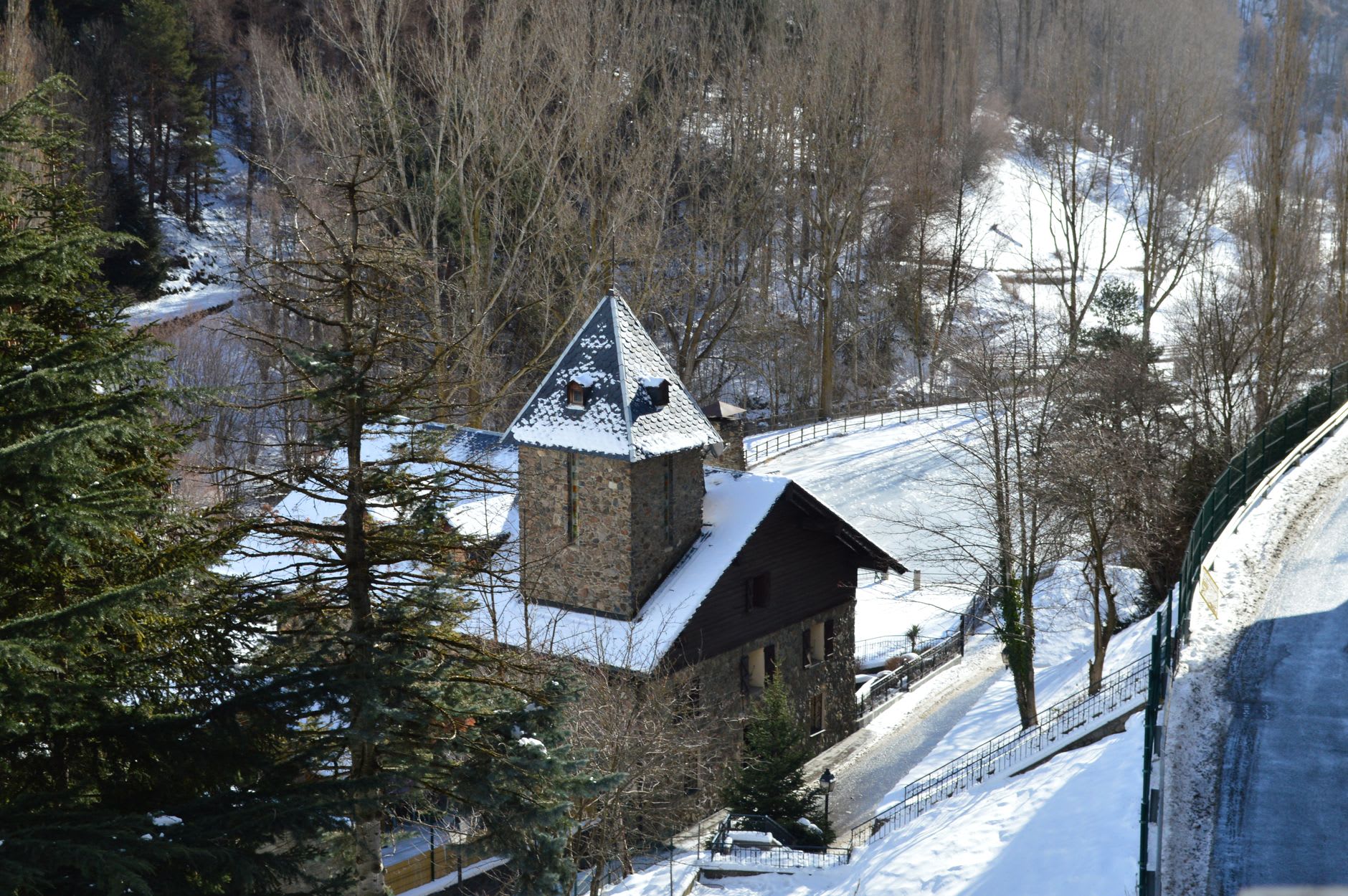
The Vallnord ski area covers the upper reaches of the parish and branches into Arinsal to the west and Pal to the east. It is smaller and quieter than Grandvalira — fewer lifts, fewer runs, fewer queues — and as a result it attracts a different kind of skier. I found families, beginners, and older skiers who preferred a resort where you could spend a day without competitive energy in the lift lines. The runs at Pal in particular are gentle and long, moving through a forest of silver firs that gives the skiing a textural variety missing from the open pistes of the larger resort.
Off-season, the Pal-Arinsal sector opens its trails for mountain biking, and in summer the cable car from La Massana village — the Telecabina de La Massana — lifts walkers and cyclists to 2,145 metres with a view that earns its entry price. From the top, a network of trails fans out across the Comapedrosa massif, which contains Andorra’s highest point at 2,942 metres. I attempted the summit in late July and turned back below the final ridge when cloud moved in fast from the north — the kind of dismissal the mountains give you periodically as a reminder that they are not providing a service.

The parish has a Roman-era bridge at Pont de la Margineda, on its southern boundary, that carries the CG-1 road over the Valira del Nord river on an arch that has been here in some form since before the country existed. I made a point of walking out onto it and standing above the river in the low afternoon light, watching the water — clear, fast, running over pale stones — and thinking about the improbability of infrastructure this old still functioning in a place this small.
When to go: Summer (June–September) for hiking and cycling, with the Telecabina open for access to higher terrain. Winter for skiing at Vallnord, which is quieter than Grandvalira and particularly good for families. The Saturday market in La Massana village runs year-round and is worth organizing a morning around.