Europe
Andorra
"A whole country you can drive through in forty minutes, and still feel like you missed something."
I crossed into Andorra on a Tuesday in November, coming down from the French side through the Envalira pass — the highest paved road in the Pyrenees, and utterly desolate that time of year. The border formality lasts about eight seconds. Then you are in: a ribbon of valley squeezed between mountains, a river threading through it, and a continuous strip of duty-free shops selling perfume, whisky, and ski gear at prices that make you briefly reconsider your life choices. My first instinct was to dismiss it. My second instinct, once I turned off the main road and started driving uphill toward Ordino, was to stay longer than I had planned.
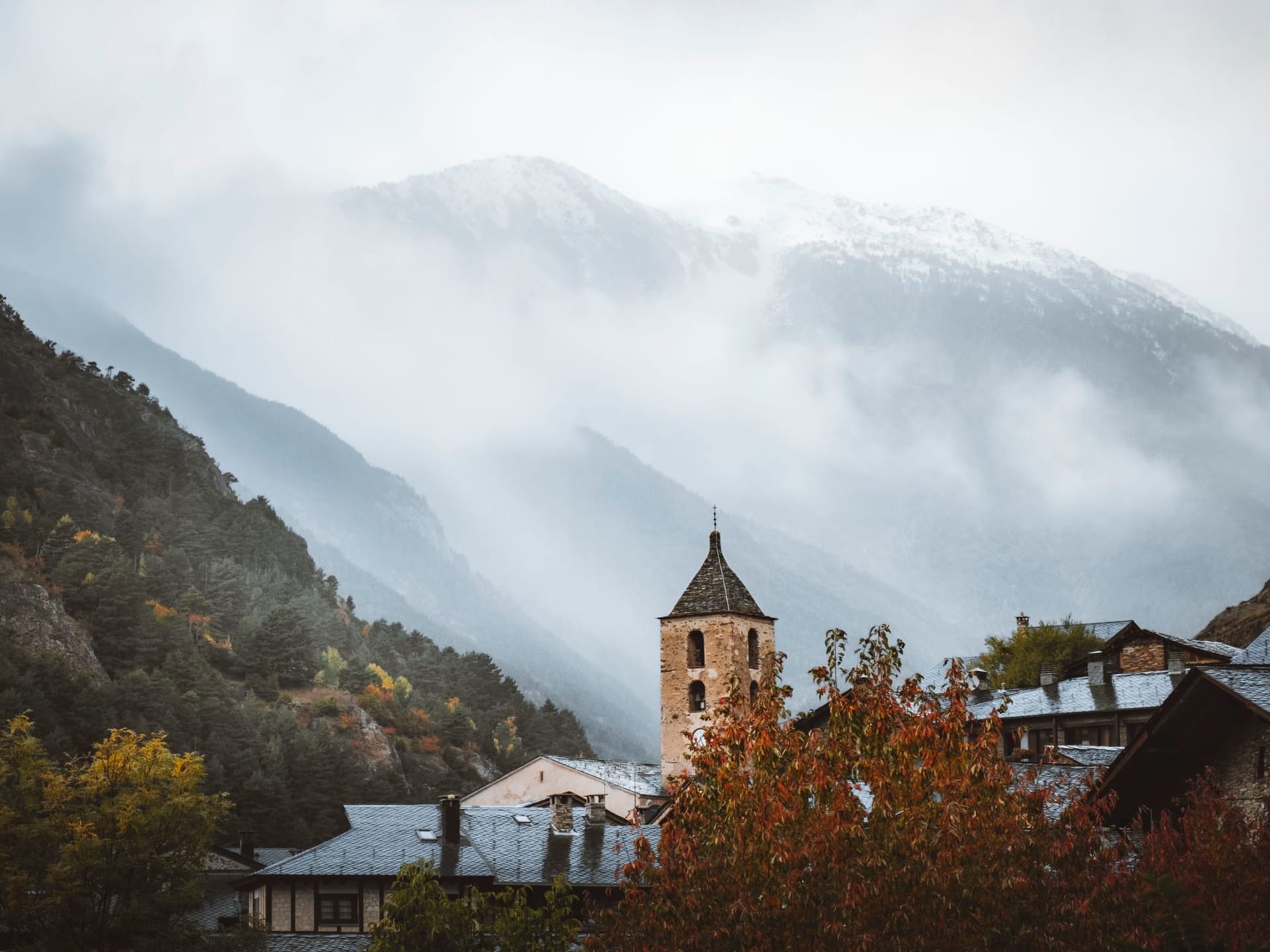
The trick with Andorra is to get vertical quickly. The valley floor — Andorra la Vella, the shopping strips, the roundabouts — is functional at best. But climb ten minutes in any direction and you land in a different country entirely: medieval stone villages with Romanesque churches, trails that wind through beech and fir forests, and views down into valleys so perfectly proportioned they look staged. Ordino is the parish I keep returning to in my head. The church tower appears in the fog like something from a fairy tale. The village square has a café that opens when it feels like it. The silence is genuine. In summer, the hiking here is among the best in the Pyrenees without the crowds of Chamonix or the performance of the Tour de France routes — just good mountain walking at altitude, with reliable trails and almost no one on them.
The food is a Franco-Spanish hybrid with no particular culinary identity of its own, and that is mostly fine. You eat well enough — trinxat, the local cabbage-and-bacon hash, is genuinely satisfying after a cold morning walk; the escudella at Christmas is worth timing a trip around. But the real pleasure of eating in Andorra is the price: a three-course menu del día costs roughly half what you would pay in Barcelona. The wine lists, unsurprisingly, are excellent and cheap.
When to go: December to March for skiing — the Grandvalira resort is legitimately large and often cheaper than comparable French or Swiss resorts, especially when you factor in the duty-free savings. June to September for hiking, when the alpine meadows are open and the crowds thin out. July and August are busy on the valley floor but quiet in the higher parishes. Avoid October and early November — some restaurants and hotels close between seasons, and the landscape is neither summer nor winter, just grey.
What most guides get wrong: They treat Andorra as a shopping stop or a ski resort and leave it at that. Both things are true and both things are beside the point. The Romanesque art heritage here — the churches of Sant Joan de Caselles, Santa Coloma, Sant Serni de Nagol — is among the best preserved in the Pyrenees, and almost nobody goes to see it. Andorra has been continuously inhabited for centuries and managed its own affairs throughout most of European history precisely because the mountains made it irrelevant to whoever was fighting at the time. That long, quiet stubbornness left a landscape dotted with things worth looking at, if you get off the commercial main road long enough to find them.