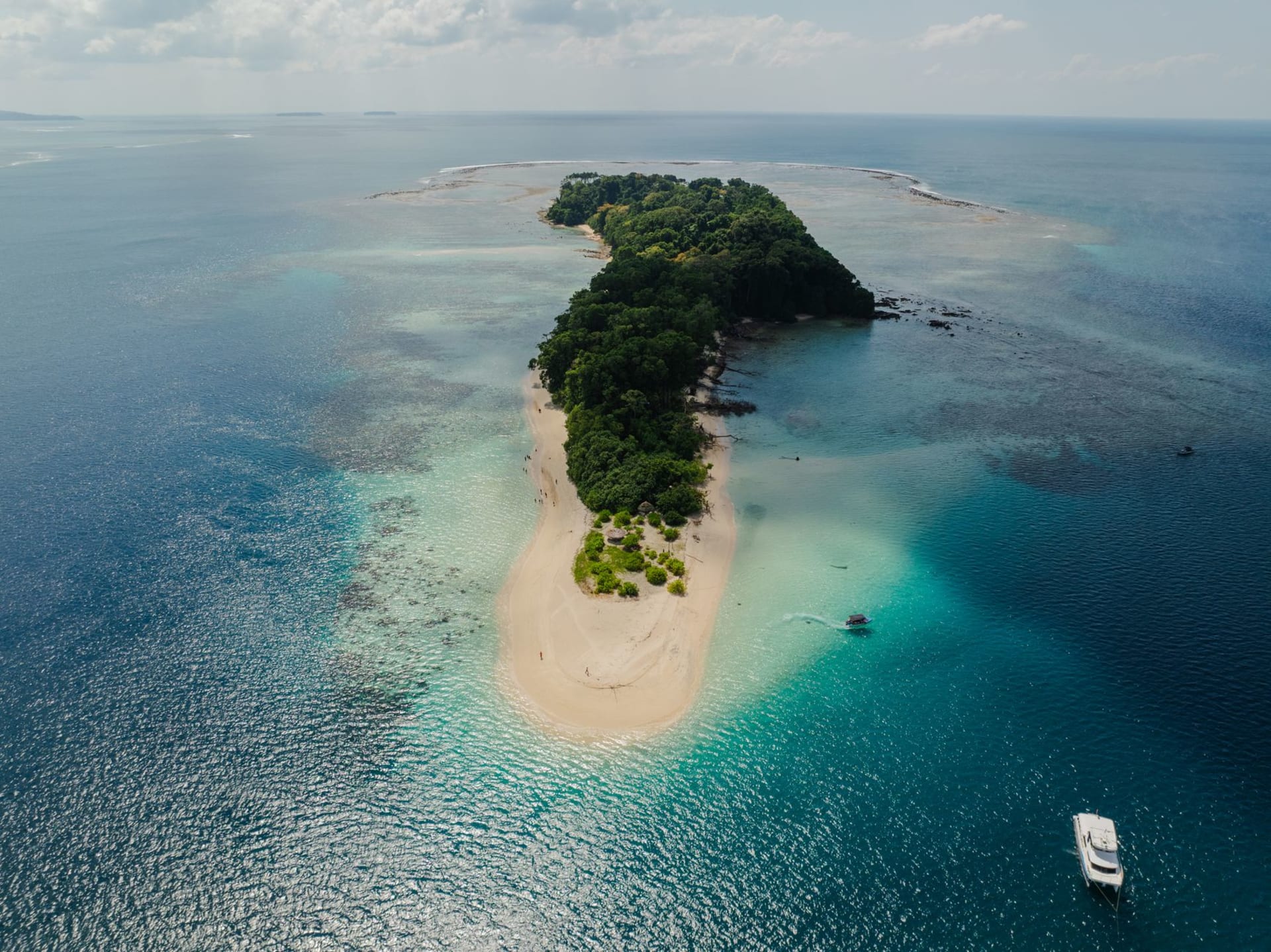
Jolly Buoy Island
"The quota system made me feel gated, then grateful — this is what a reef looks like when you actually protect it."
The boat to Jolly Buoy leaves from Wandoor, thirty kilometers south of Port Blair along a coast road that passes through forest and past mangrove channels where kingfishers perch on overhanging branches. The drive takes about forty-five minutes in a shared jeep or auto-rickshaw, and by the time you reach Wandoor jetty the sun is already high and the sea is brilliant. The island is part of Mahatma Gandhi Marine National Park, which covers fifteen islands and their surrounding reefs, and the daily visitor quota — a thousand people in theory, far fewer in practice — is the reason Jolly Buoy’s underwater world remains something worth seeing.
I had read about the quota system before I came and arrived expecting bureaucracy; what I found was a simple permit process at the forest department counter at Wandoor, a glass-bottom boat loaded with families and couples and a few serious snorkelers, and then twenty minutes of shallow turquoise passage before the island appeared off the bow. Jolly Buoy is uninhabited, ringed by beach, with a reef that begins almost at the shoreline and extends outward in a series of coral gardens that are visible from the surface even without a mask. I borrowed fins from the jetty rental counter, fitted my own mask, and went in.
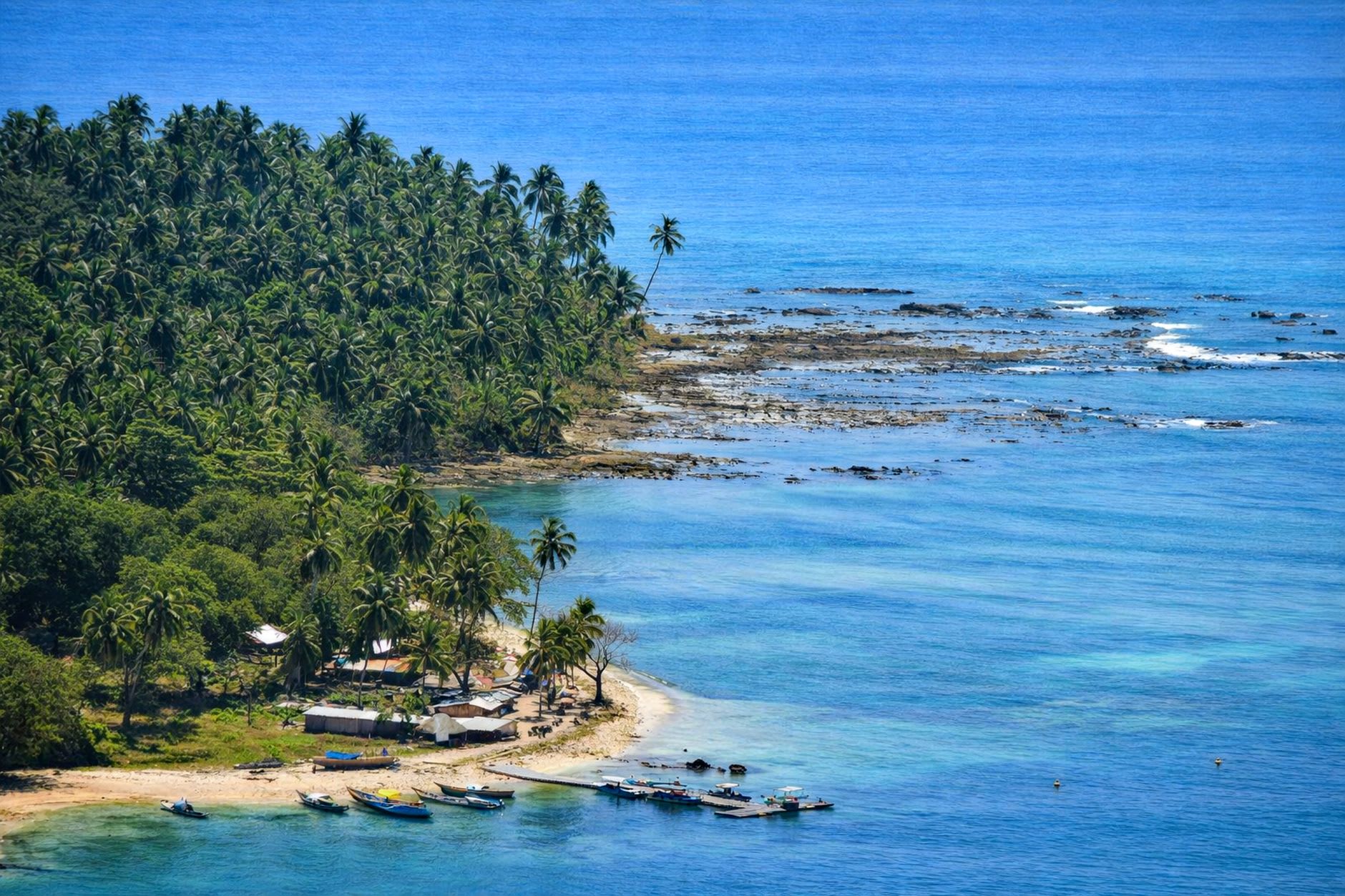
The reef condition was the best I saw at any day-accessible site in the Andamans. Staghorn coral in large formations, brain coral in domes the size of small cars, table coral extending three and four meters across. Fish everywhere: blue surgeonfish in loose groups, parrotfish grazing noisily on the coral, a hawksbill turtle — my third of the trip, and each sighting still arresting — moving purposefully toward deeper water. The visibility was perhaps fifteen meters, not the exceptional twenty-five of the offshore dive sites, but more than enough to see the full extent of the reef as it dropped toward the sandy bottom. I stayed in the water for three hours, surfacing periodically to float on my back and look at the island: green, solid, a reef egret standing on the beach with the precise stillness of someone who has been told not to move.
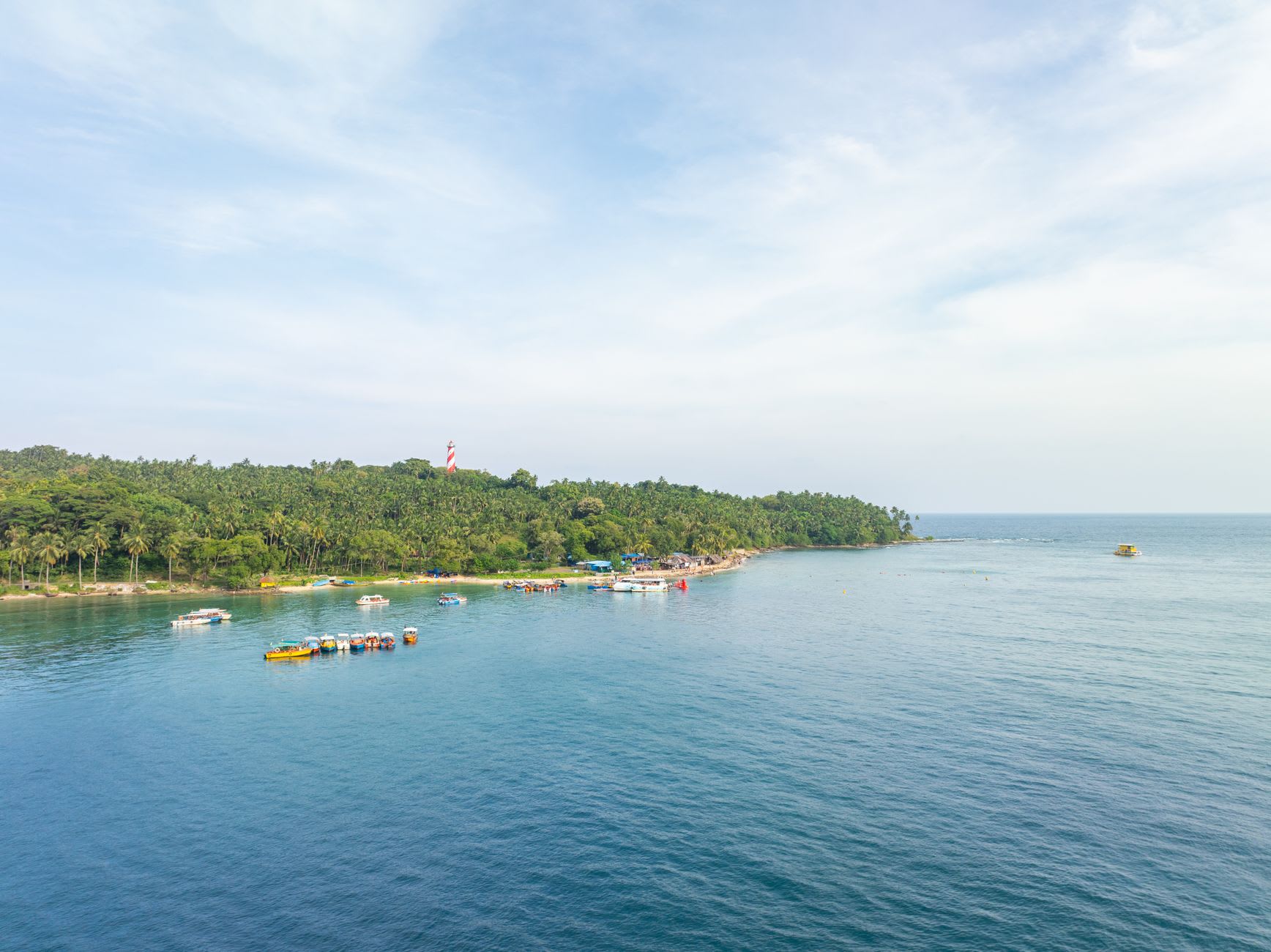
The glass-bottom boat option is worth it if you are not a swimmer or if you want to cover more ground: the operator takes you along the reef perimeter and the bottom, visible through the floor panels, scrolls beneath you like a slow documentary. I joined the return trip on the glass-bottom boat rather than snorkeling back to the main island, and found myself looking at the reef I had just been swimming through from an entirely different angle — less intimate but more comprehensive, the scale of it more apparent from above. On the boat back to Wandoor, a family from Chennai offered me murukku from a bag and asked if I had seen any sharks. I had not. They seemed slightly disappointed on my behalf.
When to go: Jolly Buoy is only open from October through May — the monsoon forces a six-month closure each year, which allows the reef to rest. The boat departs Wandoor at 9 a.m. daily (weather permitting) and returns by 3 p.m. Book your forest department permit the day before during peak season; go mid-week to arrive among the smallest crowds.