Asia
Andaman Islands
"The sea here doesn't look real — it looks like someone forgot to turn off the saturation."
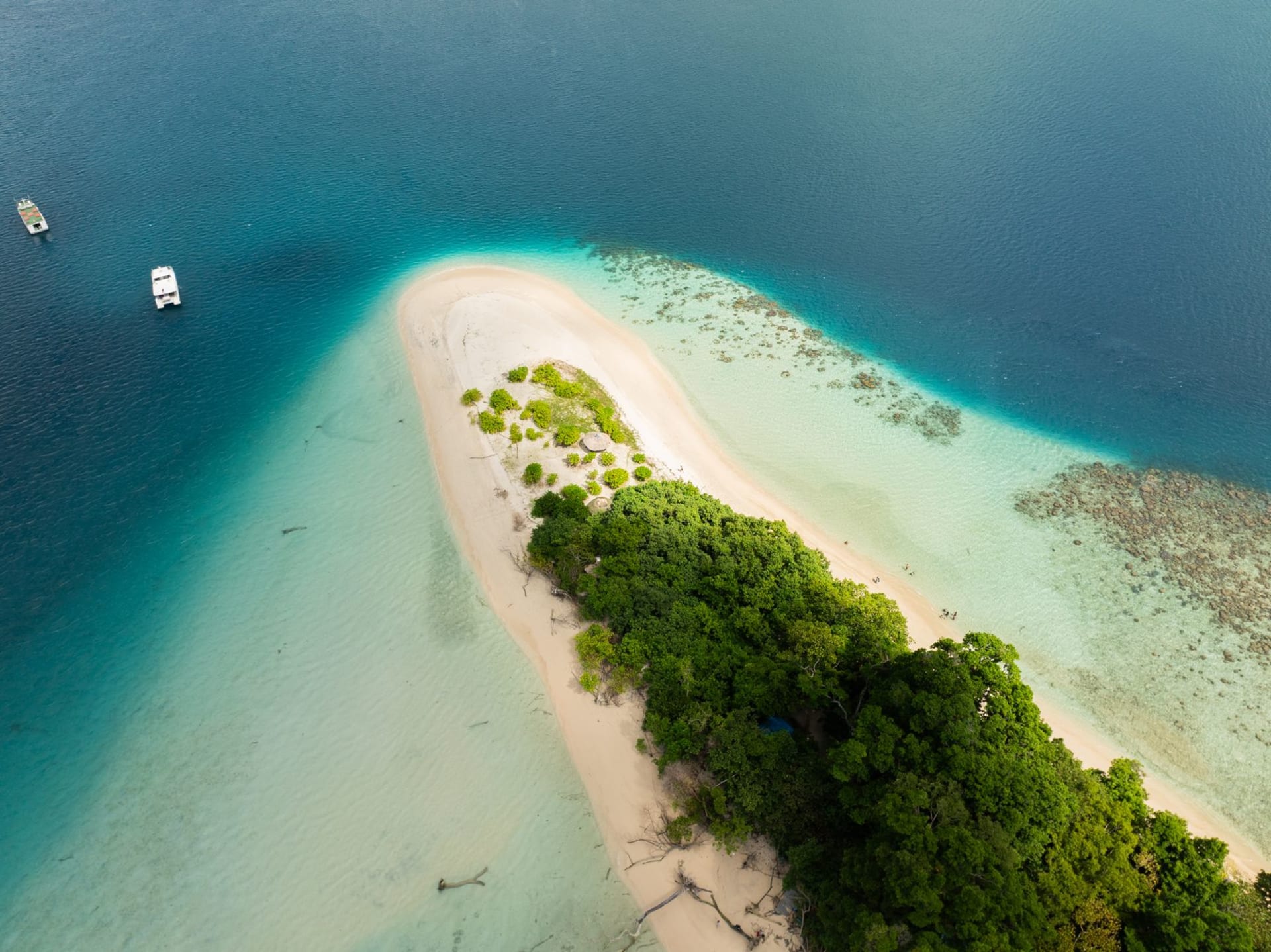
The ferry from Port Blair to Havelock takes two to three hours depending on which boat you catch, and I spent most of that crossing pressed against the bow railing watching the water change color. It starts out the usual deep blue, then — somewhere around the middle passage — it shifts. Teal first, then a luminous turquoise that looks edited, like the ocean on a screensaver. Except it isn’t edited. It’s just the Andaman Sea over white sand at fifteen meters depth, doing what it has always done, indifferent to the fact that it will ruin every other beach you ever visit.
Havelock Island — officially renamed Swaraj Dweep, though nobody uses that yet — is where most travelers land and most travelers stay. Radhanagar Beach is the reason. Consistently ranked among Asia’s finest, which is the kind of superlative that usually sets you up for disappointment. Radhanagar didn’t disappoint. Long and gently curved, backed by dense forest rather than resort towers, with water warm enough to float in for hours without moving. I arrived late afternoon and stayed until the sun went flat and red over the treeline. There were perhaps forty other people on a beach that could hold a thousand. This is the part that always surprises newcomers: the Andamans are not crowded. The permit system, the relative difficulty of getting here, the lack of direct international flights — all of it conspires to keep the numbers manageable. You get a remote-feeling experience that still has cold beer and decent wifi.
Neil Island is smaller and slower, which sounds like a lesser version of Havelock but is actually a different animal entirely. Laxmanpur Beach at sunset, Bharatpur for snorkeling at dawn — the island moves at a pace that makes you realize how much Havelock, lovely as it is, still has an edge of backpacker industry to it. Neil is where you eat grilled fish at a plastic table while a cat steals chips off someone else’s plate and nobody checks their phone. For diving, the waters around Cinque Island and the passage off Barren Island — an active volcano — offer walls of hard coral and visibility that on a good day stretches past twenty-five meters. I’ve dived in Komodo, in the Philippines, in the Red Sea. The Andamans belong in that conversation.
When to go: November through April is the window. October and May are shoulder months — some rain but thinner crowds and lower prices. Avoid June through September entirely: the southwest monsoon hits hard, most dive operators close, and the sea crossing to the outer islands can be genuinely rough.
What most guides get wrong: They frame the Andamans as a beach holiday with a side of snorkeling, which undersells what the water actually is. The diving here is serious — some sites rank among the best in Asia — and the permit system for the tribal reserve areas around Sentinel Island and the Jarawa reserve means the boat routes and restricted zones genuinely shape how you move through the archipelago. Read up on the regulations before you arrive rather than learning about them from a frustrated dive operator. Also: Port Blair is just a transit hub. Spend one night maximum and get on the ferry.