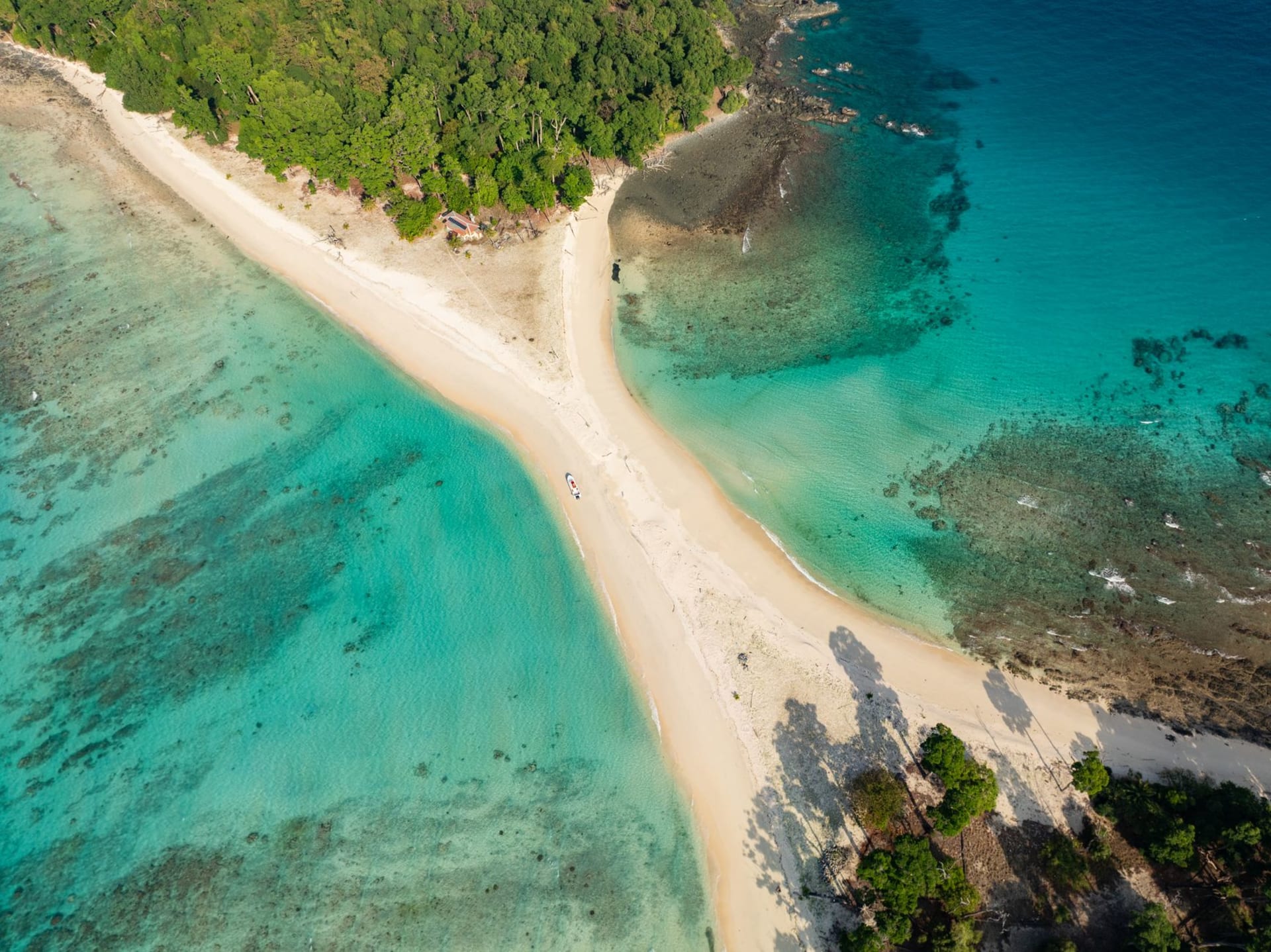
Cinque Island
"The reef at Cinque exists in a different category of beauty from most things I have seen underwater."
Cinque Island is two islands that share a name and, at low tide, a sandbar. North Cinque and South Cinque, sitting about forty kilometers south of Port Blair, are connected by this narrow white causeway that appears and disappears with the tide like a theatrical reveal, and the whole formation — seen from the air in photographs, or from the water on the day-trip boat as you approach — looks precisely like something from a map in a children’s book. The kind of islands you draw before you’ve been to an actual island. Except the children’s-book quality is accurate. This is genuinely what they look like.
Nobody lives on Cinque Island. The reserve status that protects it means day trips from Port Blair with licensed operators are the only access, and the permits are limited, which is why arriving here in the morning with eight or nine other people feels like an uncommon privilege. A dive guide named Suresh who had been running these trips for eleven years told me that Cinque is what he shows guests who are already experienced divers, who have already done the Havelock sites, who need to understand what the Andamans are capable of at their best. I asked him what he meant. He said: wait.
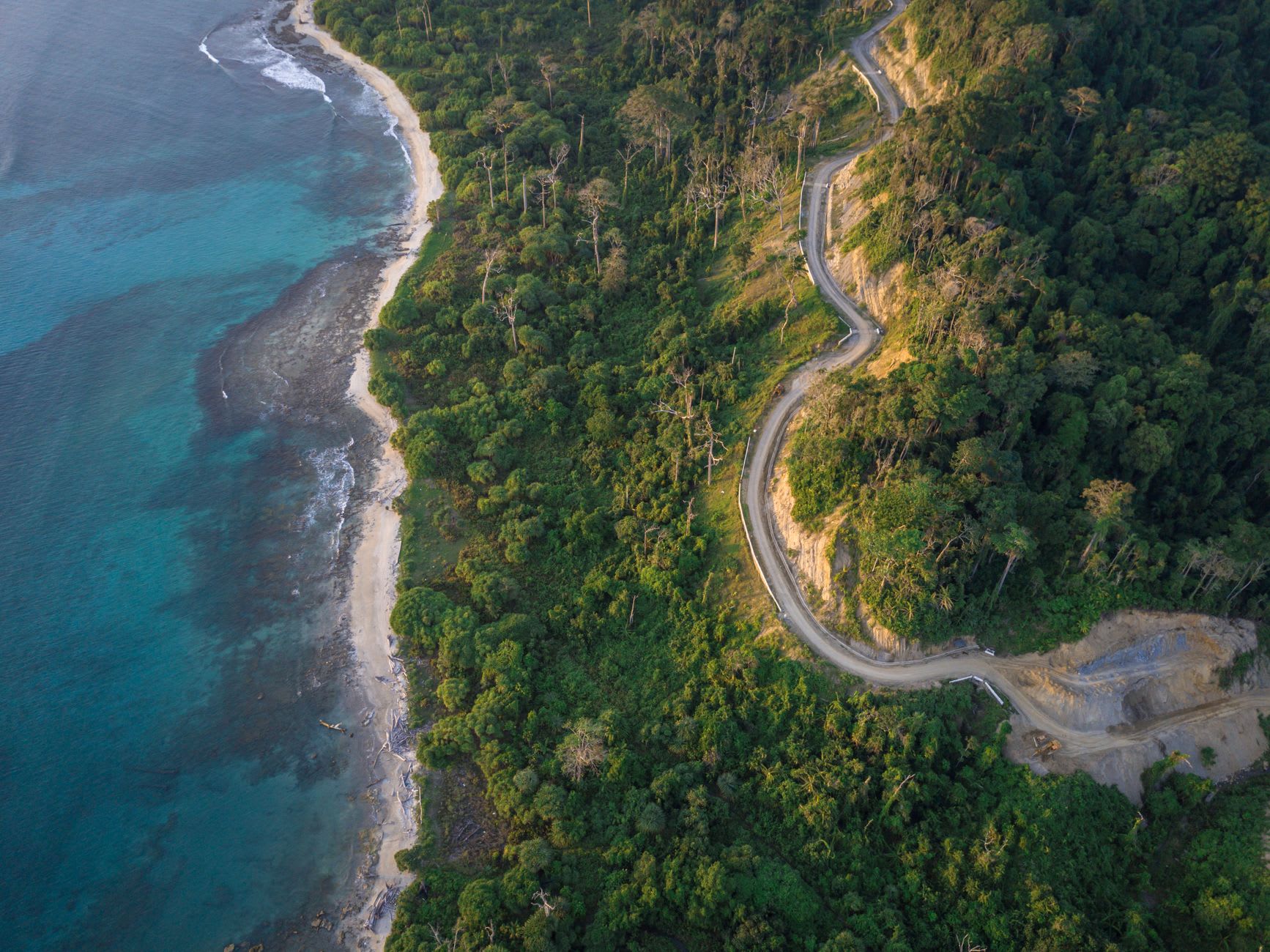
The reef on the eastern side of South Cinque drops from about six meters to beyond thirty in a series of ledges and walls that are covered — genuinely covered, not spotted with — hard and soft coral in a density I have seen equaled only once before, on a wall in the Banda Sea in eastern Indonesia. There were turtles on every dive: a hawksbill working through the coral slowly, a green turtle parked under a ledge who regarded us with the expression of someone who had been interrupted. The fish life is the kind that takes inventory to describe — Napoleon wrasse, schools of fusiliers in silver-blue clouds, a nurse shark immobile on the sand at eighteen meters, bluespotted ribbontail rays on the sandy bottom between coral heads. On the surface interval I sat on the sandbar in six inches of water, the tide having covered it to ankle depth, and watched a frigatebird circle overhead. The light was extraordinary: flat, white, refracting off the water in all directions.
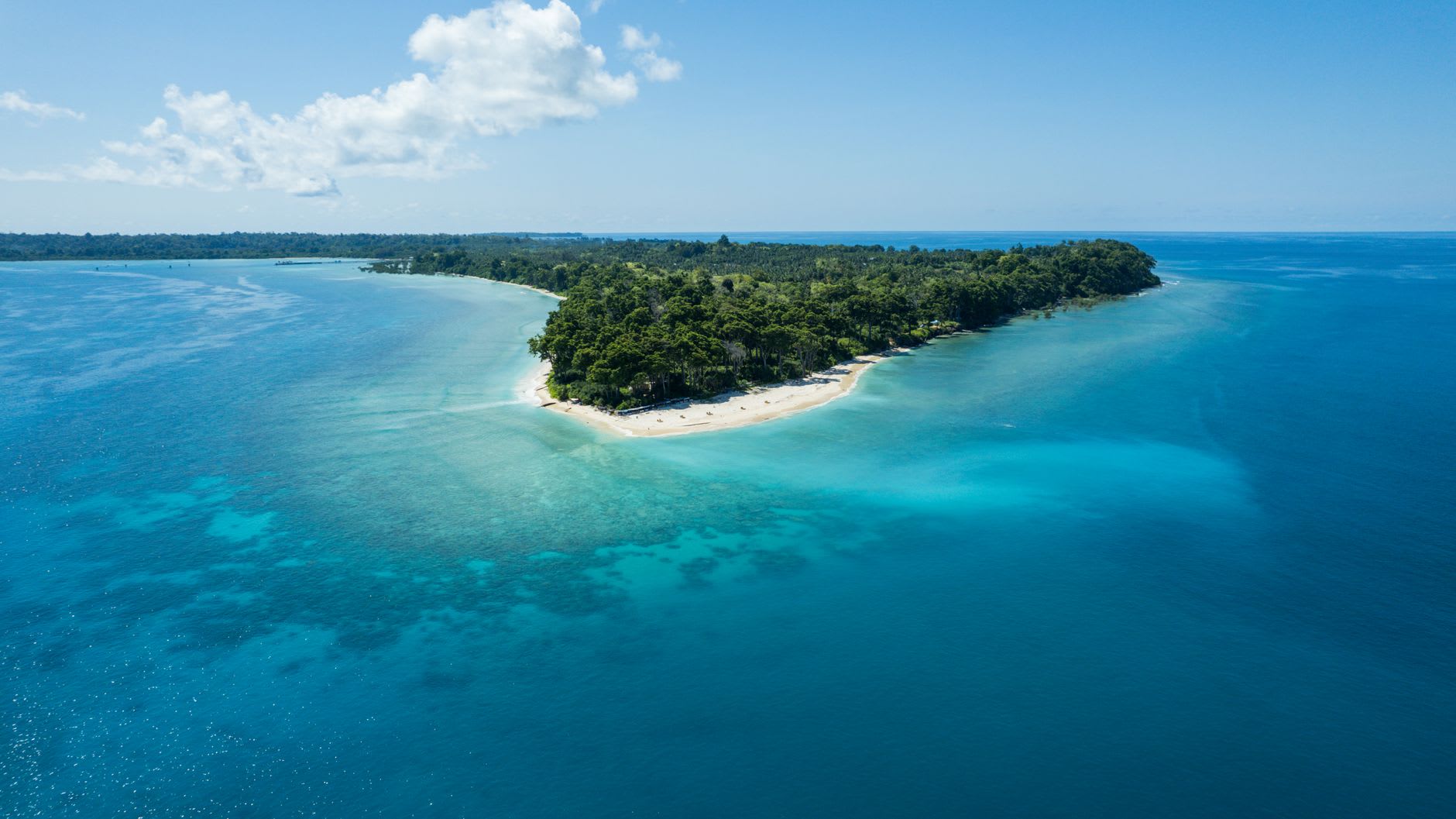
The day trip format means you are back in Port Blair by late afternoon, which creates a compressed intensity — you get perhaps three dives and then the ride back through increasingly heavy chop as the afternoon wind builds. The boat is usually a wooden fishing vessel with bench seating and a tarpaulin for shade, and the crew brings chai in thermos flasks and a lunch of rice and dal eaten off aluminum plates. It is not glamorous. None of that matters. What you have seen underwater will occupy your thoughts for days, and the chai on the return crossing, heading back into Port Blair’s harbor as the sky turns orange, tastes like the best tea you have ever had.
When to go: October through April, with the best visibility from December through February when the sea is at its calmest and the water clarity is consistently exceptional. Trips are weather-dependent and can be cancelled if the sea state is too rough for the day-boat crossing — factor a buffer day in your schedule if Cinque is a priority.