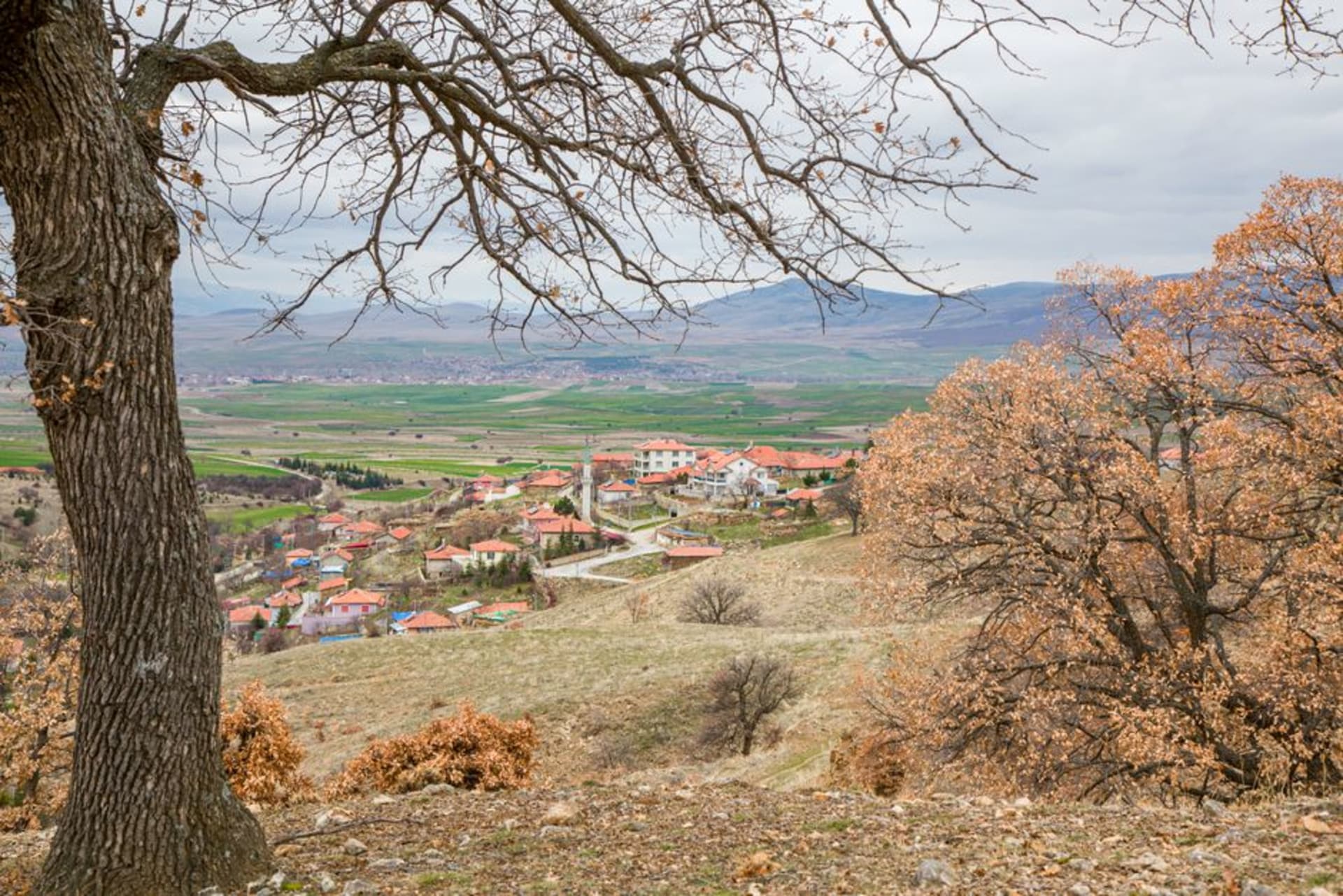
Mustafapaşa
"The people who carved these facades were forced out in 1923. The facades stayed exactly where they were."
A former Greek Orthodox village whose ornately carved stone mansions and churches survived the 1923 population exchange even after the people who built them didn't.
Mustafapaşa was called Sinasos until 1924, and the change of name marks one of the twentieth century’s less-discussed cruelties: the compulsory population exchange between Greece and Turkey, which forced tens of thousands of Anatolian Greeks to leave villages their families had lived in for generations, in exchange for Muslims leaving Greece in the opposite direction. Sinasos had been a wealthy, cosmopolitan Greek Orthodox town — its merchants had made money abroad and sent it home to build ornately decorated stone mansions, carved with neoclassical flourishes, mythological reliefs, and Orthodox motifs that have nothing to do with the plainer Anatolian villages around it. When the Greek population left in 1923, the buildings simply stayed, and Muslim families from Kastoria and Kozani in Greece moved into houses built by people they’d never meet, for a life that wasn’t theirs to begin with.
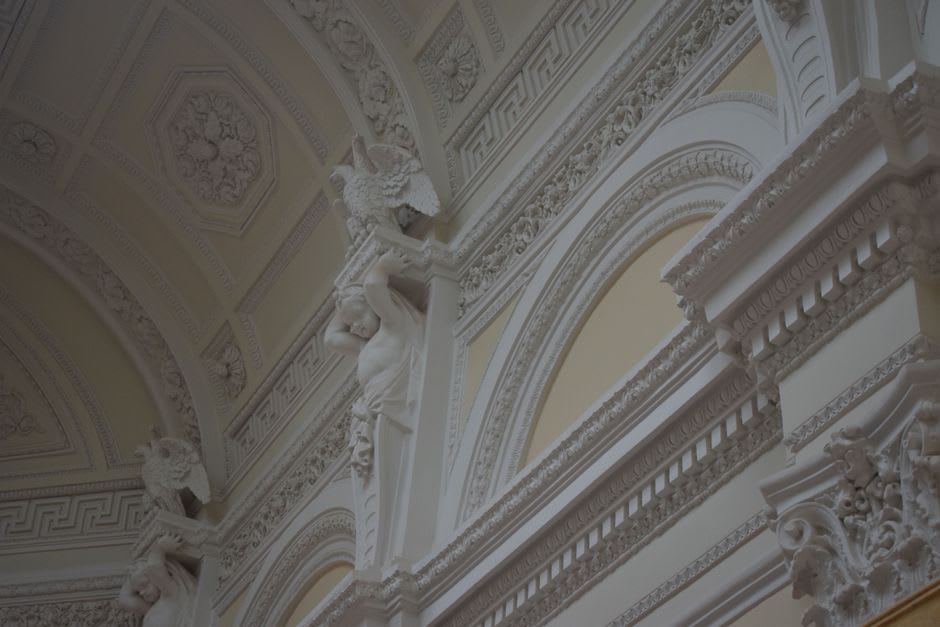
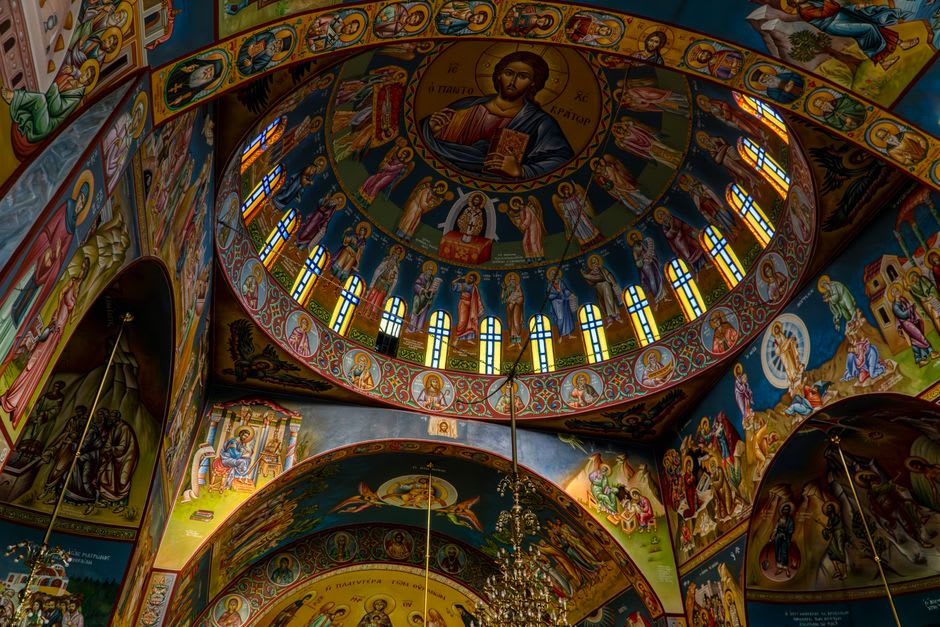
Walking through town today, that layered history is written directly onto the walls. I found stone facades carved with grapevines, rosettes, and human figures — unusual in a region that’s mostly Islamic and mostly aniconic — alongside a former Greek church, the Church of Constantine and Helen, still standing with its frescoes intact enough to make out saints and biblical scenes despite decades of the building serving other purposes after the exchange. A caretaker let me in for a small donation and pointed out where damage had been done and where it hadn’t, matter-of-factly, the way someone describes weather rather than tragedy — this is simply what the building’s history looks like now.
The town today is quiet, low-key, and largely overlooked by the Göreme-Ürgüp circuit twenty minutes away, which means you can wander the old Greek quarter’s narrow lanes largely alone. A handful of the old mansions have been converted into boutique guesthouses, careful to preserve the carved stonework, and I had coffee in the courtyard of one, built around 1900 by a Greek trader, now run by a Turkish family who’d bought it decades ago and clearly loved the building enough to keep its bones intact. It’s a strange, quietly moving kind of preservation — a village that kept the architecture of the people history displaced, whether or not it meant to.
When to go: Spring or autumn afternoons, when the light on the carved stone facades is best and the village is at its quietest. Pair it with a Ürgüp visit since it’s a short drive away and rarely gets its own full day from most itineraries.