Middle East
Anatolian Plateau
"Standing at the centre of Anatolia, you feel the weight of ten thousand years of crossroads."
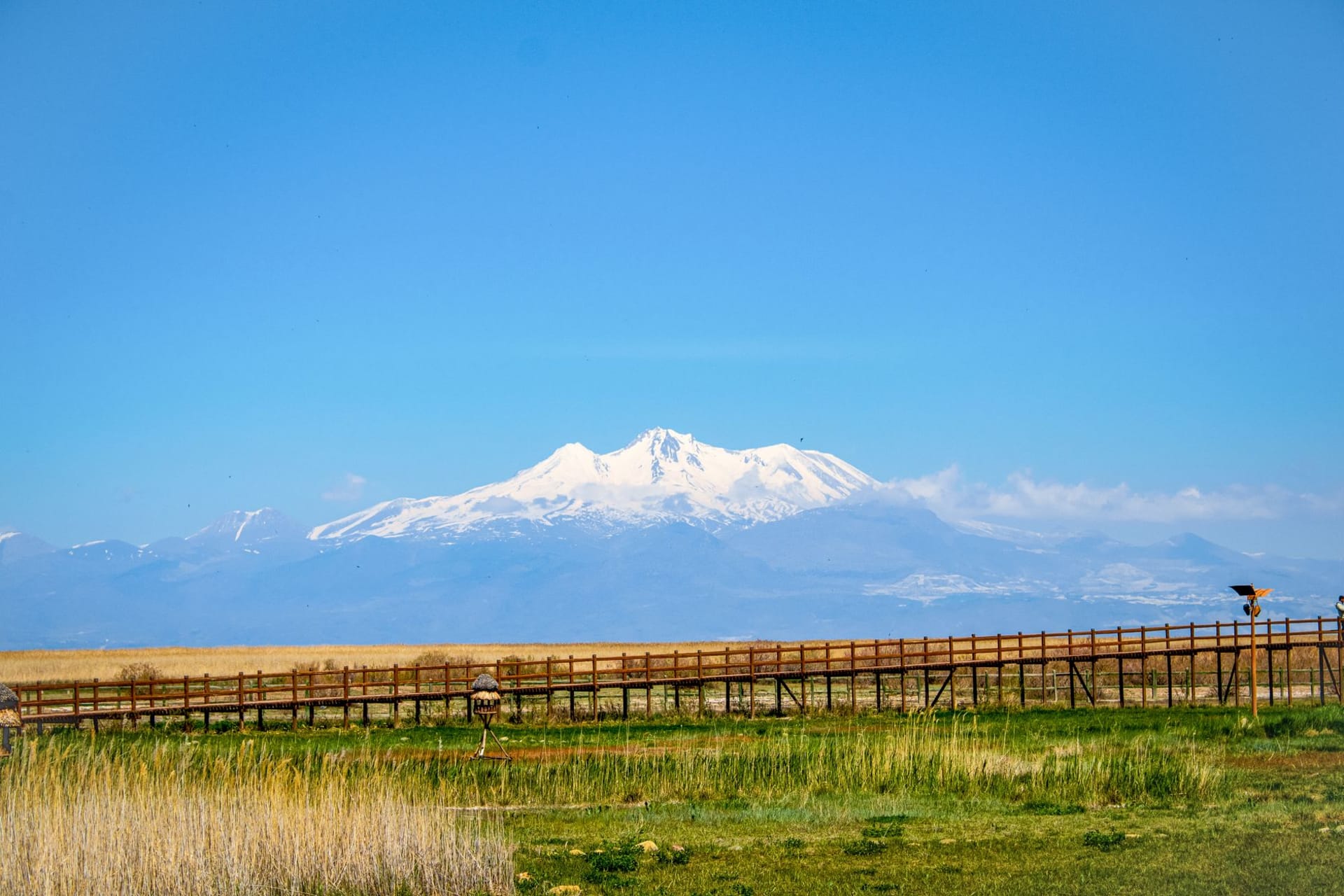
The bus from Ankara dropped me at Kayseri in the early morning, before the city had fully woken up. I stepped out into cold, thin air and looked south — and there was Erciyes, a perfect volcanic cone with a skim of snow, floating above the flat steppe like something placed there deliberately. Nobody had told me the plateau was this stark, this geometric, this quietly overwhelming. Every guide I’d read was fixated on Cappadocia’s fairy chimneys twenty minutes down the road, and I understood why — but that first glance at the open plateau told me I’d be spending a lot of time somewhere most visitors drive straight through.
The Anatolian Plateau sits at around 1,000 metres and covers the heart of the country like a dinner plate. It’s semi-arid, wind-scoured, and in summer it can hit 40°C without shade for kilometres. What it offers in exchange is a specific kind of immensity that I hadn’t felt since the high plains of Zacatecas: space so honest it makes you recalibrate. I ate testi kebabı in Avanos — clay-pot lamb that the server cracked open at the table with a small hammer — and spent an afternoon at Tuz Gölü, the great salt lake that goes blinding white and mirror-flat in late summer. Walking on its surface felt like stepping onto an overexposed photograph. I kept checking my shoes to make sure I was still moving.
The towns are unglamorous and I mean that as a compliment. Konya has the Mevlâna Museum, the shrine of Rumi, which draws pilgrims from across the Islamic world and is one of the more emotionally serious rooms I’ve stood in. Aksaray guards the entrance to the Ihlara Valley, where early Christian monks carved chapels directly into the canyon walls above a river lined with poplars. The Sultanhanı caravanserai outside Aksaray is the largest in Anatolia — an 800-year-old relay station for the Silk Road — and on the afternoon I visited, I had the entire courtyard to myself. A stork was nesting in one of the towers. The plateau does that: hands you something extraordinary in total silence.
When to go: Late April to early June or September to October. Summer is brutally hot and the salt lake is at its most spectacular in August, but you’ll want a hat and a lot of water. Spring brings wildflowers to the steppe and Erciyes is skiable through March if you want something genuinely unexpected.
What most guides get wrong: They treat the plateau as a transit zone between Istanbul and Cappadocia and write only about the fairy chimneys. The chimneys are real and worth it, but the plateau itself — the salt lakes, the Sultanhanı caravanserai, the Ihlara Valley, the volcanic landscape around Erciyes — is the destination. Budget at least three days in the plateau proper before you let Göreme swallow you whole.