Ihlara Valley
"You descend five hundred steps into the Ihlara gorge and the world goes from dust to water to the smell of poplars."
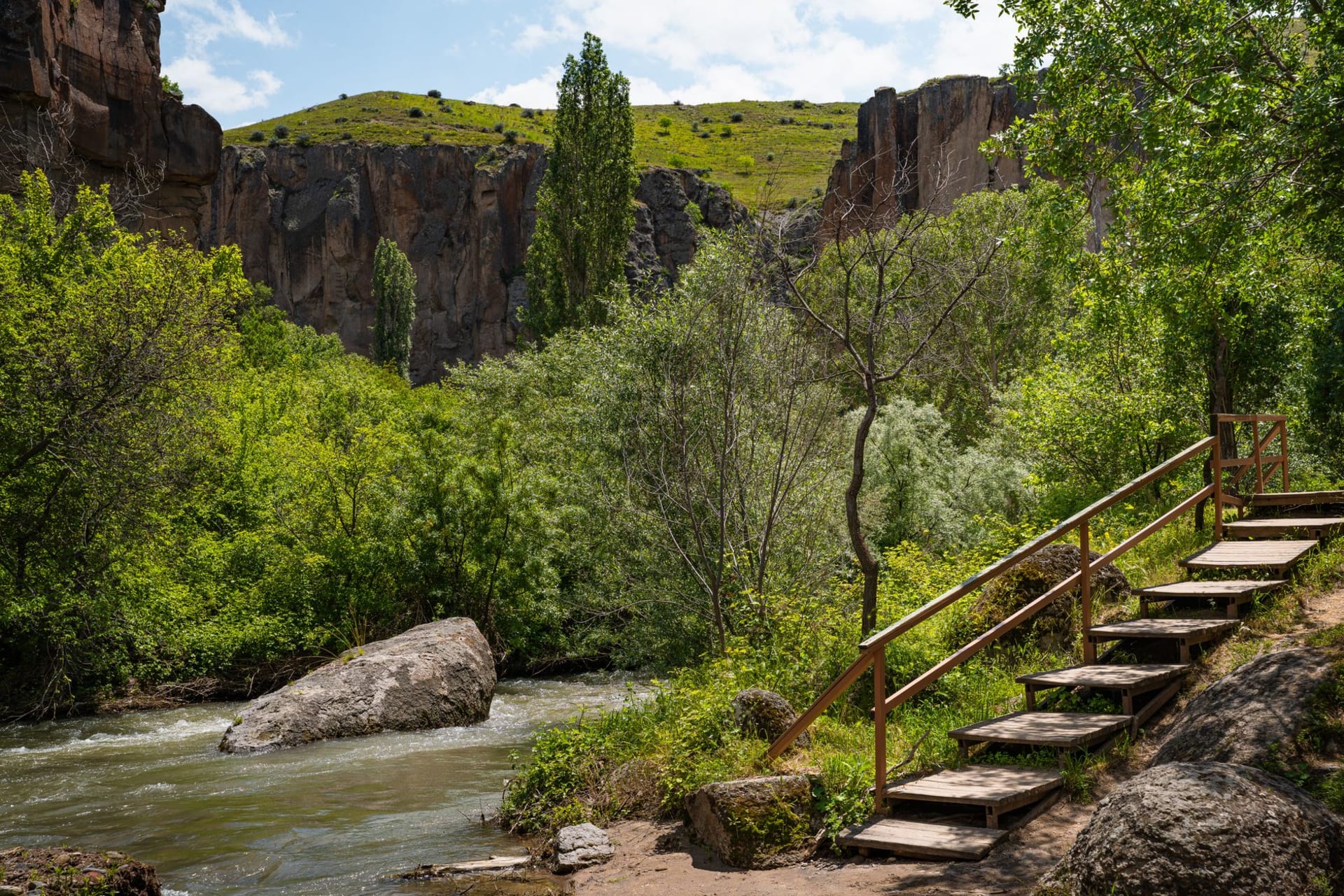
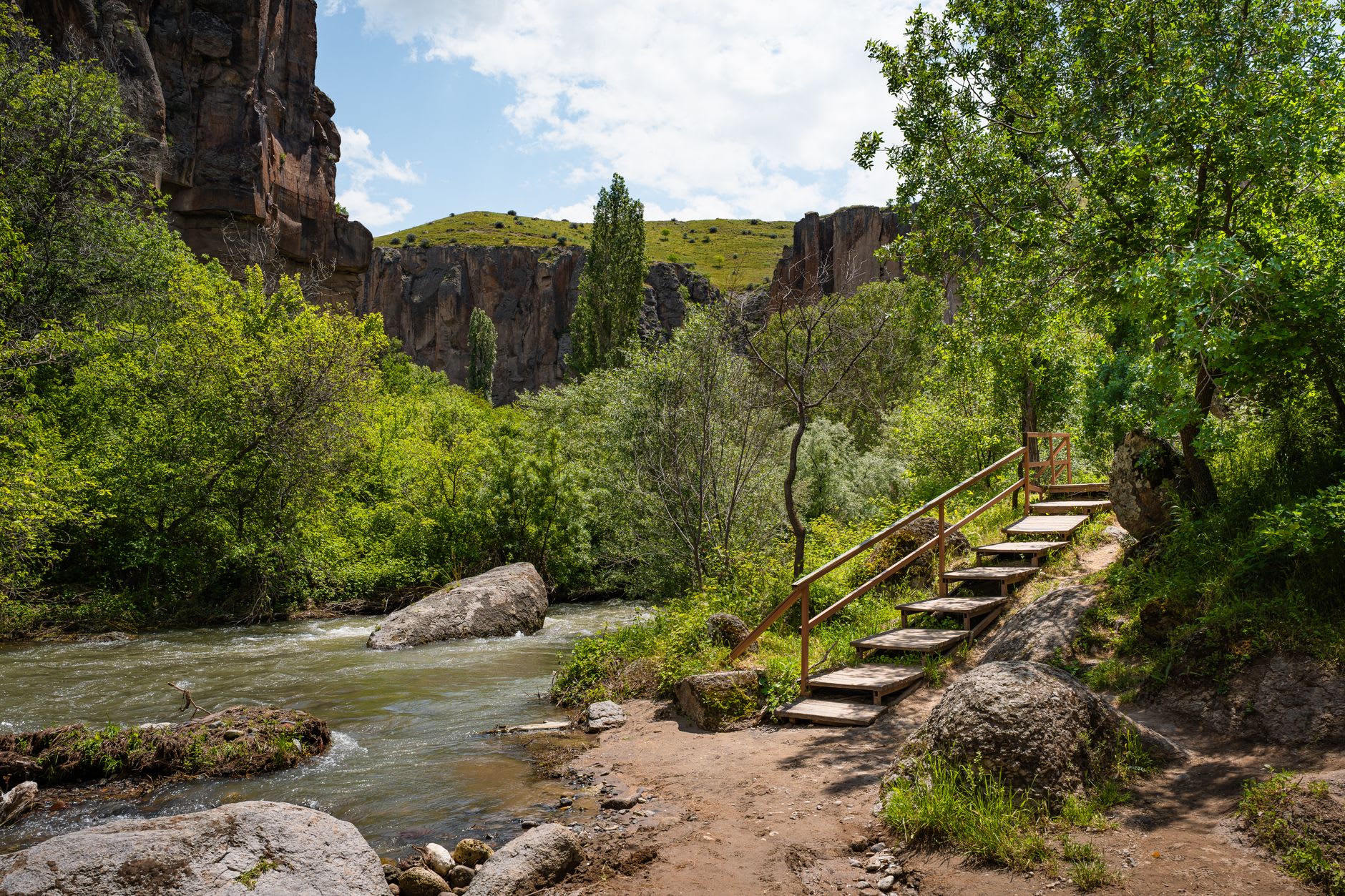
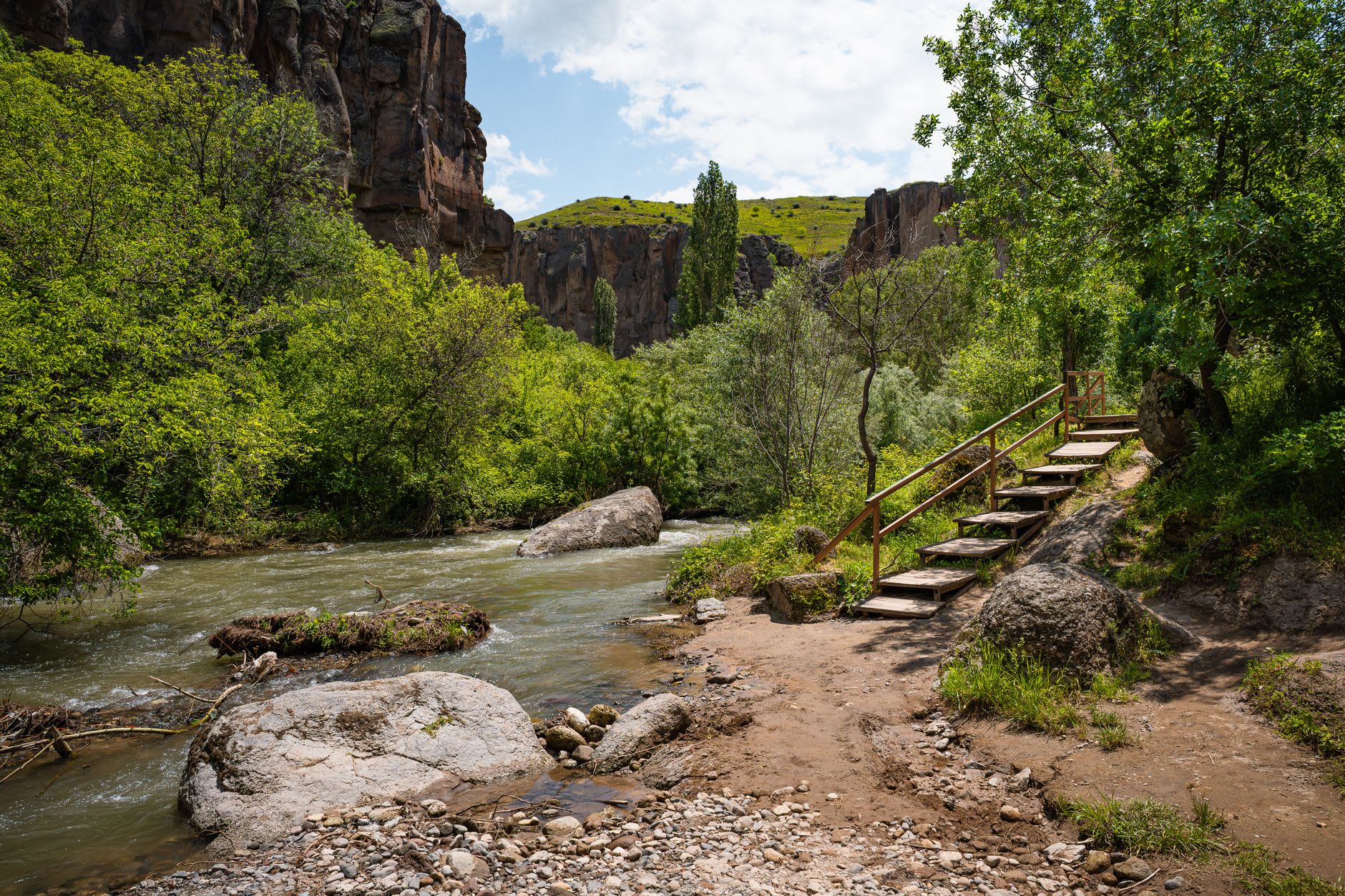
The plateau offers you almost no warning. You drive through forty kilometres of flat, tawny steppe — wheat fields, occasional farmsteads, the big sky doing what big skies do — and then the ground splits open. The Ihlara Valley drops fourteen kilometres through the plateau, a canyon cut by the Melendiz River to a depth that swallows the sun by mid-afternoon. I walked down the tourist staircase cut into the cliff face, five hundred steps, and with each descent the temperature dropped and the smell changed: from dry grass and diesel to cold water and the distinct sweetness of poplars in full leaf. At the bottom, I genuinely stopped walking for a moment. It felt like a different country.
The valley holds more than a hundred Byzantine rock-cut churches, carved by early Christian communities between roughly the 9th and 11th centuries, when this cleft in the plateau offered both shelter and seclusion. The frescoes inside are remarkable — not for their preservation, which varies from nearly intact to barely legible, but for the intimacy of encountering them inside caves barely large enough to stand in. The Ağaçaltı Church has a Pantocrator in the dome that still holds its red and blue, and the Kokar Church has a Nativity scene where the style is immediately, recognizably Byzantine: the flat perspective, the stylized drapery, the gold ground turning green with age. I had a head torch and spent two hours moving between churches, stepping over threshold stones worn smooth by a thousand years of feet.
The river path between Ihlara village and Selime, the full fourteen kilometres, takes about four hours at a relaxed pace. Restaurants on wooden platforms jut out over the water halfway along — trout, flat bread, ayran in metal cups — and the temptation to stop for an hour is real and worth giving into. I sat over the water as a kingfisher crossed the river three times in five minutes, each pass a flash of cobalt and rust.
At the northern end of the gorge, Selime Monastery is the valley’s final act — a complex so large it is more village than church, carved into a cliff face that rises fifty metres above the valley floor. Rooms connect to rooms connect to corridors connect to chapels. It is the most architecturally ambitious of all the valley’s rock-cut structures, and standing in the main hall, looking up through a hole in the roof at a sky that had gone deep blue in the late afternoon, I felt something close to vertigo — not physical, but temporal. People lived here. Made bread here, maybe. Sang in the carved chapel. Then left, and the valley sealed itself back into silence.
When to go: April through June is ideal — the river is full, the poplars are green, and the light in the canyon is golden in the morning and long in the evening. October is also beautiful. Avoid July and August if you can; the canyon traps heat, and the tourist flow peaks badly around midday.