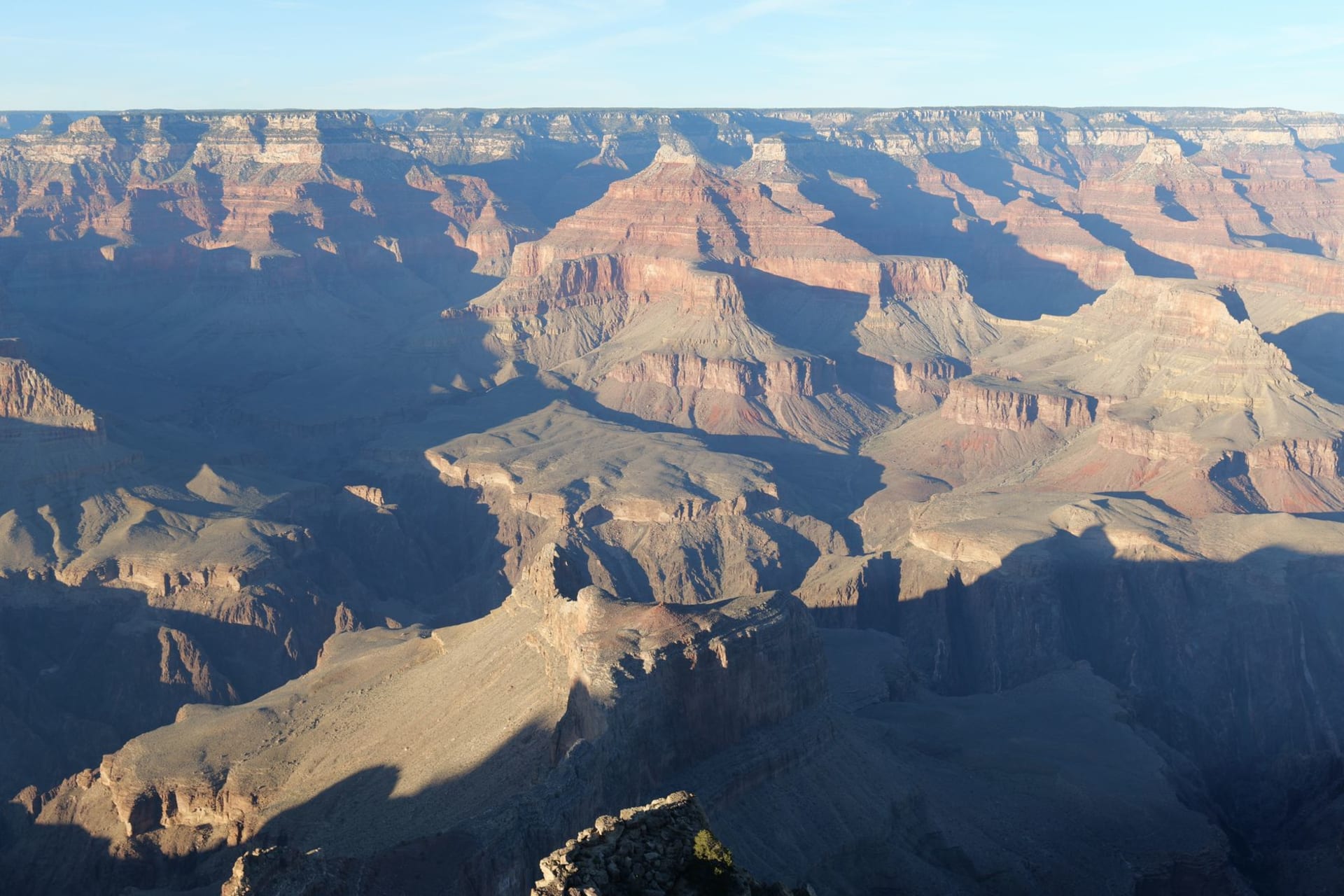
Grand Canyon South Rim
"Every superlative you've ever heard about this place is simultaneously accurate and completely insufficient."
I want to tell you that the Grand Canyon disappointed me — that it looked like the photographs, that the crowds diluted it, that familiarity had pre-emptied the awe. But I’d be lying. I walked to the rim at Mather Point in the pale hour before sunrise, with the temperature somewhere around zero and my breath visible in the dark, and when the light came up and the canyon revealed itself in layers — the Kaibab limestone at my feet, the Toroweap sandstone below it, the Hermit shale, the Supai Group, color by color down through the history of the planet — I sat down on a cold flat rock and didn’t move for forty minutes. The canyon is not a view. It is a time machine.
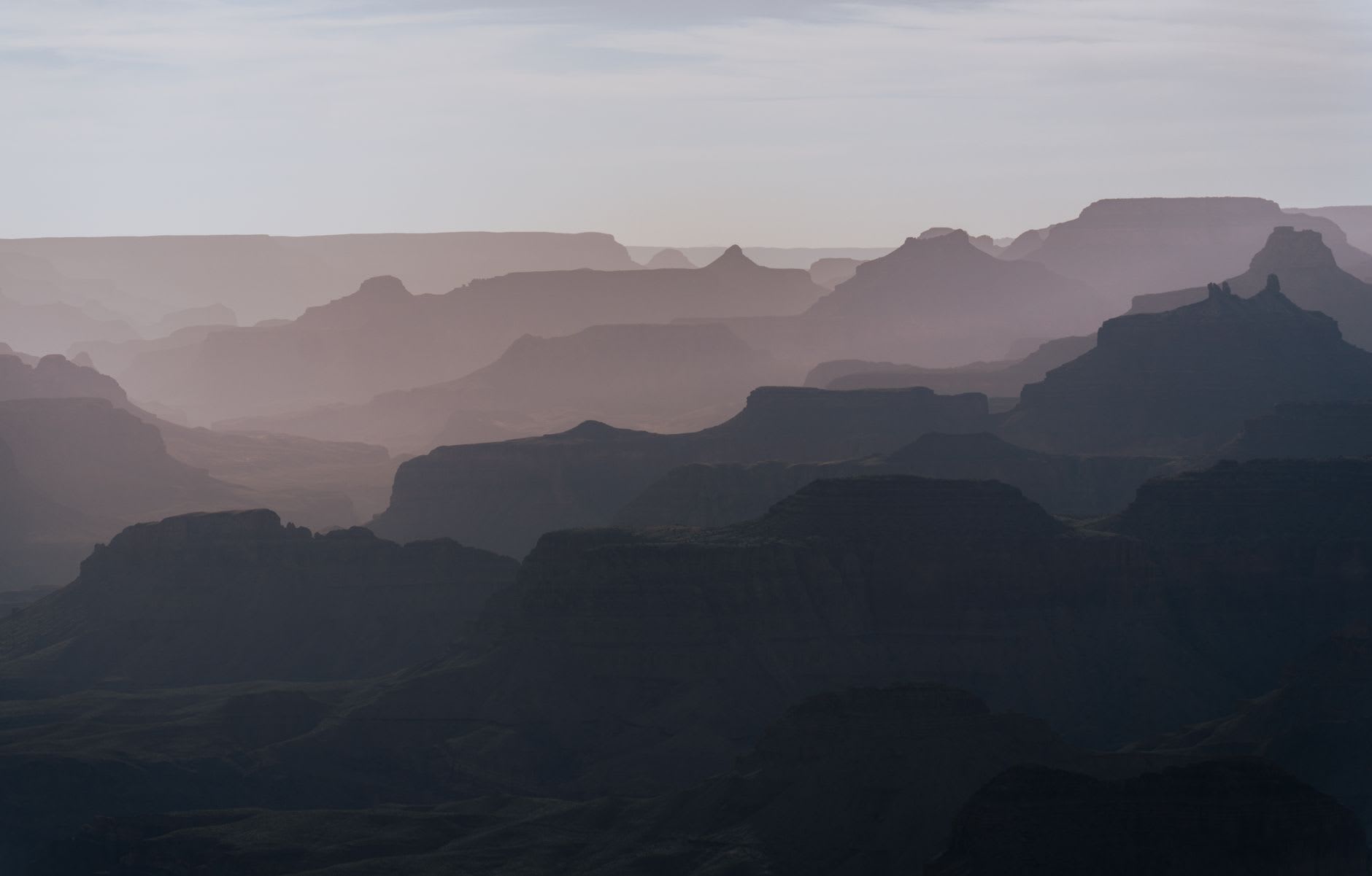
The South Rim is the accessible rim, the developed rim, and I won’t pretend otherwise. The shuttles run on schedule. The gift shops are stocked. There is a coffee cart at the visitor center. None of this erases the canyon. What it does is make the early morning hours, before the day’s first tour buses arrive, feel like a genuine act of discovery. I hiked the first two miles of the Bright Angel Trail on a morning in October, down past the first tunnel where the stone walls rose close on both sides and the canyon opened below me in sections, each switchback revealing a new layer of depth. I turned back before the heat built. That was the correct decision, but the two miles I walked were worth every step.
The condors are a detail no photograph quite captures: enormous birds with nine-foot wingspans riding thermals above the canyon, close enough sometimes to see the numbered tags on their wings. They nearly went extinct in the 1980s — the last wild ones were captured for a captive breeding program — and watching one circle above the rim while tourists photograph it with their phones, I felt the complicated pleasure of a conservation success story playing out in real time.

The rim trail between Mather Point and Hermit’s Rest runs along the canyon’s edge for nine miles of mostly flat walking, with views that change character with every mile. The stretch near Powell Point, in late afternoon, catches the light on the Vishnu Basement Rocks at the canyon floor in a way that makes them look like they’re burning.
When to go: March through May and September through November. October is the finest month — the summer crowds have thinned, the temperature on the rim is mild, and the canyon fills with a particular quality of autumn light that makes the rock colors richer and more varied. Avoid the inner canyon in summer: the temperature at the bottom can exceed 110°F and hikers have died from underestimating it.