Americas
American Southwest
"Standing at the canyon rim, I understood why people move here and never leave."
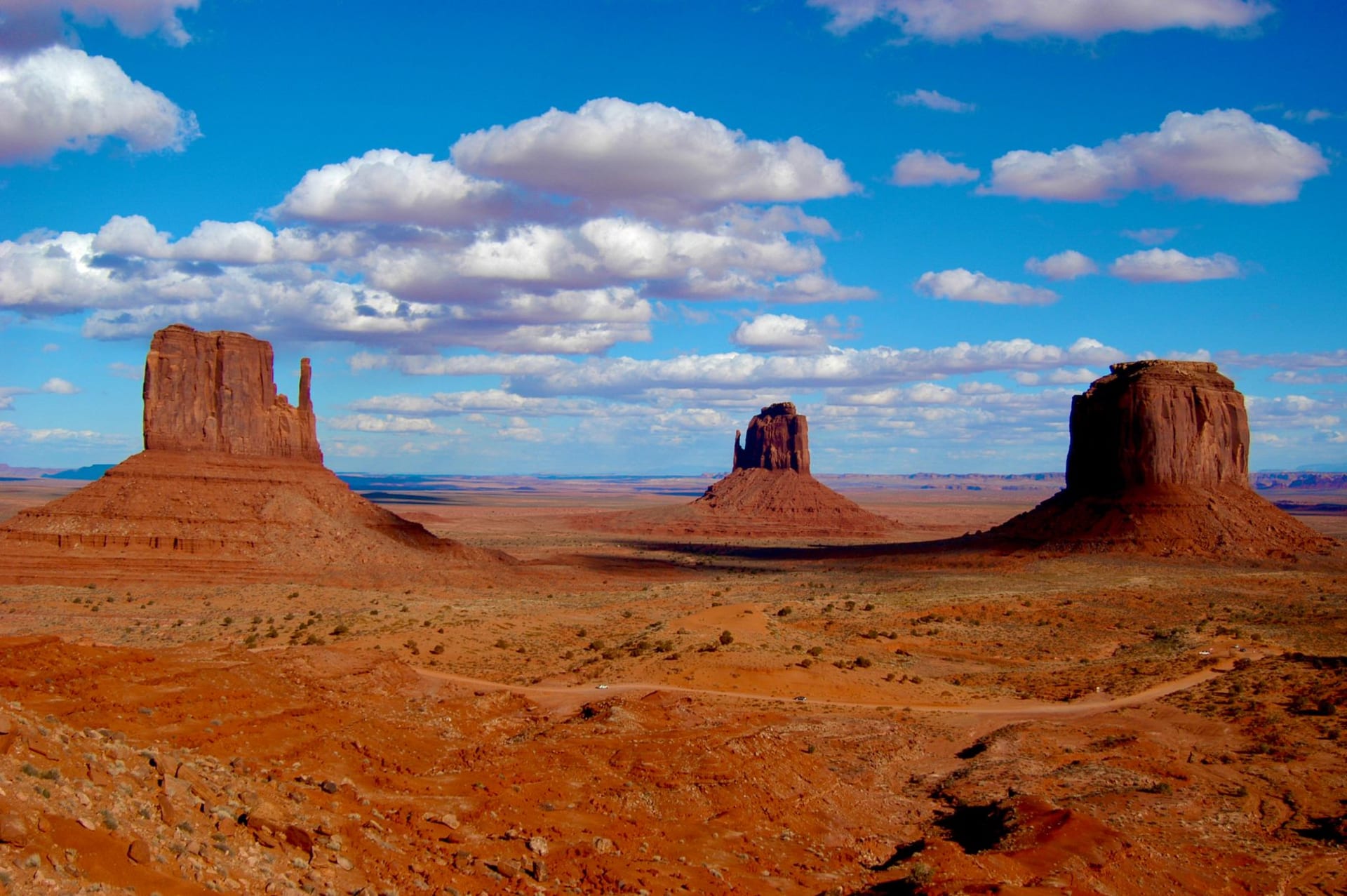
The first time I drove into Monument Valley, I had to pull over. Not because of the buttes — I’d seen enough photographs — but because of the scale. Nothing prepares you for the moment the landscape stops being a backdrop and becomes something you’re actually inside. The road narrows to a thin gray line between two sandstone towers that dwarf everything humans have ever built, and the sky above is so blue it looks photoshopped. I sat on the hood of the rental car and ate a gas station burrito and felt, for the first time in years, genuinely small.
The American Southwest is best understood as four or five distinct worlds stacked inside each other. There’s the canyon country — Zion, Bryce, the Grand Canyon — where erosion has been doing patient, extraordinary work for two hundred million years. Then there’s the high desert of New Mexico, where the light hits adobe walls at dusk and everything goes the color of embers, and the food gets serious: green chile on everything, posole so rich it could qualify as a religious experience, Hatch chiles roasting in wire drums outside every grocery store in September. The Sonoran Desert in Arizona is a third world entirely — saguaro cacti standing thirty feet tall like sentinels, javelinas crossing hiking trails at dawn, the kind of dry heat that feels respectful rather than punishing. And running through all of it, Highway 89 and Route 66 and a dozen unnamed two-lane roads where the only traffic is wind.
What keeps pulling me back is the silence. I live in Mexico City now, where the noise is architectural — it builds around you like a structure. The Southwest offers the opposite: an absence so complete you can hear your own heartbeat. Slot canyons in Utah where the only sound is sand sliding between your boots. The Petrified Forest at closing time when the last tour buses have gone. The desert at 4 a.m., an hour before the canyon fills with tour groups, when the Colorado River sounds like an entire civilization breathing.
When to go: March through May and September through November are the windows that matter. Spring wildflowers in the Sonoran Desert peak late February to April depending on winter rains. Avoid July and August in the low desert — the heat is not romantic, it is simply punishing, and the monsoon season brings flash floods that close canyon trails without warning.
What most guides get wrong: They treat the national parks as the destination and everything between them as logistics. The between parts are where the Southwest actually lives. The Navajo Nation covers 27,000 square miles and contains some of the most extraordinary landscapes on the continent, most of which require a local guide and none of which appear on the standard itineraries. Santa Fe’s Canyon Road galleries, Tucson’s food scene, the Verde Valley wine country — the Southwest has been quietly building a culture that doesn’t need the Grand Canyon to justify itself.