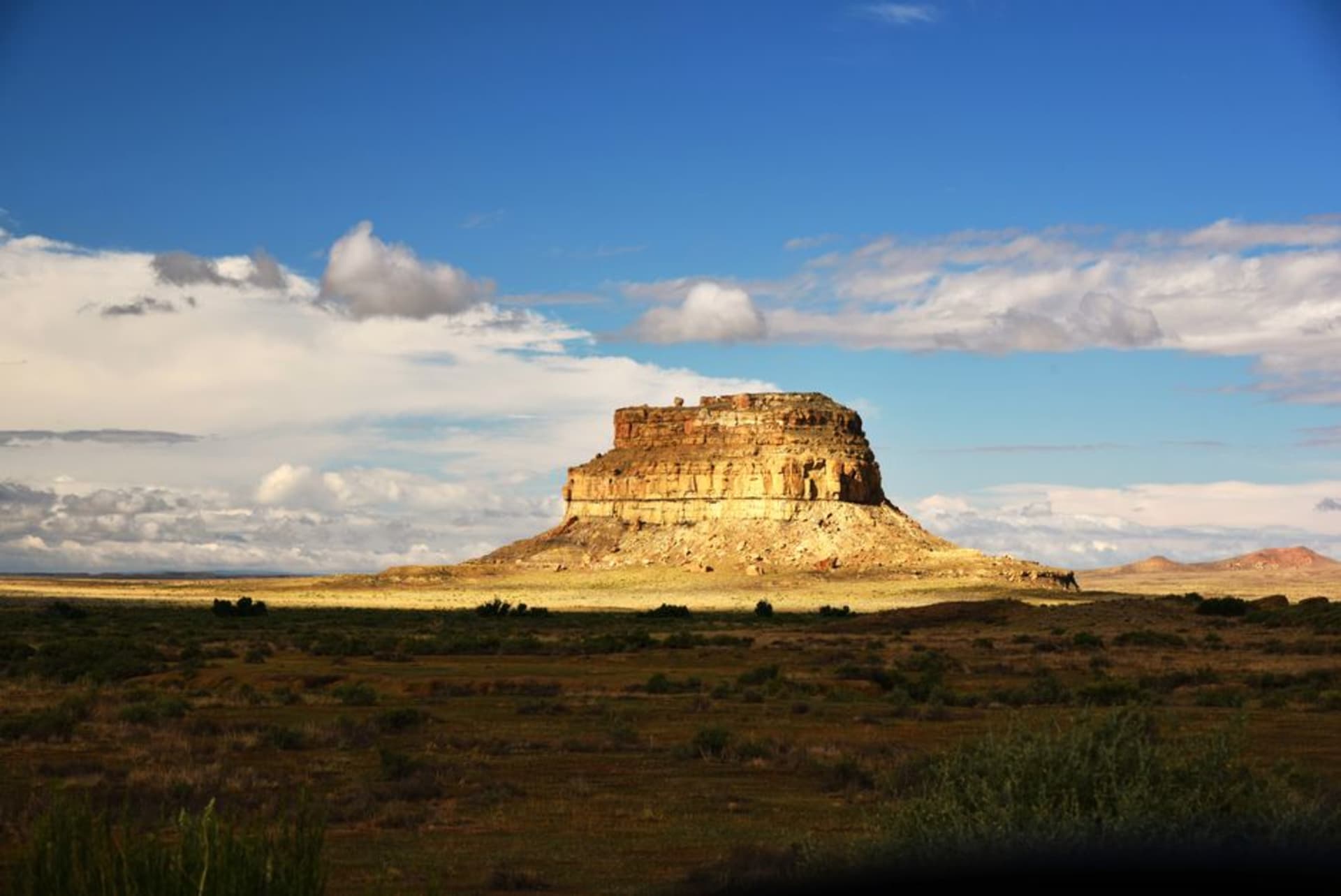
A remote high-desert canyon where thousand-year-old great houses still align with the sun and moon in eerie precision.
We almost turned back twice on the road into Chaco. Twenty-some miles of washboard dirt, the rental car rattling like it wanted a divorce, Lia gripping the door handle and asking, only half joking, if this was really worth it. Then the canyon opened up, low and wide under an enormous sky, and I understood why nobody paved that road on purpose. Chaco doesn’t want to be easy to reach. It’s one of the most remote national parks in the country, and that isolation is exactly what preserved it.
Pueblo Bonito is the reason most people make the drive, and it earns every mile. Standing in what’s left of its plaza, I tried to picture it whole: four stories tall in places, more than 600 rooms, built between roughly 850 and 1250 CE by people who had no draft animals and no metal tools. Just sandstone, timber hauled from mountains dozens of miles away, and an almost unbelievable amount of coordinated labor. I put my hand on one of the core-and-veneer walls and Lia pointed out how the stonework changed texture from one century’s construction to the next, like tree rings you could read with your fingers.
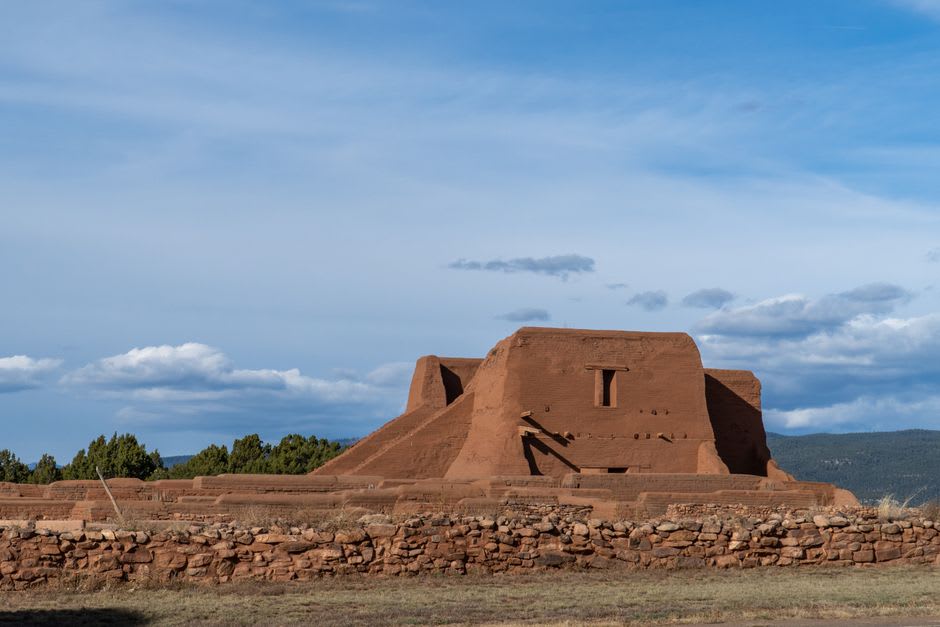
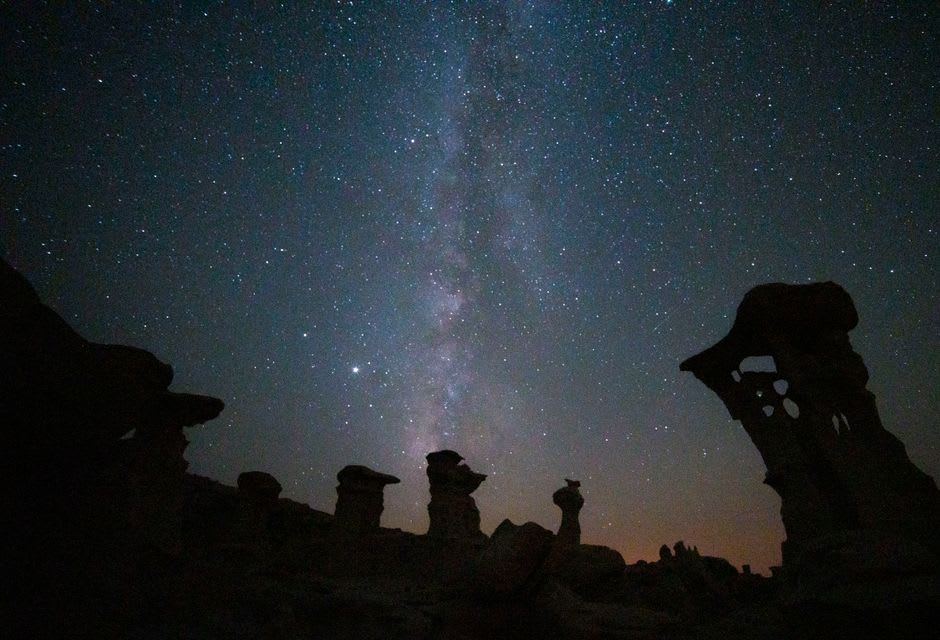
What stayed with me longer than the scale, though, was the astronomy. A park ranger showed us how certain windows and corners at Chaco align with the solstices and the 18.6-year lunar cycle, engineering that has nothing to do with survival and everything to do with watching the sky on purpose, generation after generation. That night we stayed for the stargazing program — Chaco is one of the least light-polluted parks in the US — and lying on a blanket with Lia’s head on my shoulder, the Milky Way came in so thick it looked like weather. I thought about the roads, too: a whole network once radiated out from this canyon, some running arrow-straight for miles, connecting Chaco to communities we still haven’t fully mapped.
We ate cold sandwiches on the tailgate that evening, dust still on our boots, and neither of us said much. UNESCO named Chaco a World Heritage Site in 1987, and standing there it felt less like a label and more like a simple statement of fact — this place is one of a kind, and it knows it.
When to go: We went in early October and were grateful for it — aim for spring (April-May) or fall (September-October) so you avoid the brutal summer heat, and ideally get in after a dry stretch, since that washboard road turns to thick mud after storms and can strand you for a day or more.