
Bryce Canyon
"The hoodoos here are so numerous and so strange that the word 'landscape' starts to feel inadequate."
I arrived at Bryce Canyon in the dark. It was early October and I’d driven up from Zion in the late afternoon, watching the elevation climb from 4,000 feet to over 8,000, the vegetation shifting from desert scrub to ponderosa pine. The entrance fee booth closed at dusk and I pulled through on the honor system, found a pullout near Sunrise Point, and sat in the car eating crackers and waiting. At dawn I walked to the rim. What was below me looked like nothing so much as a city made by a civilization that had given up on right angles — thousands of pink and orange and cream-white spires clustered in an amphitheater half a mile wide and several hundred feet deep, each column a different height, the whole arrangement suggesting intention without any possibility of it.
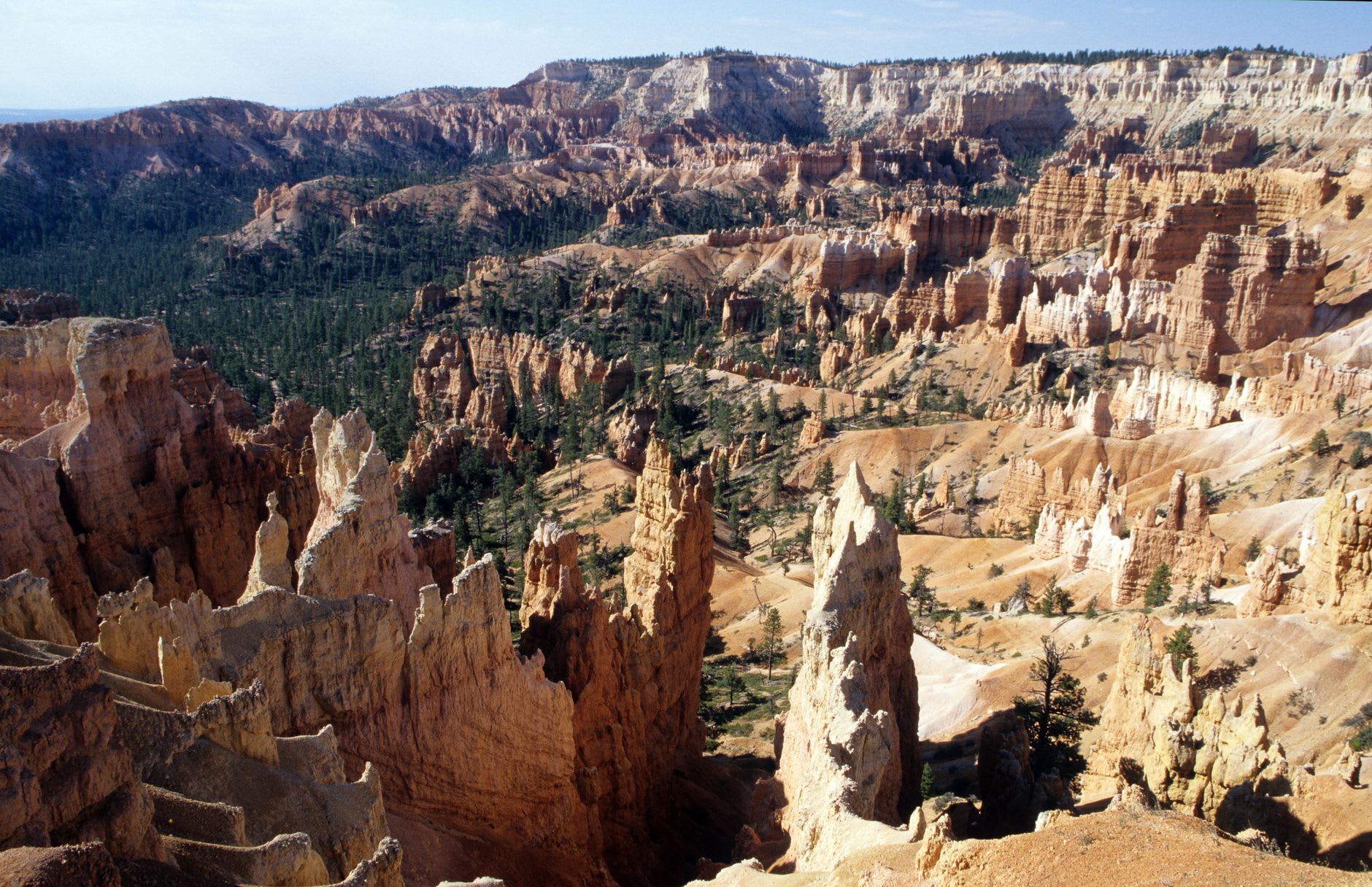
The hoodoos form because a specific sequence of rock layers erodes at different rates. The Claron Formation here — pink limestone, siltstone, and dolomite deposited 50 million years ago — erodes more slowly at its cap than its base, leaving columns whose tips resist while their bodies narrow. I learned all this from the interpretive signs, but the geological explanation doesn’t diminish the strangeness. If anything it sharpens it: these things exist purely because of differential erosion acting over incomprehensible spans of time, and they look like this.
The Queen’s Garden trail drops below the rim into the amphitheater and threads between the hoodoos at ground level, which is where Bryce becomes genuinely surreal. Standing between two spires that rise forty feet on either side of you, the sky reduced to a blue stripe above, the red and orange rock close enough to touch and already warm from the morning sun, is an experience that photographs don’t quite transmit. The trail connects to the Navajo Loop trail for a two-mile circuit that passes through the Wall Street slot canyon — a narrow ravine where Douglas firs grow from the canyon floor reaching for light — and I did it twice.
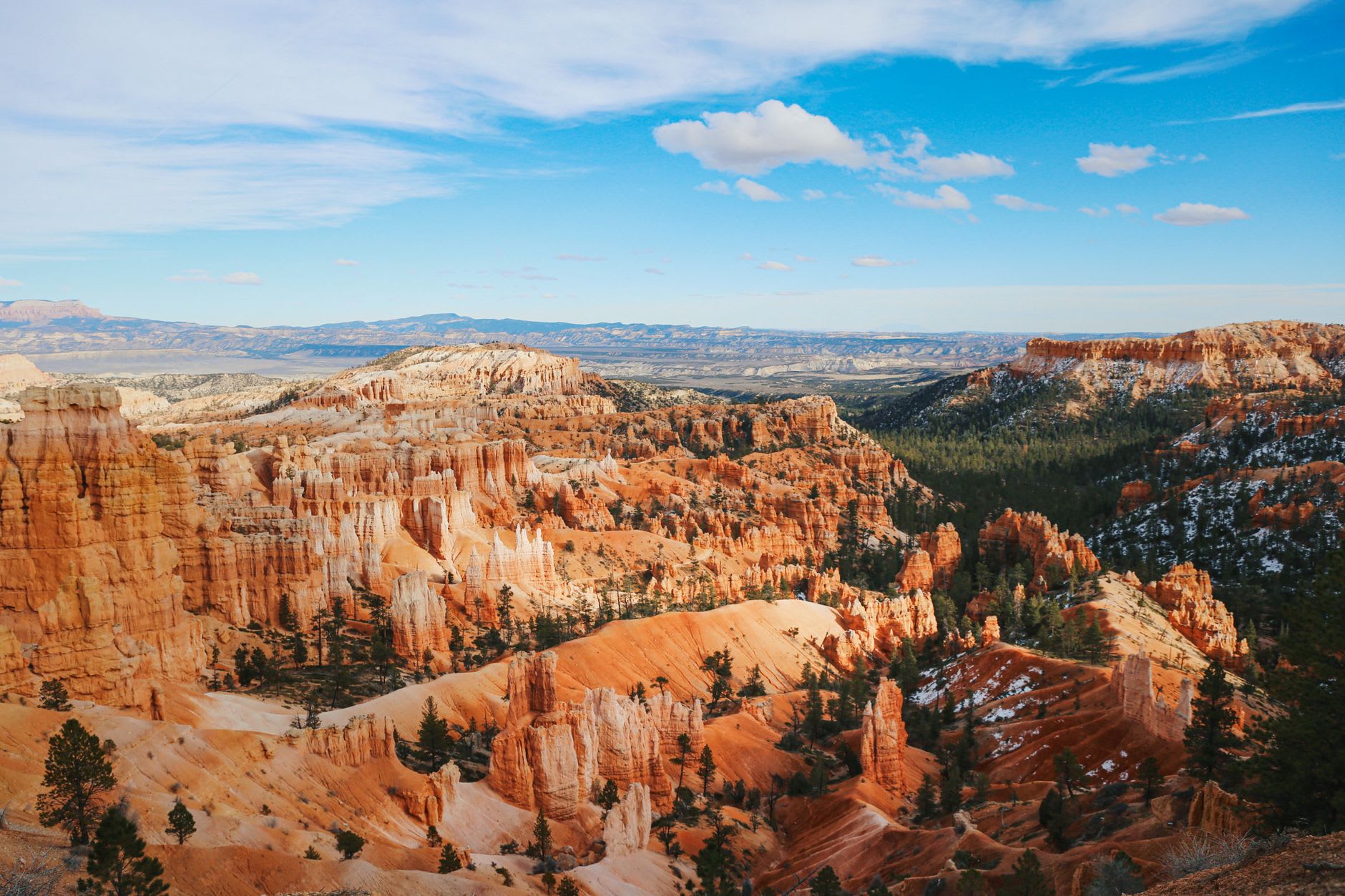
Because of its elevation, Bryce Canyon has genuine winters — snowfall that dusts the hoodoos white and turns the amphitheater into something from a different planet entirely. I’ve seen photographs taken in January of the pink spires above a fresh snowfield and I intend to go back for that specific image one day.
When to go: September through October for ideal hiking weather, thin crowds, and the particular quality of autumn light that makes the orange and pink rock glow in the late afternoon. May and June are also excellent. The winter months (December through February) offer extraordinary snow-dusted scenery and nearly empty trails if you’re equipped for cold; temperatures at the rim can drop well below freezing at night.