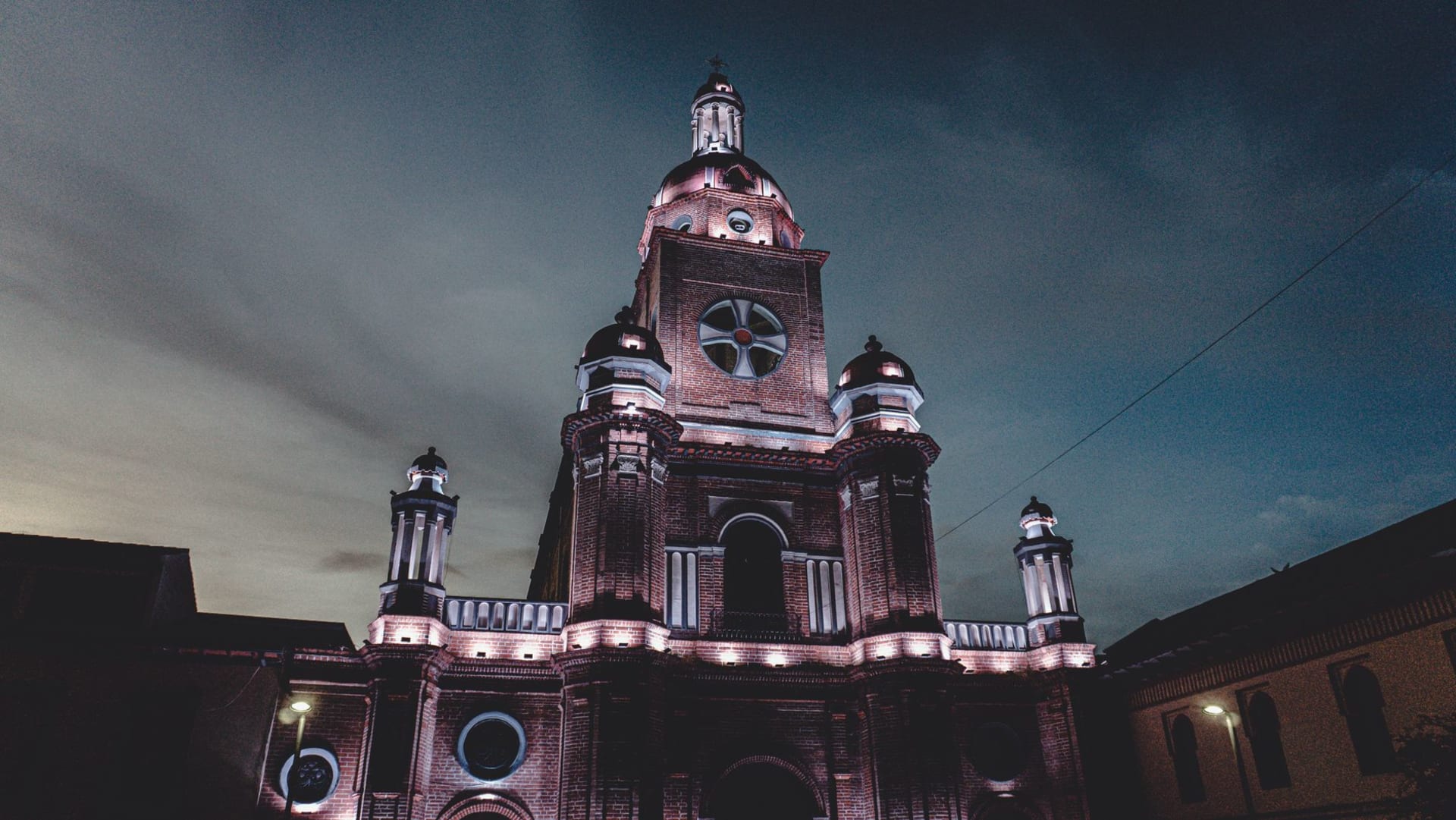
Puerto Nariño
"No cars, no motorcycles, no noise beyond the river and the birds. Someone made this choice on purpose."
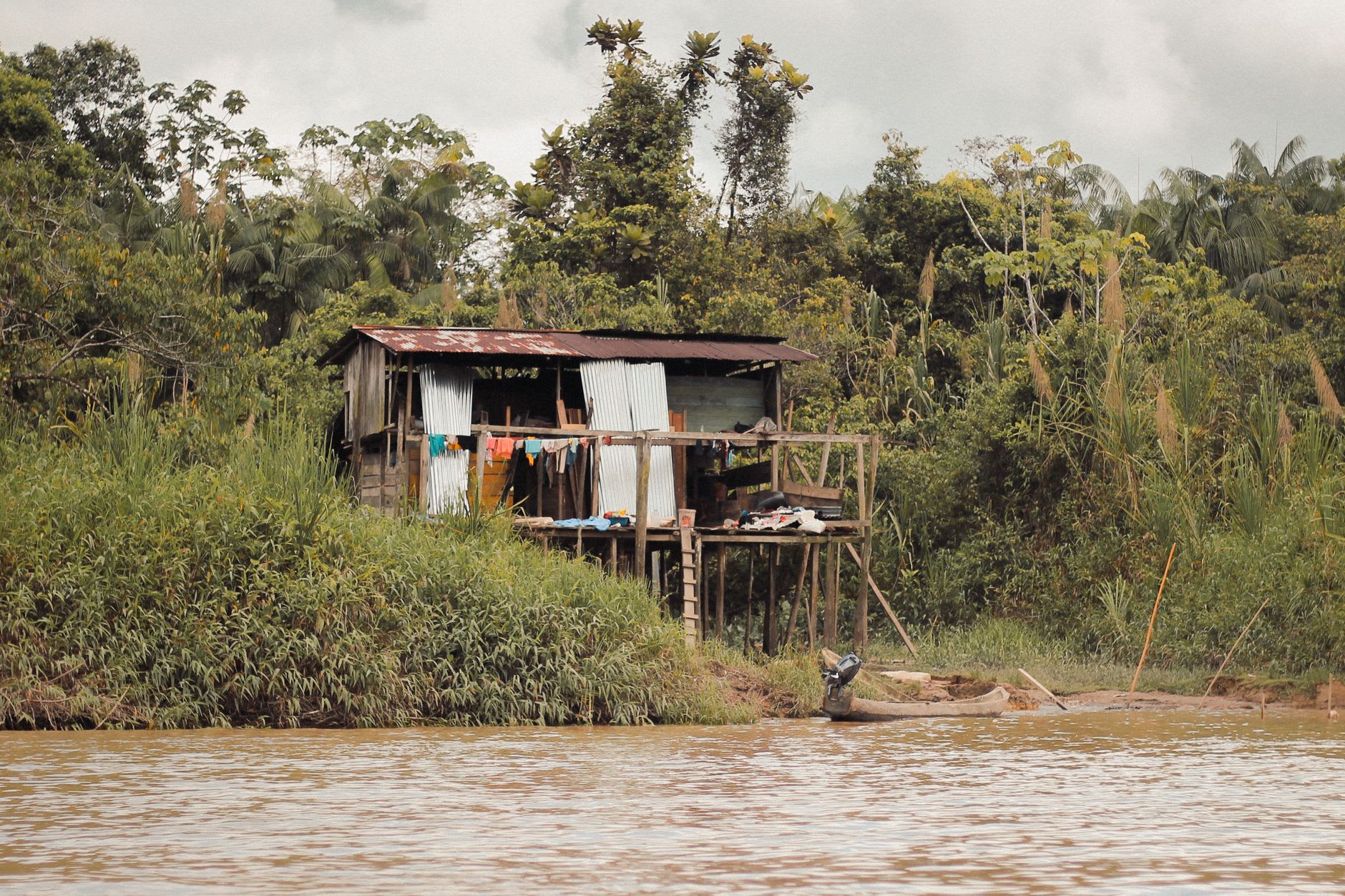
The fast boat from Leticia takes three hours upriver, and Puerto Nariño announces itself quietly — first a water tower, then a cluster of pastel-painted buildings on stilts above the flood line, then a wooden dock where children were fishing with hand lines when I arrived at nine in the morning. There are no cars here. No motorcycles. The community made this decision years ago, and the silence that results is so complete that when you step off the dock, the first thing you notice is birdsong so layered and detailed that it sounds almost architectural — like something that has been composed.
I walked to my lodging along a wooden elevated walkway that runs through the settlement above the mud and roots, following a child who was heading to school with a backpack nearly as large as he was. The walkways are a feature of daily life here, connecting homes and the central plaza and the school and the health post in a network that keeps feet dry during high water season. Puerto Nariño has around six thousand residents, predominantly Tikuna and Cocama indigenous people, and the community structure manages its own nature reserves — monitoring pink dolphin populations, controlling fishing pressure, deciding what kind of development gets permitted. It is governance at human scale, visibly working, and the results show in the water quality and the wildlife density and the fact that the community does not feel like a place that has been managed for tourism.
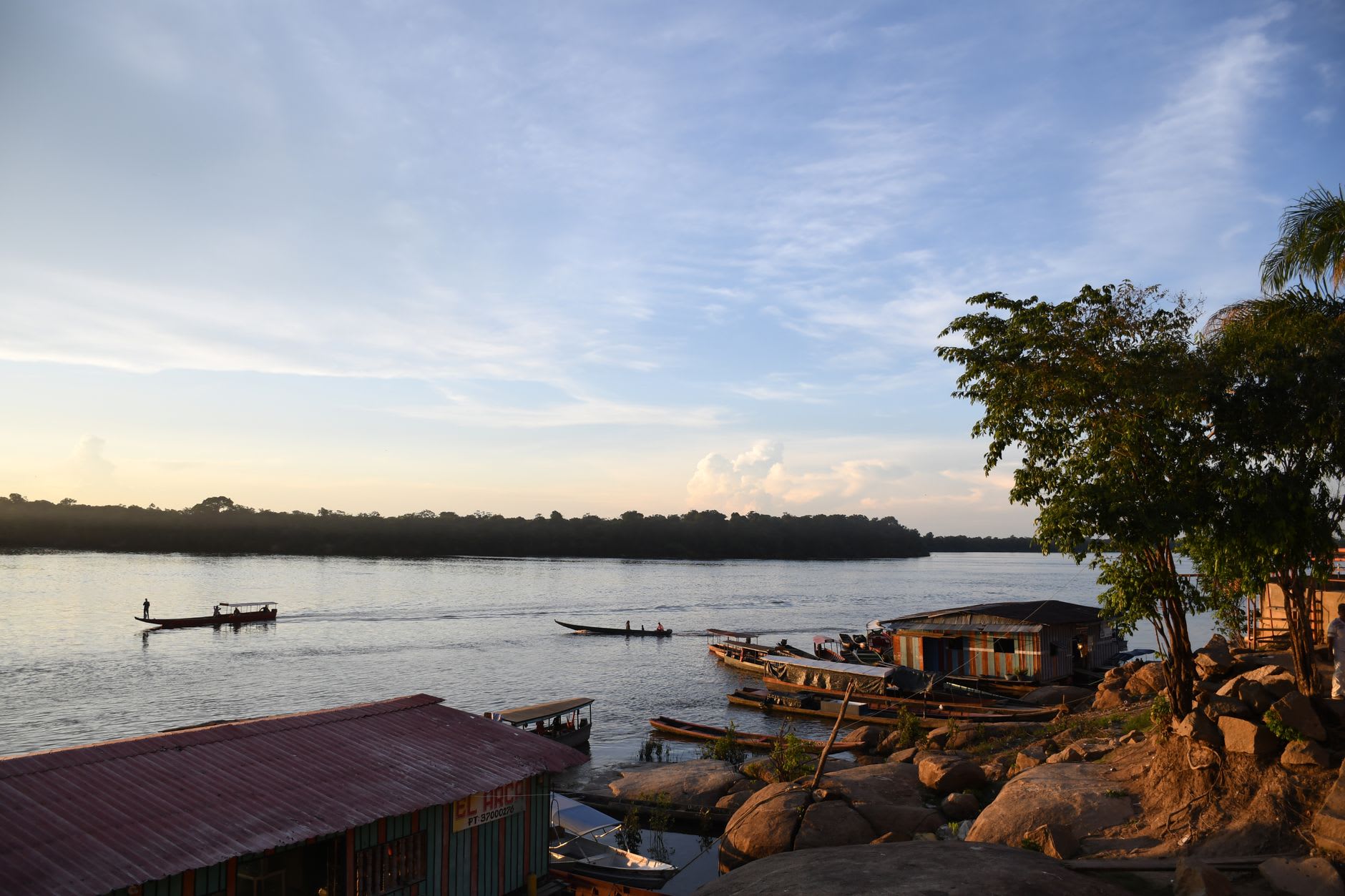
In the evenings I ate at the simple comedor near the dock — fish soup, rice, a plate of fried banana — and the woman who ran it talked about the fishing while she cooked, specific and opinionated: the gamitana had been good this season because the river had been high enough, the tucunaré less so because of something she described with a hand gesture I didn’t entirely follow but chose to trust. The food tasted like it was prepared by someone who had been eating from the same river for forty years and had arrived at certainty. The soup was milky with coconut milk and the fish came off the bone in clean sheets.
The plaza fills in the late afternoon when the heat begins to ease. Elderly Tikuna women sit in the shade selling crafts — carved wood fish, woven chambira palm bracelets, masks painted in geometric patterns whose meanings were explained to me by a young man who spoke Spanish with formal precision and shifted into Tikuna when his grandmother interjected. The grandmother did not need to sell hard. Her work was self-evidently superior, and she knew it.
What stays with me most is the mornings. I woke at five to the light coming gray through the mosquito net, and the sounds outside were only river and birds, and somewhere nearby a radio was playing cumbia at low volume, and the whole thing felt like a place that had made peace with itself in a way that most places haven’t. Puerto Nariño is not perfect — there are the same stresses and politics that exist everywhere — but it has made structural decisions that produce a quality of daily life that you feel immediately, as a visitor, and that you carry with you afterward as a kind of rebuke to the places that chose otherwise.
When to go: Puerto Nariño is best reached June through September when the river is high and the flooded forest around the lake at Tarapoto is navigable. The boat from Leticia runs daily and takes three hours by fast lancha. Stay at least two nights — one day is not enough to feel the rhythm of the place.