Americas
Colombian Amazon
"The Amazon doesn't ease you in. It absorbs you completely the moment the plane lands."
The plane from Bogotá drops through cloud and then there is nothing but green — an unbroken canopy extending to every horizon, sliced open by the brown ribbon of the Amazon. Leticia is where you land, a port city wedged between Colombia, Peru, and Brazil where the borders dissolve into the river and the concept of a country feels momentarily beside the point. By the time you’re on the water, thirty minutes after arrival, the city behind you feels like a rumor.
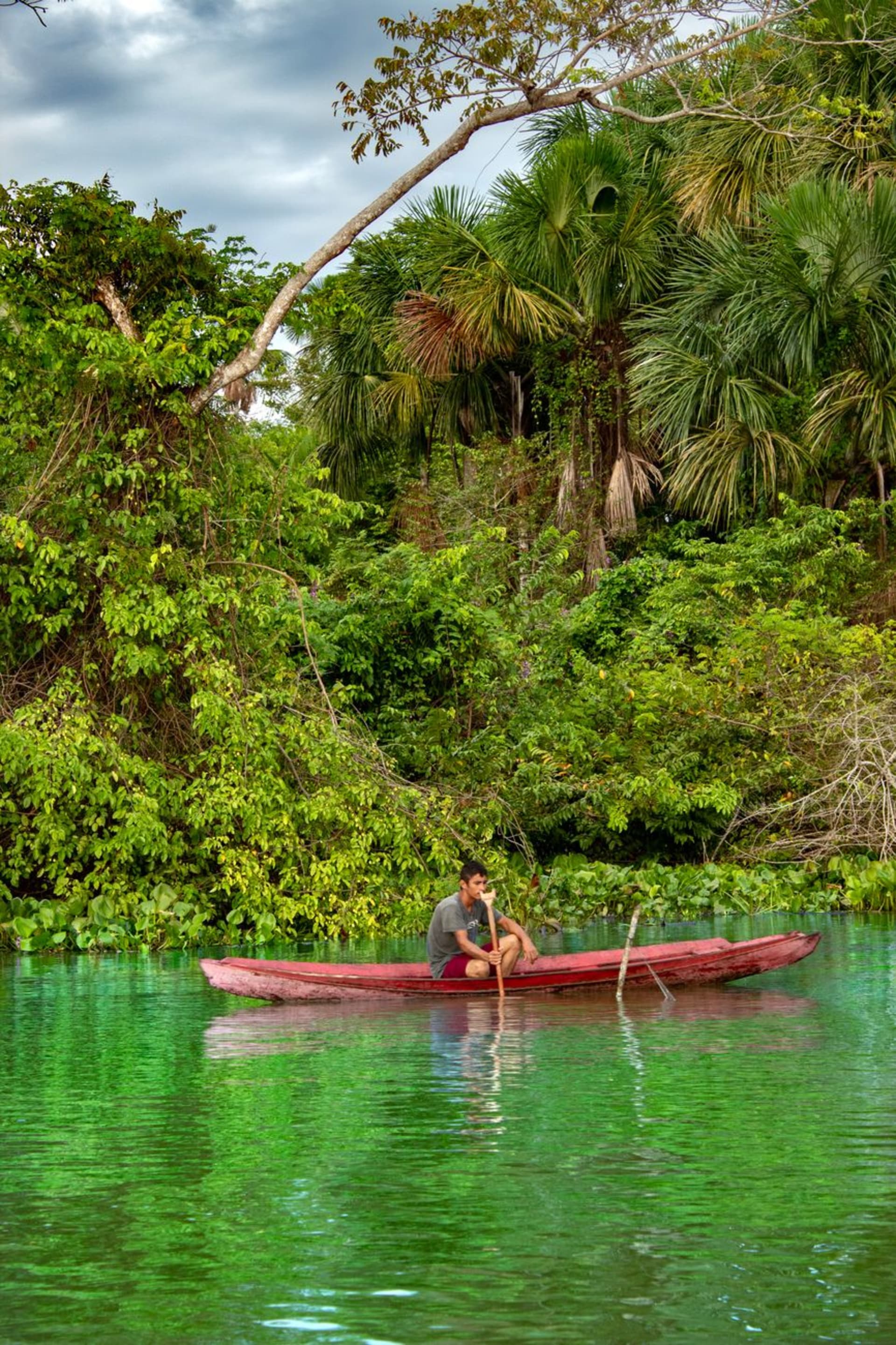
I came here expecting something dramatic — anacondas on the path, caiman at every bend. What the Colombian Amazon actually gives you is more disorienting than that. It gives you stillness. The river absorbs sound. Dawn on the water means pink dolphins surfacing two meters from the bow of a wooden canoe, a great blue heron lifting off in slow motion, a fisherman standing in his dugout with absolute certainty on the dark water. In the village of Puerto Nariño — reachable only by boat, no cars, no motorcycles — children walk to school along elevated wooden walkways through the jungle. It is the most functional, the most serene settlement I have visited anywhere in South America. The community manages its own reserves, monitors wildlife populations, and has made a conscious decision about the kind of place it wants to be.
The food here is its own education. In Leticia’s market, tucunaré fish comes grilled on banana leaf. Fariña — toasted cassava flour — goes on everything. Fruits I had no names for were handed to me by vendors who seemed amused that I needed to ask. Masato, a fermented cassava drink, appeared without warning at a family lunch in a riverside community. I drank it, and it was sour and slightly alive, and it tasted like the kind of thing that has been made the same way for a thousand years, because it has.
When to go: June through November is high water season — the river rises up to twelve meters, flooding the forest and creating flooded-forest ecosystems you can canoe through directly among the trees. December through May brings lower water and easier wildlife spotting along exposed riverbanks. Both have their logic. I went in August, high water, and I would not change it.
What most guides get wrong: They frame the Colombian Amazon as a hardship destination requiring a specialist operator and weeks of preparation. You can fly from Bogotá in two hours, stay in a simple lodge outside Leticia, hire a local guide for thirty dollars a day, and be on the river the same afternoon. Puerto Nariño is a three-hour fast boat from Leticia and is genuinely one of the most remarkable small communities in South America. The Amazon is not behind a paywall. It just requires you to show up.