Parque Nacional Natural Amacayacu
"At three in the morning the jungle makes sounds that have no name in any language I know."
The ranger station at San Martín sits at the edge of the park and the park begins immediately behind it — not a gradual transition but an abrupt wall of primary forest that swallows you the moment you enter the trail. I had been walking for perhaps ten minutes when I stopped and stood still, and the forest adjusted. Birds that had gone quiet as I passed resumed calling. Something moved in the undergrowth three meters to my right, paused, moved again. The trail narrowed to a line through chest-high roots and the canopy overhead blocked the sun completely, so that the light was a uniform green dimness that made distances hard to judge. Parque Nacional Natural Amacayacu covers more than five thousand square kilometres between Leticia and Puerto Nariño, and the scale is not something you absorb intellectually — it hits you through the body, through the realisation that the forest you can see from where you stand extends, identically, for a hundred kilometers in every direction.
I came with a guide named Ernesto, who had grown up in the nearby community of Mocagua and had been working in the park for fifteen years. He walked slowly and stopped often, not from tiredness but from attention. He crouched beside a leaf the size of a dinner plate that had been cut in a precise arc along one edge — leaf-cutter ants, he said, pointing to a faint trail on the ground that I would not have noticed until I looked directly at it. Following the trail with my eyes I eventually made out the column: hundreds of ants, each carrying a segment of leaf like a green sail, processing along a fixed path back to their nest two hundred meters away.
The biodiversity here is recorded in numbers that don’t quite compute: over five hundred species of birds, one hundred and fifty species of mammals, more reptile and amphibian species than most countries contain. Ernesto added practical weight to these abstractions — the woolly monkey troop that used the valley below the ridge as a transit corridor, the family of tapirs that visited a particular creek at dusk, the caiman that had lived under the same bank overhang for longer than Ernesto had been coming to the park. He described them with the particular affection of someone who has been paying consistent attention to the same animals long enough to recognise individuals.
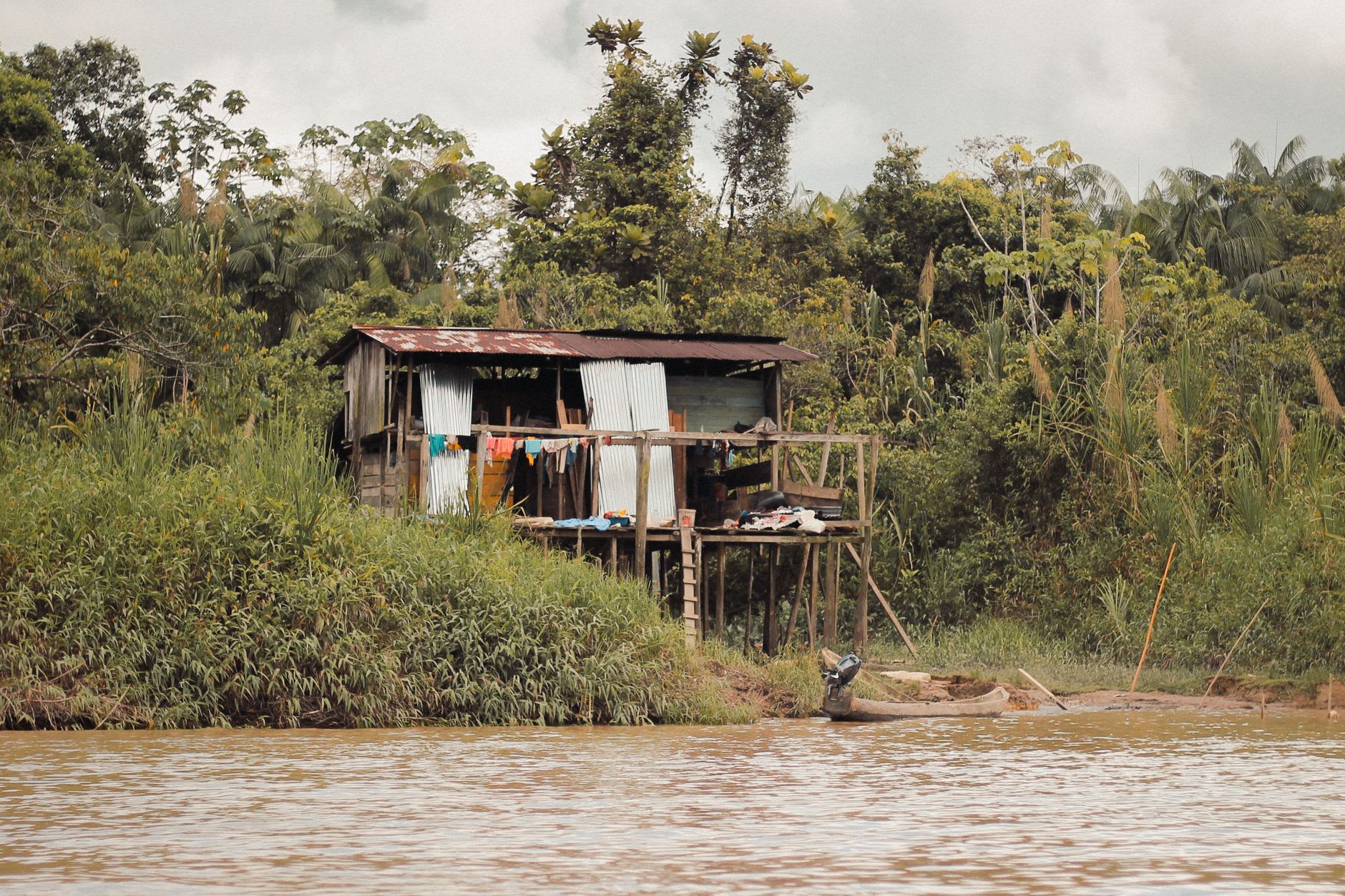
We slept in the ranger station, in hammocks under a thatched roof with mosquito nets and the jungle three meters away on every side. The night was the point. After dark the forest volume increased dramatically — frogs in multiple registers, insects in overlapping frequencies, the occasional distant howler monkey that sounded like a wind that hadn’t arrived yet, and once, around three in the morning, something large walking heavily through the understory that Ernesto, from inside his hammock without moving, identified simply as “tapir” in a tone suggesting this was routine. I lay awake for an hour listening, unable to categorise what I was hearing, each sound replaced before I could classify it by the next sound equally without a name.
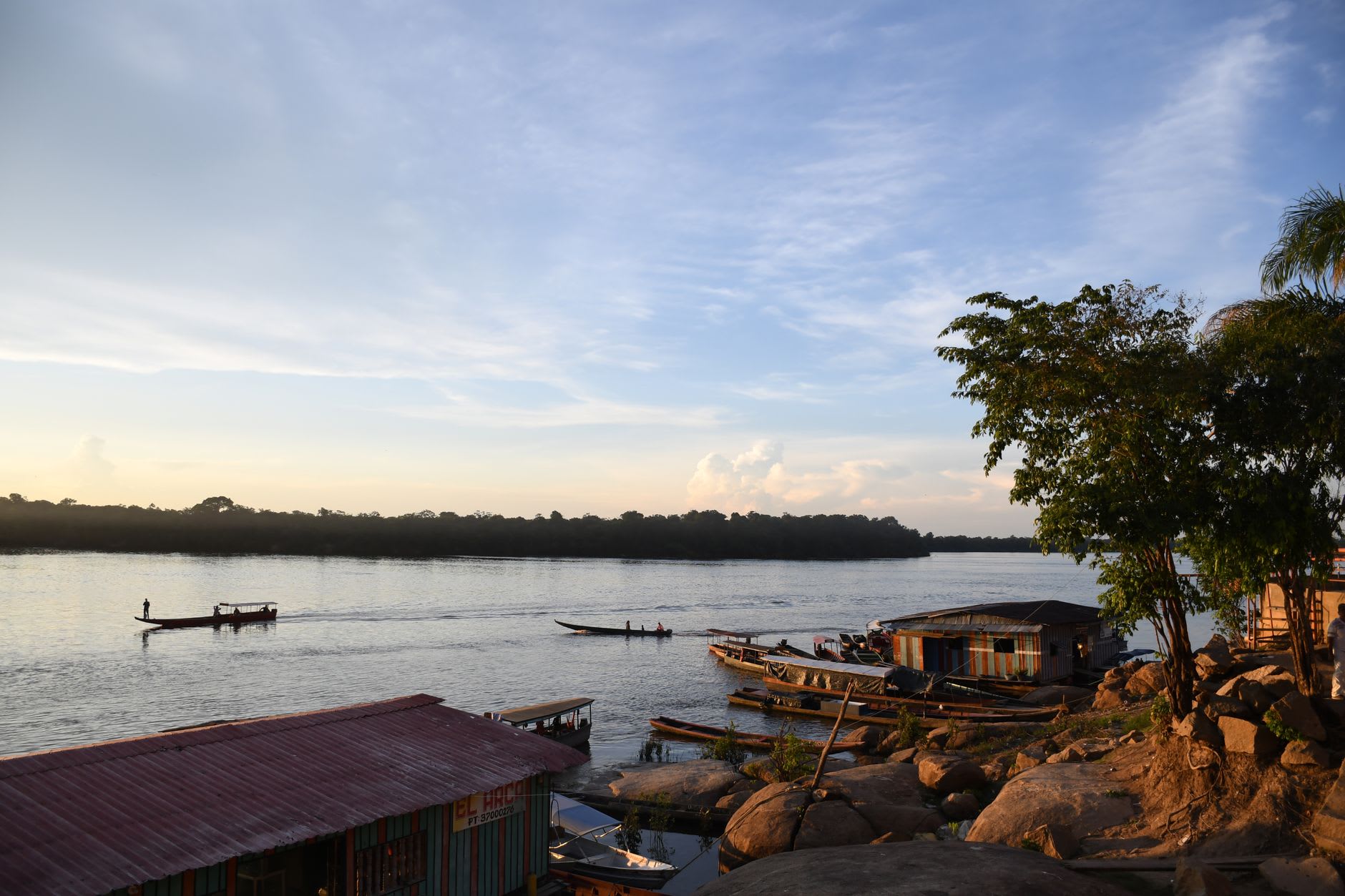
The morning returned everything to visibility and proportion. By six o’clock Ernesto had coffee ready and the forest was performing its diurnal shift — night sounds receding, day sounds replacing them, toucans and parrots adding colour to a soundtrack that had been all texture and rumour for hours. We walked back to the river by seven, and the transition from forest to water felt, as it always does, like emerging from one kind of consciousness into another.
When to go: Amacayacu is accessible year-round via boat from Leticia (approximately three hours) or Puerto Nariño (approximately one hour). The park receives fewer visitors than comparable Amazonian parks in Brazil or Peru. Advance coordination with the park administration is recommended for overnight stays. Guides from communities bordering the park are essential and worth every arrangement.