
Lago Tarapoto
"The lily pads were the size of dining tables. The dolphins surfaced between them like something that should not exist."
An oxbow lake near Puerto Nariño where Victoria amazonica lilies grow to two meters across and pink dolphins surface between the floating leaves.

We left Puerto Nariño at five-thirty in the morning while the river was still dark, and by the time we reached the mouth of the channel that leads to Lago Tarapoto the sky had gone from black to a colour that had no exact name — a deep indigo bruising into orange at the treeline, reflecting upward from water so still it looked solid. My guide cut the engine and we paddled the last hundred meters into the lake by hand. The silence came forward immediately, and then the first dolphin surfaced — a long grey arc ten meters to the left — and then another to the right, and within ten minutes we were surrounded by them.
Lago Tarapoto is an oxbow lake, cut off from the main Amazon channel and now its own enclosed world — a horseshoe of still water covering roughly three thousand hectares, fed by creeks and dependent on the river’s seasonal floods for the fluctuations that drive its ecology. The lake is most famous for two things: the pink dolphins and the Victoria amazonica, the Amazonian giant water lilies whose circular pads grow to two meters in diameter with raised rims that curl upward like shallow bowls. During high water season they cover significant portions of the lake surface, and the effect is surreal — a plane of interlocking green discs interrupted by the surfacing backs of dolphins, everything reflected twice in the still water above and below.
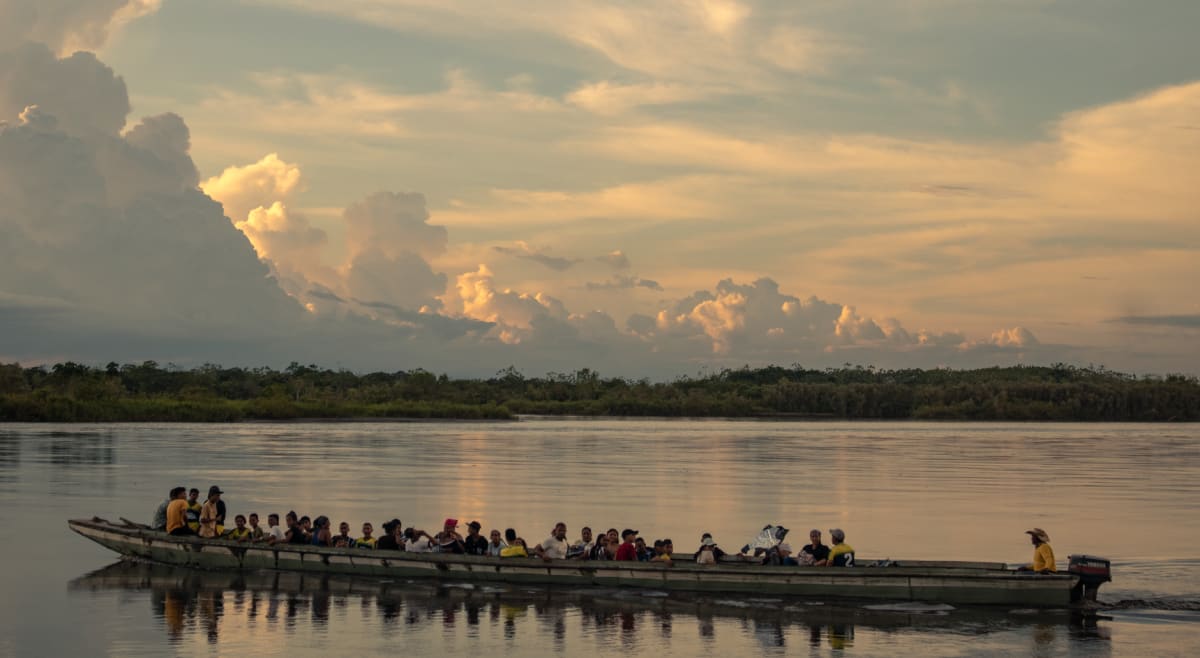
The Amazon river dolphin — boto in Portuguese, bufeo in Spanish — is pink in ways that vary by individual, ranging from pale grey-rose to a vivid bubble-gum that seems impossible in context. They are larger than I expected: up to two and a half meters, with flexible necks and long beaks and a domed forehead that gives them an expression of mild enquiry. They are not shy. They surfaced close to the canoe repeatedly, exhaling in that characteristic rush of breath, occasionally lifting their heads to look at us sideways. My guide, who grew up paddling this lake, talked about them the way you talk about difficult neighbours — with affectionate exasperation. There were more this year because the high water had brought more fish into the flooded forest margins, and more fish meant more dolphins, and more dolphins meant more tourists, and more tourists meant — he trailed off and touched the gunwale of the canoe.
We spent the morning moving around the lake’s perimeter, following the tree line where the forest came down to the water. Kingfishers worked the shallows with furious efficiency. A hoatzin — the prehistoric-looking bird with a crest like a punk concert and the digestive system of a cow — clattered out of the reeds and landed heavily in a tree, regarding us with ancient suspicion. Toucans moved overhead in small groups, their bills absurdly large, their flight a series of bounds between trees. Everything here is maximalist. The Amazon does not believe in understatement.
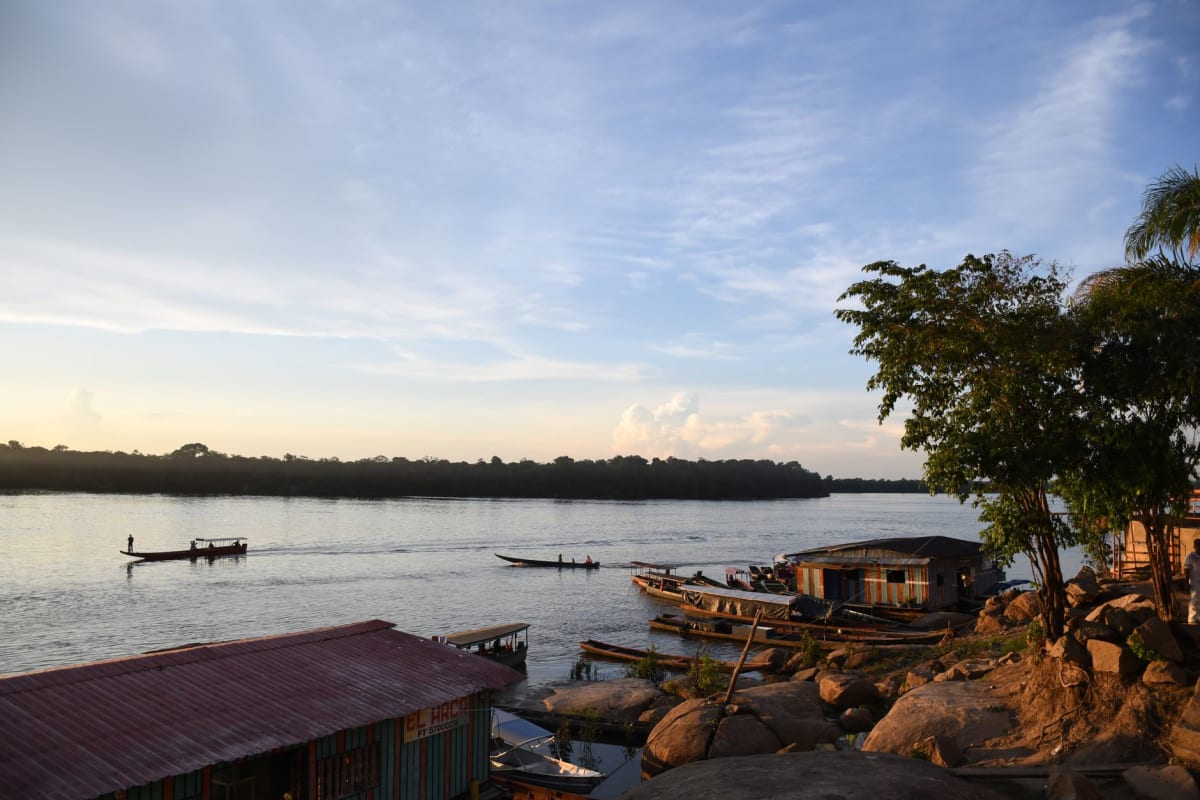
The return journey across the main river in full daylight showed me the scale of what the rainy season had done: trees that were normally on dry ground stood knee-deep in brown water, the flooded forest extending for hundreds of meters back from the channel. We passed a family in a dugout going the other direction, the woman in the stern with a paddle, a child asleep in the bow, a cooking pot and two chickens completing the cargo. They did not look at us. The river is not a tourist attraction to people who live on it.
When to go: Lago Tarapoto is most spectacular during high water season, June through October, when the Victoria amazonica lilies are at full size and the flooded forest corridors are navigable. Dolphin sightings occur year-round but are more concentrated when the lake is full. The lake is reached by motor canoe from Puerto Nariño in about forty minutes.
Keep exploring
More from Colombian Amazon
 amazon-colombia
Lagos de Yahuarcaca
A system of Amazon lakes fifteen minutes from Leticia where caimans sun on the banks and herons outnumber the tourists by a comfortable margin.
Explore amazon-colombia
Leticia
A port city at the exact edge of three countries where Colombia dissolves into the river and the river swallows everything else.
Explore amazon-colombia
Mocagua
A small riverine community on the edge of Amacayacu park where a family-run manatee rescue centre quietly does the most important work in the Colombian Amazon.
Explore amazon-colombia
Parque Nacional Natural Amacayacu
Five thousand square kilometres of primary Amazonian forest where the jungle sounds at night are so dense they become a kind of weather.
Explore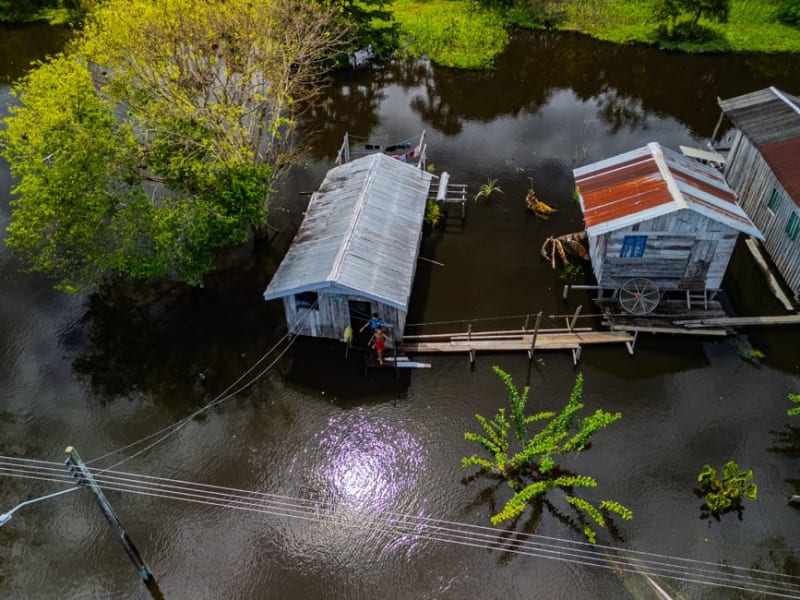 amazon-colombia
Puerto Alegria
A Peruvian fishing village on the far bank from Leticia, reachable only by boat and living on a completely different clock.
Explore amazon-colombia
Puerto Nariño
A car-free Amazonian community that manages its own jungle reserves and decided, deliberately, to become the most serene place in South America.
Explore