Isla de los Micos
"The monkey looked at me with the complete indifference of something that has never had a reason to fear."
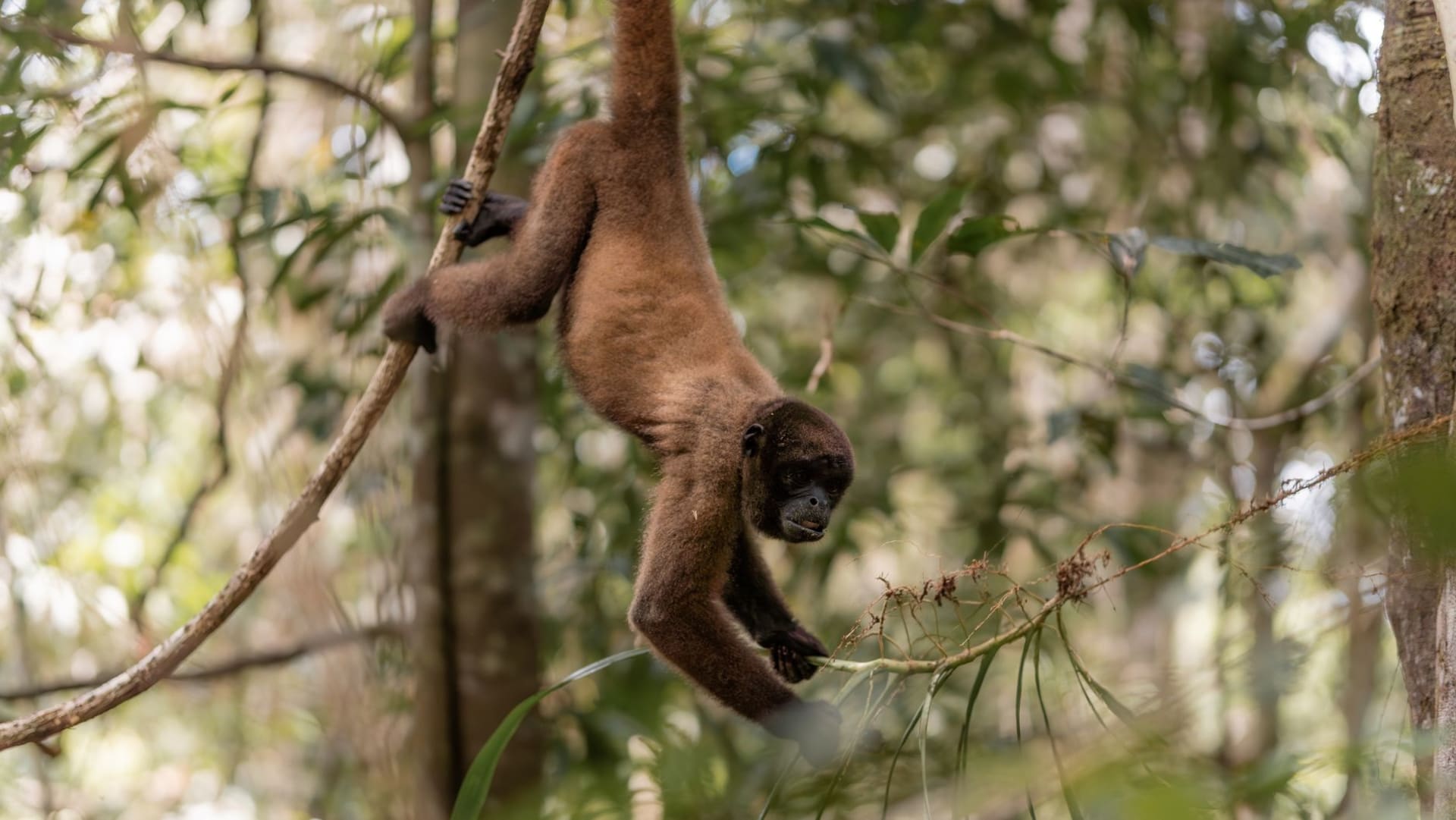
The guide cut the engine about fifty meters from the island’s shore and we drifted in silence, and then the canopy moved. A woolly monkey appeared at the treeline, then two more, then five, descending hand over hand toward the water with a fluid confidence that made the whole performance look choreographed. They were not afraid. They were, if anything, curious — assessing the boat and its contents with the kind of sideways intelligence that primates carry in their gaze. One dropped onto the bow of the lancha with a soft thump and sat there, examining a water bottle that someone had left out, turning it in its hands with the focused attention of someone reading instructions.
Isla de los Micos sits in the Amazon near the village of El Progreso, between Leticia and Puerto Nariño, and it is a private wildlife reserve covering around seventeen hundred hectares of primary floodplain forest. The woolly monkeys — marimondas — are the main event, but they share the island with howler monkeys, capuchins, parrots, macaws, pink dolphins in the adjacent channels, and species of birds so various that the field guide I had brought became an exercise in humility. My guide, a Cocama man named Rodrigo who had spent his entire life on the river, identified birds by sound before they were visible, naming them in Spanish and then in his own language — a double taxonomy that reframed every identification as something personal rather than scientific.

We walked a trail into the interior where the canopy closed overhead at forty meters and the light reduced to a green diffusion that made everything look underwater. The sounds were extraordinary — a continuous layering of calls and responses and the crack of branches that could be anything from a falling limb to something large moving in the middle distance. Rodrigo pointed out jaguar prints in the mud beside a creek, three days old he estimated, running his thumb around the perimeter of one print with a familiarity that suggested he’d been having this conversation with the forest for years.
What the island offers that most wildlife encounters in the Amazon don’t is the habituated monkeys — animals conditioned by years of careful management to approach humans without alarm. This changes the nature of the experience completely. Instead of watching from a distance through binoculars, hoping for movement, you find yourself in the middle of a troop going about its business, grooming and squabbling and nursing young and ignoring you with pointed completeness. A mother carrying an infant on her back climbed directly over my shoulder to reach a better branch. The weight of her was less than I expected. The indifference was exactly what I expected.

The pink dolphins appear in the channels between the island and the mainland, usually in the low-light hours — early morning and late afternoon when they are most active. Rodrigo positioned the boat quietly and cut the engine, and we waited, and they came — grey at a distance, shifting to that impossible pink up close, surfacing in long arcs with a sigh of breath that carries across still water with startling clarity. They did not perform. They were simply present, doing whatever dolphins do in river channels at dusk, and we were guests in that fact.
When to go: Isla de los Micos is accessible year-round from Leticia or Puerto Nariño. Early morning and late afternoon visits maximize dolphin and monkey activity. During high water season (June–November), the flooded forest channels become navigable by canoe, offering a completely different experience of the island’s margins.