Parintins
"I have never seen forty thousand people scream at a giant mechanical ox, and I will never again accept a Tuesday as a real event."
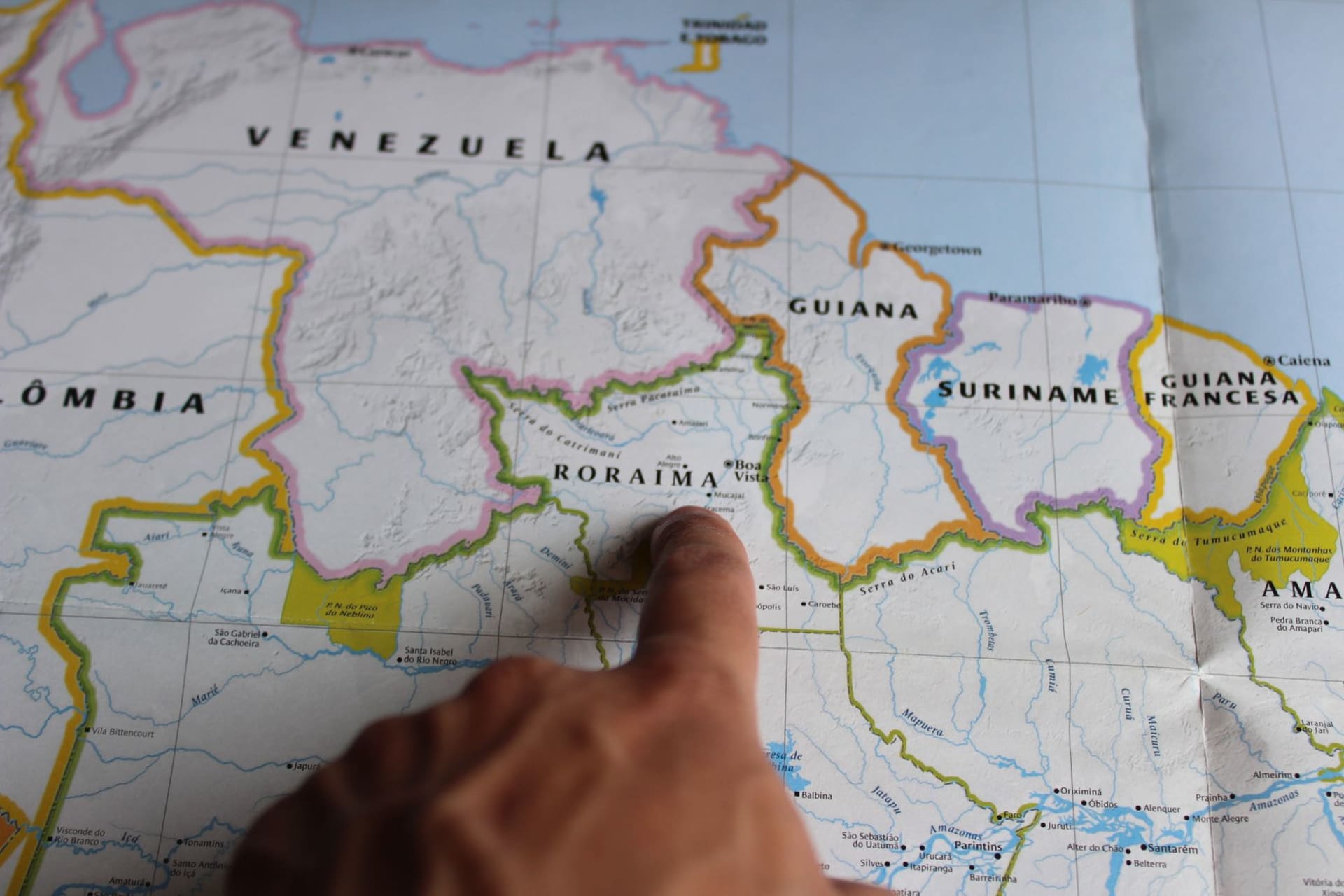
Parintins is not an easy place to get to, which is part of its point. It sits on an island in the middle of the Amazon, closer to the border of Pará than to Manaus, and you reach it by a slow riverboat or a small plane. We took the boat from Manaus, an overnight passage in hammocks slung so close together that I learned a great deal about the sleeping habits of strangers, and woke to the town rising low and bright off the brown water. For most of the year Parintins is a quiet river town of fishermen and small commerce. For three days in late June it becomes something else entirely.
The night the ox came back to life
The Festival de Parintins, or Boi-Bumbá, is the reason anyone outside the Amazon has heard of the place. It’s a competition between two factions — Garantido, in red, and Caprichoso, in blue — each retelling a folk legend about an ox that dies and is resurrected, and the rivalry divides the entire town with a seriousness that makes football look casual. You are expected to pick a side. Lia, with no hesitation whatsoever, chose blue, on the grounds that the colour suited her, and was immediately treated as a defector by the family running our guesthouse, who were Garantido to the bone.

The performances happen in the Bumbódromo, a purpose-built arena shaped, fittingly, like a stylized bull’s head. What I was not prepared for was the scale. Each side fields hundreds of dancers, drummers and singers, indigenous-inspired costumes the size of small buildings, and these enormous animated floats — giant snakes, forest spirits, and the ox itself, rearing and bellowing over the crowd. The two sides perform on alternating nights and the rule is that when one is performing, the other half of the arena must sit in complete silence. Forty thousand people, half of them screaming and dancing, the other half pointedly ignoring it all. I have rarely seen discipline and chaos hold hands so closely.
A town that lives for one week
What moved me, beyond the spectacle, was realizing how much of the year funnels toward those three nights. The costumes are built over months in vast workshops called galpões; the songs are written fresh each year; whole extended families belong, by inheritance, to one ox or the other. A man at a riverside bar, deep into his beer, explained to me that his father had been Caprichoso and so he was Caprichoso and so his children would be, and that this was not really a choice any more than your surname is.

We stayed on after the festival for two quiet days, when the town exhaled and went back to itself, and that was its own reward. The riverfront market sold tambaqui fish and brazil nuts and absurdly cheap pineapple, kids jumped off the docks into the river, and the only evidence of the madness was the blue and red bunting still hanging limp in the heat. I liked Parintins enormously in both moods, but I understood it best in the quiet one.
When to go
The festival falls in late June, almost always the last weekend of the month — book transport and lodging far in advance, as both fill completely and prices climb. Outside of June, Parintins is a calm, authentic river town reachable by boat or plane from Manaus, pleasant in the drier months of June through November when the rivers are lower.