Americas
Brazilian Amazon
"Nothing I'd read about the Amazon prepared me for what the silence actually sounds like."
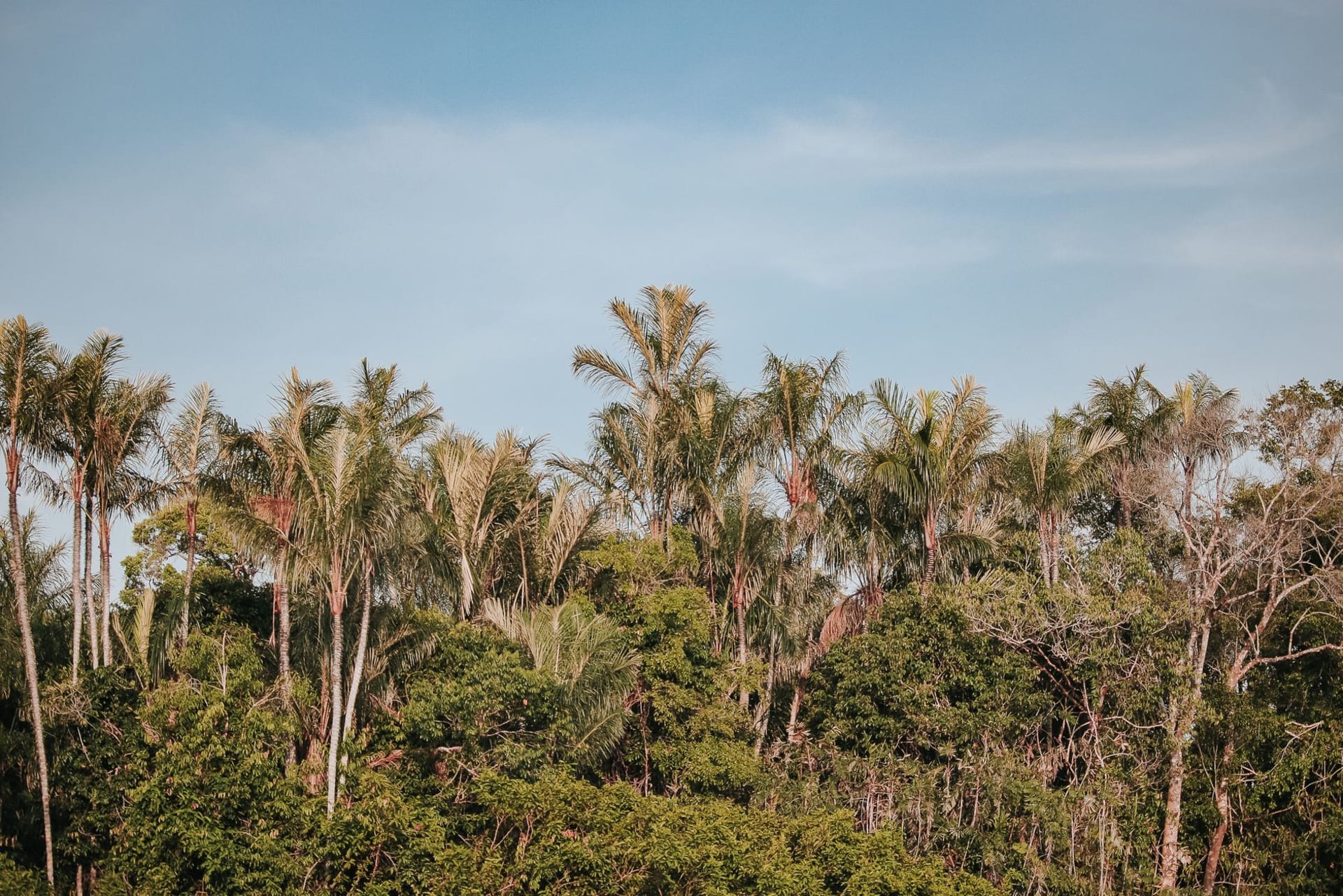
The first thing Manaus does is confuse you. You fly in over an unbroken ceiling of green — three hours from São Paulo and the city just appears, this improbable sprawl of a million and a half people surrounded on all sides by forest and river. You land, step outside the airport into air so thick and warm it feels like walking into a mouth, and immediately understand that you are somewhere unlike any other place you have ever been.
I came in late October, at the tail end of the rainy season, when the Rio Negro was still high enough to flood the lower streets of the port district. My boat out of the city on day two crossed the Encontro das Águas — the meeting of the Rio Negro and the Amazon River proper — where the black water and the sandy-brown water run side by side for eight kilometres without mixing, a trick of temperature and density that no photograph has ever done justice. The Yanomami say the two rivers are two different living things. Standing at the bow watching it, that felt less like mythology and more like accurate reporting.
What the forest asks of you is patience. The wildlife is there — river dolphins surfacing ten metres off the bow, caimans the length of a kitchen counter motionless in the shallows at nightfall, scarlet macaws crossing the river at first light in pairs — but it reveals itself on its own schedule, not yours. The guides who know the forest do not rush. I spent four days at a lodge two hours upstream from Manaus, sleeping in a screened room over the water, waking before dawn to go out in a narrow wooden canoe with a man named Antônio who had been reading the forest since he was seven. He found a three-toed sloth in the high canopy of a cecropía tree by looking at the shape of the silence. I would never have seen it alone.
The food in and around Manaus is an argument for coming here on its own. Tacacá — a hot broth of tucupi, jambu leaf, and dried shrimp that numbs your lips — is one of the stranger and more addictive things I have eaten anywhere. Pirarucu, the enormous river fish, grilled over charcoal with farinha and lime. Açaí that bears no resemblance to the frozen purple smoothie bowls sold in Mexico City — thick, unsweetened, almost savoury, eaten with salted fish and tapioca.
When to go: June to October for lower water levels, which means more beaches along the river banks, easier wildlife spotting, and better jungle walks on dry ground. November to May the forest floods spectacularly — you canoe between the trees, at the level of the canopy — which is its own category of extraordinary, but requires more planning and better waterproofing.
What most guides get wrong: They sell the Amazon as an adventure sport — survival courses, piranha fishing, Instagram-friendly canopy walks. The real thing is slower and more disorienting than that. What the forest actually does is make you feel the specific weight of how small you are. Go looking for that instead of the postcard, and the Amazon will give you something you will carry for years.