Manaus
"The opera house exists because rubber barons needed somewhere to feel European. I'm glad they did."
I arrived in Manaus at dusk, the plane banking hard over the forest so the porthole framed nothing but unbroken green in every direction — and then suddenly the city, enormous and improbable, emerging from the canopy like a fever dream. The air in the jetway hit me immediately: wet heat, the faint sweetness of something rotting beautifully, the baseline hum of a place where the forest is always trying to take back what it’s owed.

The Teatro Amazonas — the opera house built by rubber barons at the height of the boom in 1896 — was the first thing I sought out the next morning. It sits in the middle of the city looking completely insane: a Portuguese Renaissance building with a dome tiled in the colors of the Brazilian flag, iron imported from Glasgow, marble from Italy, chandeliers from Paris. The rubber economy that built it collapsed within a decade of its completion, and the forest nearly reclaimed the city. The building survived. Walking through the gilded interior at nine in the morning with a guide who spoke softly about acoustics, I felt the particular vertigo of a place that outlasted its own reason for existing.
The Mercado Municipal Adolpho Lisboa, a few minutes’ walk downhill toward the port, is where Manaus actually feeds itself. The market occupies a cast-iron structure from 1882 modeled after Les Halles in Paris, which seems on-brand for a city that built an opera house in the rainforest. Inside, the smells are extraordinary: the sharp metallic tang of fresh fish laid out on ice, the earthier funk of tucupi fermenting in barrels, dried herbs I couldn’t name bundled and hanging from iron hooks. An older woman with a red apron handed me a plastic cup of something without asking — cupuaçu juice, she said, watching my face as I drank it, somewhere between sour and tropical and completely unlike anything else.

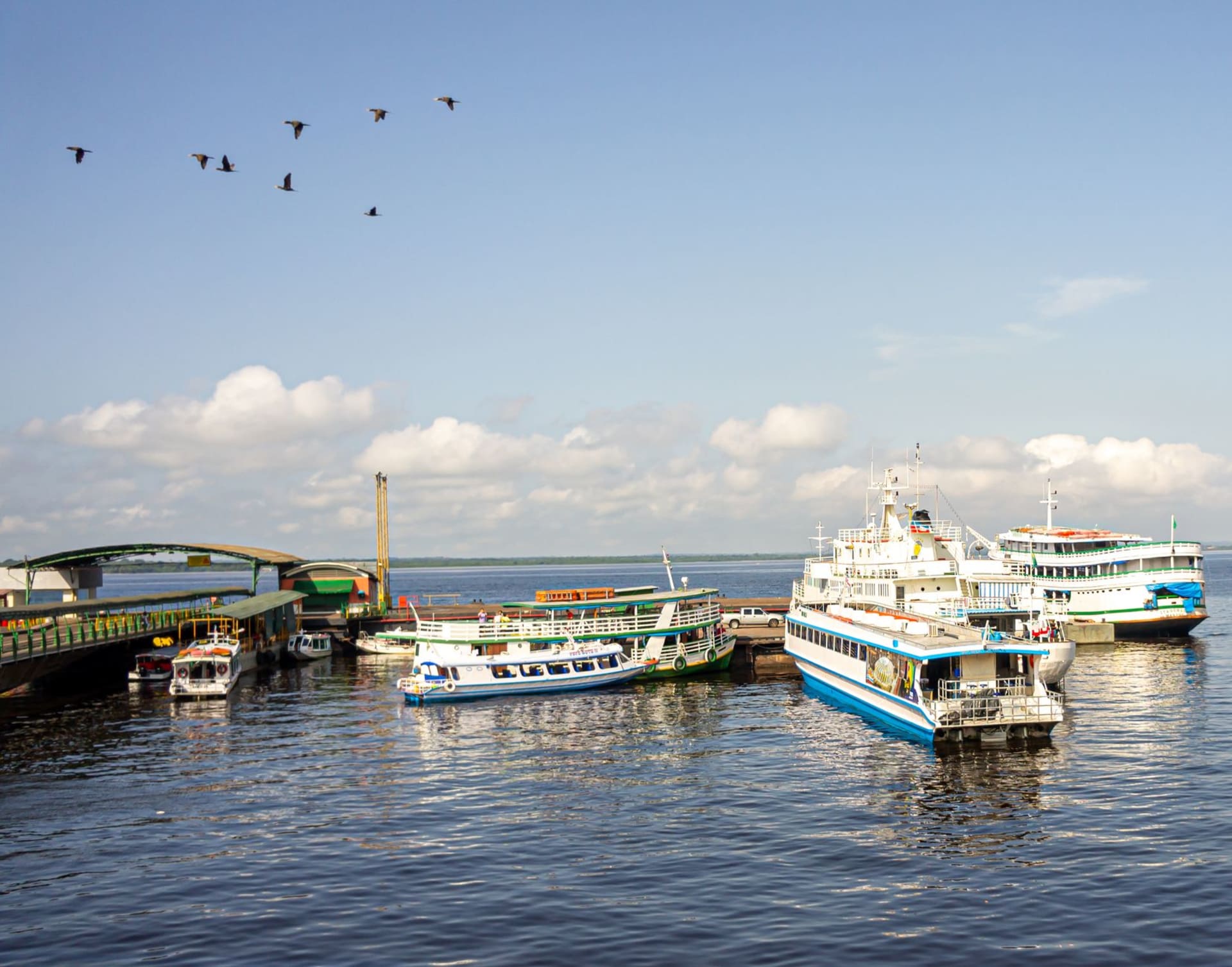
The port district down by the Rio Negro operates on its own logic. Floating docks rise and fall with the river level — up to twelve metres difference between flood and dry season — and the wooden boats loaded with goods and passengers for river towns days away sit low in the dark water. In the evenings I ate tacacá from street vendors who set up at the waterfront: hot yellow broth in a gourd bowl, rubbery tapioca pearls, dried shrimp, jambu leaf that numbs your tongue in a way that felt medieval and completely right. Manaus is a city that would be impossible anywhere else on earth, and it knows it.
When to go: The dry season, June to October, brings lower river levels and more navigable streets, plus easier access to forest lodges nearby. December through April, the city floods in places and the humidity climbs — but the sense of the forest actively pressing against the city intensifies in a way that is worth experiencing at least once.