Alter do Chão
"Nobody tells you the Amazon has beaches this white. It feels like a secret the continent kept to itself."
I’d been in the forest for ten days — lodges, canoes, dark water, predawn wake-ups — when a fellow traveller in Santarém told me about Alter do Chão with the slightly guilty tone of someone revealing a party that was already getting too crowded. An hour by bus south of Santarém, on the banks of the Tapajós River, the village sits in front of a white sand beach that the internet has started calling the Caribbean of the Amazon. That comparison is lazy and slightly wrong. Alter do Chão is better than the Caribbean.

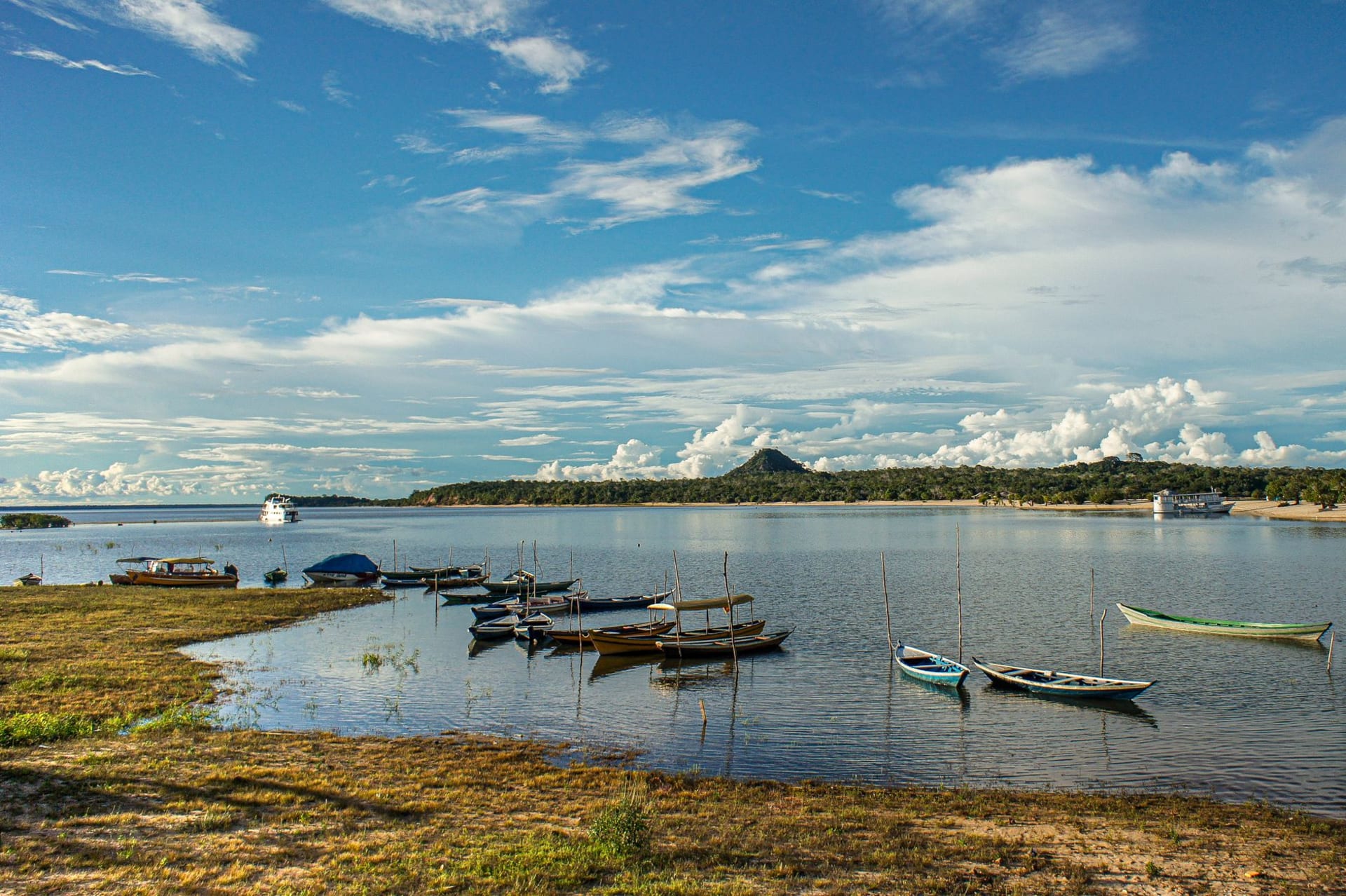
The Tapajós is an enormous river — one of the major tributaries of the Amazon — but at Alter do Chão in the dry season it pulls back to reveal sandbars of extraordinary quality. The main beach, attached to a small island called Ilha do Amor, is pure white and slopes gently into water that runs turquoise-clear where it’s shallow and deep blue further out. The far bank is unbroken forest. There are no hotels on the beach, no jet skis, no speakers playing forró at volume. What there is: fishing boats, kids from the village, thatch-roofed kiosks selling cold beer and plates of grilled pirarucu with rice and beans eaten at plastic tables with your feet in the sand.
The village itself is small and pleasantly unpretentious. The church is painted yellow. The streets near the waterfront fill with hammock vendors and artisan stalls in the evenings, selling carved wooden turtles and necklaces strung with Amazonian seeds. The Arapiuns River meets the Tapajós just here, and on nights when the wind is right you can hear both waters moving with different rhythms. I stayed at a simple pousada two blocks from the beach and woke every morning to the sound of parrots in the palms overhead.

The Floresta Nacional do Tapajós starts a few kilometres east of the village, and day trips run into the forest with local guides from the Borari Indigenous community. These are not the adventure-tourism type of jungle walk — they are quiet, slower-moving, led by people who grew up reading this particular forest. The guide I went with, a man named Carlos whose family had lived along the Tapajós for generations, stopped at intervals to explain the medicinal uses of particular trees, the edible roots, the way certain vines carry fresh water inside when you cut them. The knowledge felt like another country layered inside the one I was already standing in.
When to go: August to December for the famous beaches — this is when the river drops and the sandbars appear in their full width. From January to June the water rises and the beaches shrink or disappear; the forest floods and becomes accessible by canoe. The Çairé festival, a Borari Indigenous celebration, happens in September and is one of the most genuinely moving cultural events I’ve encountered in Brazil.