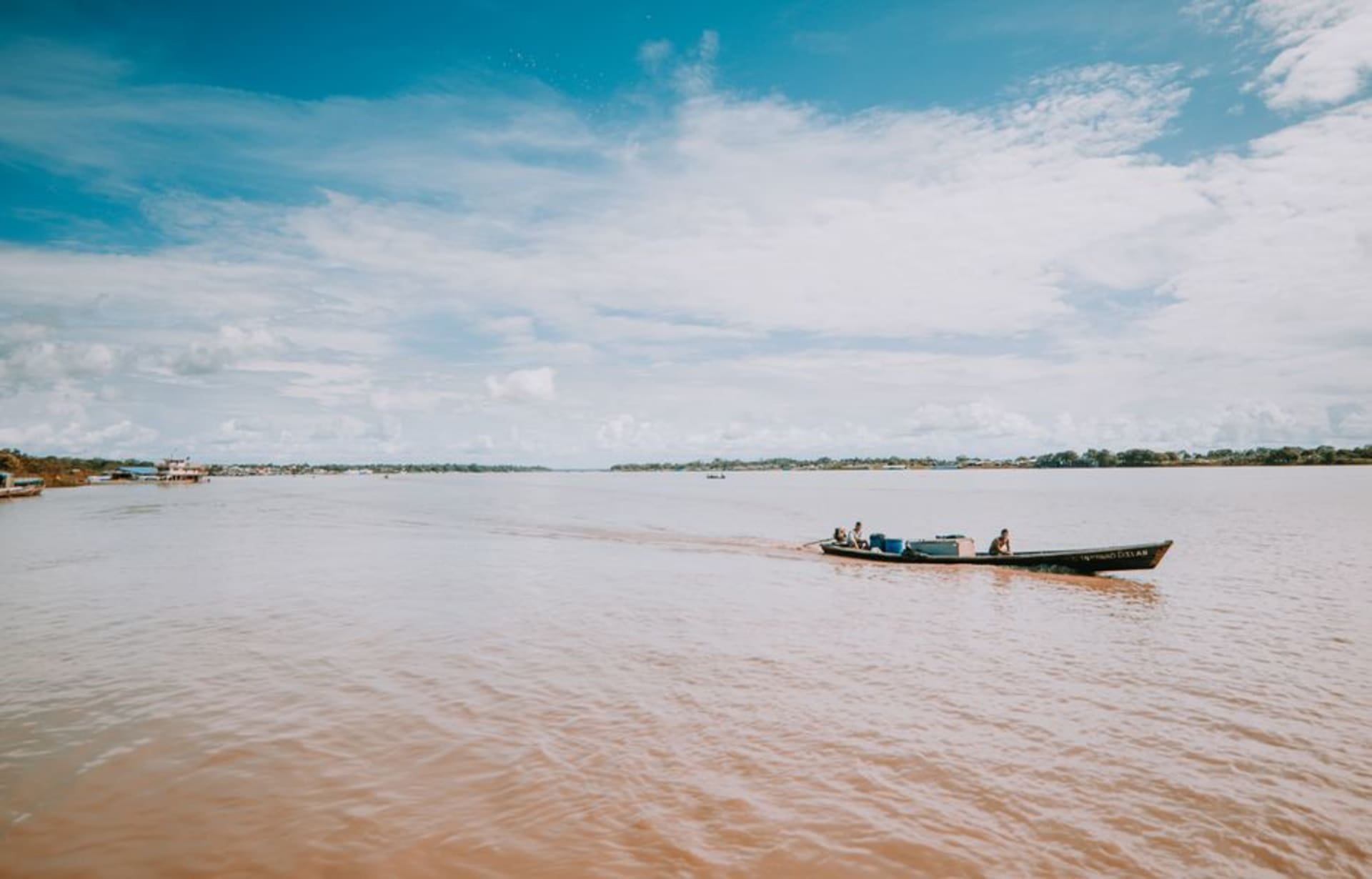
Colombia's improbable southern tip, where three countries blur into one river town and the rainforest starts at the edge of the market.
I landed in Leticia not really believing it was still Colombia. There’s no road here — you either fly in over an unbroken green ceiling or you come up the river — and by the time the plane banked over the water I’d already lost track of which bank belonged to which country. Lia leaned over me to look out the window and just said, “so that’s it,” pointing at a smudge of rooftops that turned out to be Tabatinga, Brazil, close enough that our taxi driver later joked he crossed for lunch more often than we cross the street back home in Mexico.
That first evening we walked from our hotel down to the Malecón without really planning to go anywhere, and ended up staying two hours. Leticia is Colombia’s southernmost city, sitting right where Colombia, Brazil and Peru meet, and it shows in the smallest things — the accents changing block to block, a kid selling Peruvian mangoes in Brazilian reais next to a stall taking Colombian pesos. There’s genuinely no checkpoint between Leticia and Tabatinga; we walked into Brazil for a beer without anyone stamping anything, which felt less like crossing a border and more like changing neighborhoods.
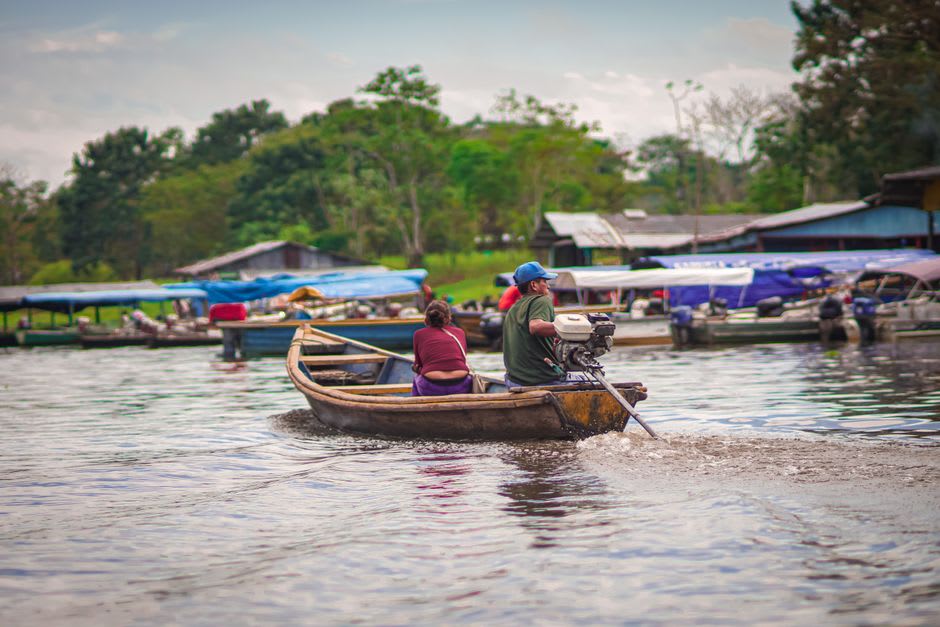
The next morning we hired a boat out toward Amacayacu National Park, and that’s when Leticia stopped feeling like a town and started feeling like a threshold. Our guide, a quiet man named Wilmer who’d grown up on the river, pointed out pink dolphins surfacing near the bank like it was nothing, then took us past Isla de los Micos — Monkey Island — where squirrel monkeys came right down to the boat looking for fruit Lia hadn’t realized she was supposed to bring. I kept thinking about how young this city technically is as a Colombian place — founded in 1867 as a Peruvian settlement called San Antonio, only ceded to Colombia in 1922, and even then briefly seized back by Peru during a tense standoff in the early 1930s before international mediators sorted it out. None of that history is loud here, but you feel its residue in how fluidly the three nationalities still move through each other.
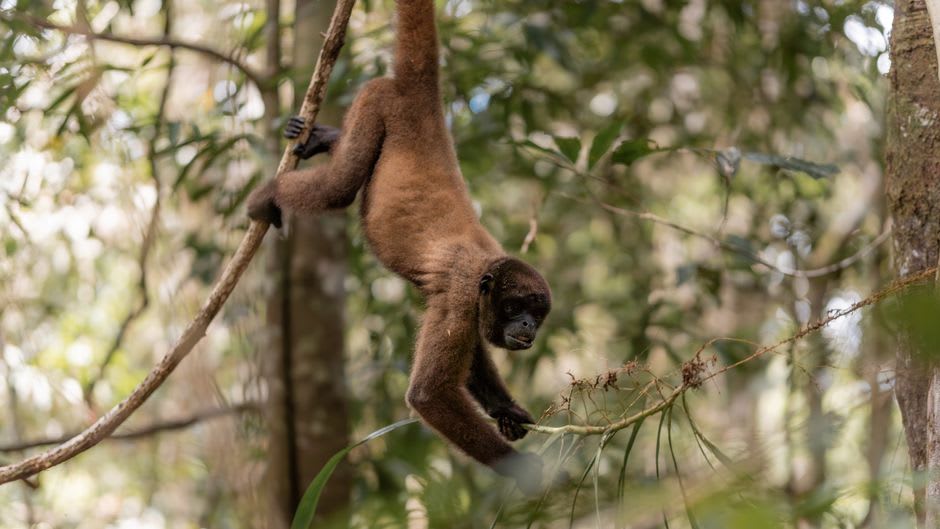
By our last night we’d fallen into a rhythm — coffee at the market before the heat set in, long slow afternoons on the water, dinner wherever smelled like fresh fish. Leticia isn’t a place you conquer in a checklist; it’s a place you drift through, and I left thinking less about what I’d seen and more about how strange and wonderful it is that a city can belong so completely to a river instead of a country.
When to go: We went during the low-water season, roughly July to October, and I’d recommend it — the riverbanks and forest trails around Amacayacu are far easier to reach when the water’s down, though ask locally since the river writes its own calendar every year.