Iquitos
"You only get here by water or by air. The city lives with that knowledge in its bones."
The taxi driver from the airport told me, without preamble, that Iquitos was the most isolated city in the world. I had heard this before — that it is the largest urban centre on earth with no road connection to the outside — but hearing it said casually, as a local fact rather than a tourist pitch, made it feel different. We drove past oil company offices and evangelical churches and a neighborhood of painted wooden houses on stilts, and the driver pointed at the river glimpsed between buildings and said simply: that’s all there is, from here to the Atlantic. I looked at the brown water and tried to make the distances real. They wouldn’t cooperate.
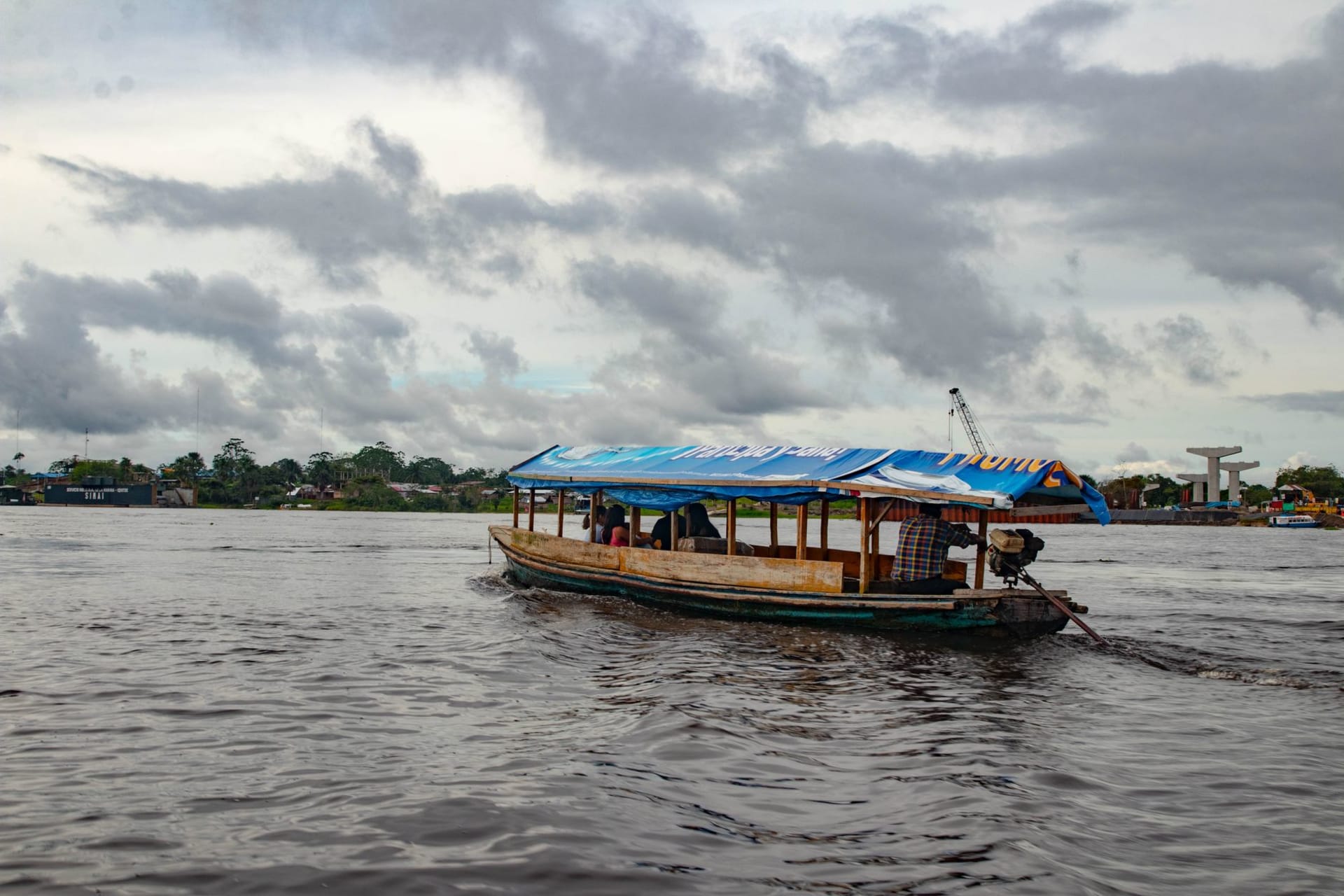
Iquitos is a city of half a million people, and the predominant vehicle is the mototaxi — a motorbike encased in a fiberglass body with room for two passengers behind and a driver up front, all of it painted in various degrees of fading color. The city moves by mototaxi the way other cities move by subway: constantly, chaotically, and with a confidence that suggests everyone knows exactly where they are going. I did not. My first morning I just let one take me to the malecón and stood at the river’s edge, watching the sky go orange over the far bank while a boatload of children in school uniforms crossed from the Belén neighborhood, their oars dipping without ceremony into the most important river on the planet.

Belén is the neighborhood that built Iquitos’s reputation. During the flood season — which peaks between February and June — the lower portion of the barrio sits entirely on water, its wooden houses jacked up on stilts, its streets replaced by channels navigable only by dugout canoe. Women paddle between their front doors and the floating market, selling river fish and plantains from boats tied to the same posts they’ve used for years. I visited in September, at moderate water, and walked the upper streets where some of the stilts were exposed — four, five meters of dark wood disappearing into the mud below, entire floors dedicated to living above the flood line. The smell of fish and woodsmoke was very strong. Children played on elevated walkways with the ease of people who have never known a flat street.
The food of Iquitos is strange and magnificent. At the central market I ate juanes — rice and chicken wrapped in bijao leaves and boiled, the leaf imparting a green, slightly grassy taste that works with the fat of the chicken in ways I couldn’t entirely explain. I drank aguajina, a juice made from the aguaje palm fruit that tastes like custard cut with a tang I don’t have a comparison for. I ate cecina — smoked pork dried in the Amazon heat — with fried plantains at a comedor where the television was running telenovelas and nobody was watching them. The cook told me cecina was something you ate when you were very hungry or very sad. I was neither. I ate it anyway.

The Casa de Hierro on the Plaza de Armas is the most-photographed building in town — a prefabricated iron structure variously attributed to Eiffel’s workshop, though the documentation is ambiguous. What’s certain is that it arrived by boat from Europe during the rubber boom, piece by piece, and was assembled here in the heat by men who must have found the whole enterprise bewildering. It now contains shops selling jungle remedies and tourist trinkets, which seems about right. More interesting to me was the Biblioteca Amazónica, a few blocks away, where I spent an afternoon reading about Francisco de Orellana’s voyage down the river in 1542 in a room where the ceiling fans barely moved the air.
When to go: June through November is the dry season — heat peaks in October, the river drops, beaches appear on the sandbars, and wildlife is easier to spot. February through June is full flood season: the Belén neighborhood is at its most dramatic by canoe and the jungle becomes navigable in entirely new ways. Any season is very hot; pack light clothing and expect afternoon rain.