Alter do Chão
"I came expecting jungle and found a beach. The Amazon keeps doing this — refusing to be what you expect."
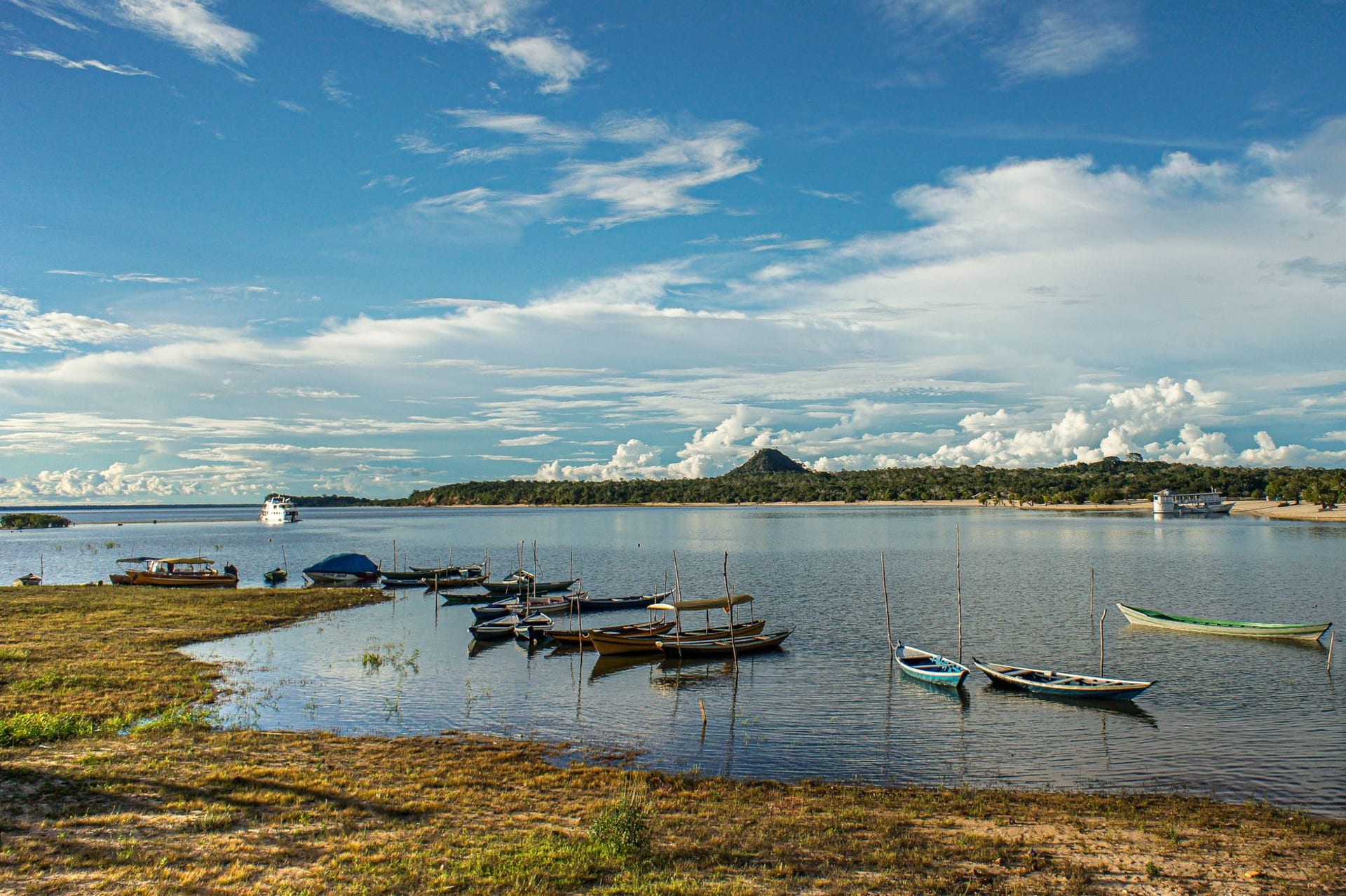
I took a taxi from Santarém on a Tuesday morning in September, through forty kilometres of road that alternated between paved and optimistically unpaved, and arrived in Alter do Chão with no particular expectations. Then I turned a corner and saw the lagoon. The Lago Verde is a circle of water so implausibly turquoise, bounded by white sand beaches that curve in from either side, with the dark Amazon forest rising behind it all, that I stopped moving for a moment and just tried to process what I was looking at. It looked like a Caribbean postcard transposed into the wrong continent. A Brazilian family a few metres away was taking photographs and laughing. I understood completely.
Alter do Chão is a small town — maybe six thousand people — on the Tapajós River, not the Amazon proper, though the Tapajós joins the Amazon just upstream near Santarém. The distinction matters: the Tapajós runs blue-green where most of the Amazon runs brown, its water clearer and colder, draining a different plateau geology. In the dry season, from July through November, the river drops and sandbanks appear — here more dramatically than anywhere else I’ve seen in Brazil, with the beach at Ilha do Amor growing to the size of a small park, accessible by a two-minute canoe crossing from the village square. By August it is enormous. By October it is almost surreal.

I spent three days and found a rhythm easily. Mornings: early swim in the lagoon before the crowds, then breakfast at one of the simple lanchonetes near the main square — tapioca filled with queijo and ham, coffee from a thermos someone refills without asking. Afternoons: either floating in the lagoon or walking the forest trail that climbs the hill above town to a viewpoint where the rivers and the forest spread out to every horizon, the green so deep it begins to look like a single solid thing. Evenings: açaí na tigela in one of its many available local corruptions, or a plate of tambaqui grilled over charcoal at the riverside restaurants, the fish rich and fatty and nothing like the tambaqui I’d had before in São Paulo.
The tucumã palm is everywhere — the fruit itself, which tastes somewhere between butter and banana with an astringency that sneaks up on you, sold in small bags at the market, and the regional sandwich: tucumã, queijo coalho, and banana-da-terra fried in butter on bread, a combination I found completely wrong in theory and completely correct in practice. The market in Alter do Chão is small but dense: river fish, guaraná powder, hammocks, ceramic figures of the boto. I bought a bag of Brazil nuts from a woman who told me they had come from a harvester who lived four days upriver by boat. I ate them slowly for the rest of the trip, trying to account for the distance.

Canoeing through the igapó — the seasonally flooded forest — is the thing I keep trying to describe to people and failing. In September the water had receded enough to leave some channels navigable, paddling between the trunks of trees whose roots had been underwater for five months. The light comes down in columns where the canopy opens. You can hear fish moving in the water beneath the hull. The guides here have spent their whole lives reading this landscape, and a good one will stop paddling at some point and simply wait, letting the silence accumulate, until you understand what kind of quiet this is — not empty, but full.
When to go: August through November is peak beach season — the sandbanks are at maximum size and the lagoon is its most brilliant. July is the start of the process. December to June the beaches are mostly submerged, but the flooded forest canoe trips are at their most rewarding. The Festa do Çairé in September is one of the most atmospheric folk festivals in the Brazilian Amazon and draws large crowds to a small town; book accommodation early.