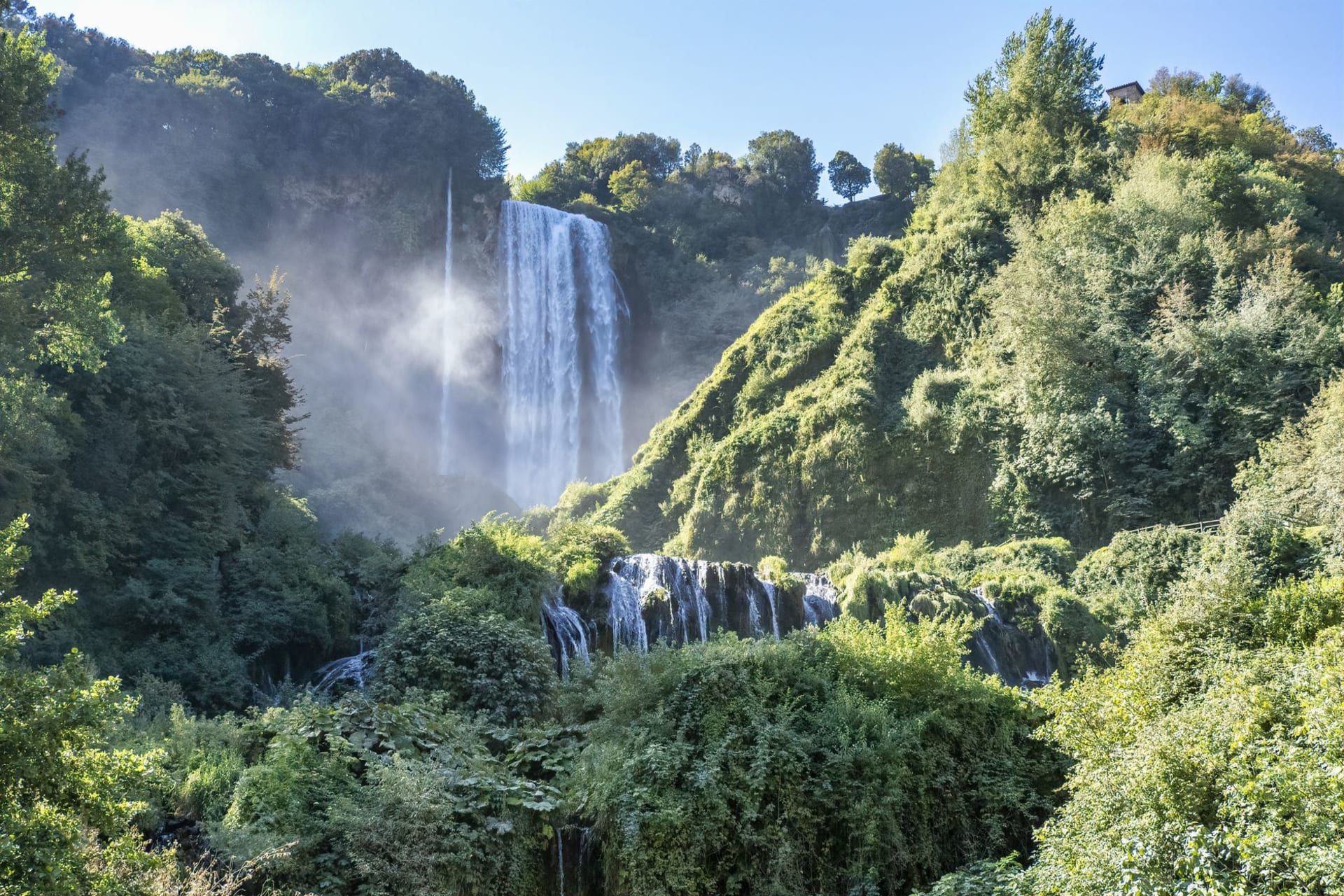
Valle delle Ferriere
"You go in from the lemon-scented heat and within ten minutes you're standing in ferns taller than you, next to a waterfall, completely alone."
The entrance to the Valle delle Ferriere is behind the Amalfi paper museum — the Museo della Carta — through a gate that you can push open, up a cobbled path that starts between old mill walls. Within three minutes of leaving the piazza the town noise has dropped. Within ten you’re in a different world entirely: a narrow valley that catches water from the mountains above Ravello and channels it down through gorges, over falls, and into a series of mills that have been here since the 10th century and have been ruining architecturally since the 19th. The ruins are spectacular in the original sense — roofless stone chambers choked with ferns, millstones abandoned mid-process, wooden sluice frames collapsed into the stream.
The path climbs the valley floor, passing through alternating shade and light, alongside the stream that runs year-round from mountain springs. In summer this is the one reliably cool place on the Amalfi Coast — the canopy of chestnut and alder closes overhead and the water is genuinely cold when you dip your hand in. The vegetation becomes increasingly lush and unusual as you climb: the valley provides a microclimate that supports subtropical plants including Woodwardia radicans, a giant chain fern that grows here in its only European habitat, spreading massive fronds across the stream banks in a prehistoric-looking curtain. It is, botanically, a relict from before the last ice age, surviving in this warm-wet pocket while the rest of Europe froze. I didn’t know this when I visited and found out afterward, which only made me wish I’d looked at the ferns more attentively.

The connection to the paper museum is the thing that gives the walk its historical spine. Amalfi was producing paper from the 10th century, using a technique borrowed from Arab traders — linen and cotton rags beaten into pulp in water-powered mills, then pressed and dried on wooden frames. At the valley’s height there were dozens of mills running continuously, supplying paper to courts and merchants across the Mediterranean. Walking up the valley, you pass the remains of them: the Cartiera della Gualchiera, the Mulino Rovinato, others that have lost their names to time. The larger intact walls still have their millrace channels cut into the stone, the water that once drove the wheels now running off uselessly into the undergrowth.
The waterfall — Cascata delle Ferriere — is about forty minutes from the entrance, a double fall dropping about fifteen meters into a dark pool ringed with ferns and dripping stone. In May the pool is swollen from spring runoff and the falls are full-throated. In October the volume drops and the falls are quieter, a constant white thread rather than a surge, and the surrounding vegetation has gone gold. Both versions are excellent. The pool itself is not officially a swimming spot — the path continues beyond it for another thirty minutes to where the trail eventually reaches the ridge above Ravello — but on a hot day in May the water is cold enough to constitute a convincing argument.
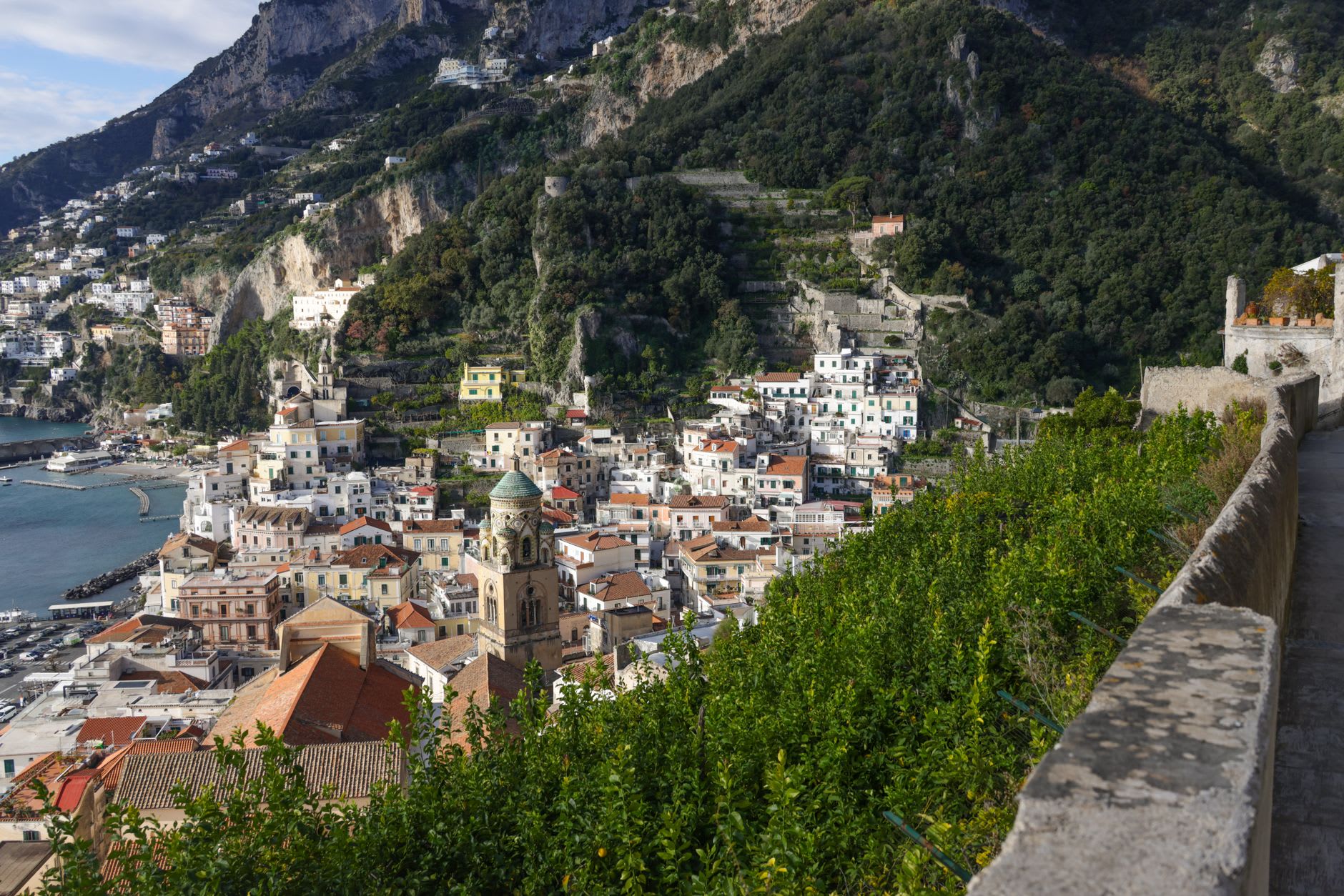
The lemon groves begin just outside the reserve boundary and continue almost to the Amalfi piazza — the terraced groves of sfusato amalfitano that have been farmed on these slopes since the 11th century. Walking back down through them in the afternoon, the smell of lemon — both the ripe fruit and the white blossom in spring — fills the air in a way that the town’s granitas are trying to approximate and never quite catching.
When to go: April through October for the walk. May is best overall — the falls are full, the ferns are at their most dramatic, and the temperature in the valley is perfect when the coast below is already hot. October for the golden light and the autumn color on the chestnuts. The valley is never particularly crowded — it requires actual walking and is therefore filtered of the cruise-ship traffic. Morning is better than afternoon, when the light in the upper sections fades early.