Europe
Amalfi Coast
"The sea here doesn't just surround the coast — it defines everything that grew beside it."
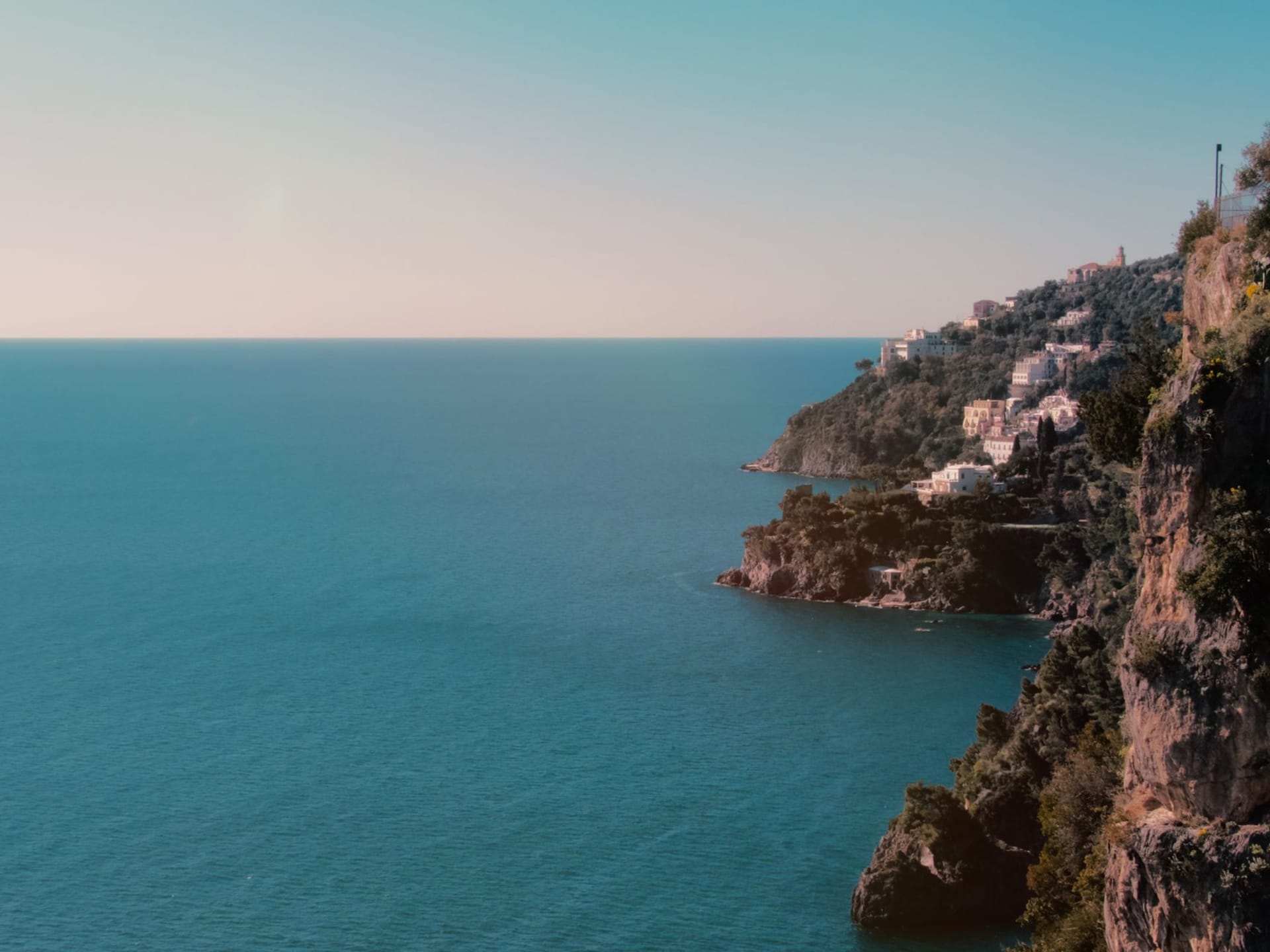
I arrived by ferry from Salerno, and that first approach from the water is still the clearest image I have of the Amalfi Coast — a wall of limestone rising straight out of the sea, and stuck to the face of it, somehow defying gravity and common sense, the stacked white and ochre cubes of Positano. Nothing prepares you for it. You can look at photographs for years and still feel like you’ve been ambushed by the actual thing.
The coast runs about fifty kilometers from Positano in the west to Vietri sul Mare in the east, and the only road threading it is the SS163, a two-lane panic attack carved into the cliff that the Italians drive at speeds that make tourists grip whatever’s nearest. Amalfi town itself is quieter than Positano and more human-scaled — a medieval cathedral rising out of a piazza where old men play cards in the shade, a paper museum tucked into a former mill along a gorge, a granita di limone made with lemons that taste more intensely of lemon than anything grown anywhere else on earth. Those lemons are the sfusato amalfitano, a local variety that’s grown on terraced groves going back a thousand years. Get the lemon profiteroles from Pasticceria Pansa. Do not argue with me about this.
Ravello sits a few hundred meters above Amalfi on a ridge, and it earns the climb. The gardens of Villa Cimbrone and Villa Rufolo have a stillness that the coastal towns can’t offer in summer — up here the tour buses don’t come, the cruise ship crowds thin out, and you can stand at the Terrazza dell’Infinito and look at a view that has been making people lose their minds since Wagner came here and wrote part of Parsifal.
When to go: May or October, without hesitation. June through August the coast is genuinely overwhelmed — the road gridlocks, the towns feel like queues, and the magic evaporates under the weight of the crowds. In May the lemon blossoms are still on the trees, the water is already warm enough to swim, and you can walk the Sentiero degli Dei — the Path of the Gods along the ridge above the coast — without pressing against a hundred other people. October is golden light and empty restaurants and the best seafood of the year.
What most guides get wrong: They treat Positano as the destination. Positano is a beautiful set piece that’s been photographed into a kind of unreality — prices have reached a level that only makes sense if you’re staying on a yacht, and the beach is pebbly and packed. The real Amalfi Coast is the villages above the road: Praiano, Furore, the Valle delle Ferriere nature reserve, the towns you reach on foot or by local bus. Spend a night in Atrani, five minutes from Amalfi but barely mentioned in most guides, and you’ll understand what the coast was before it became itself.