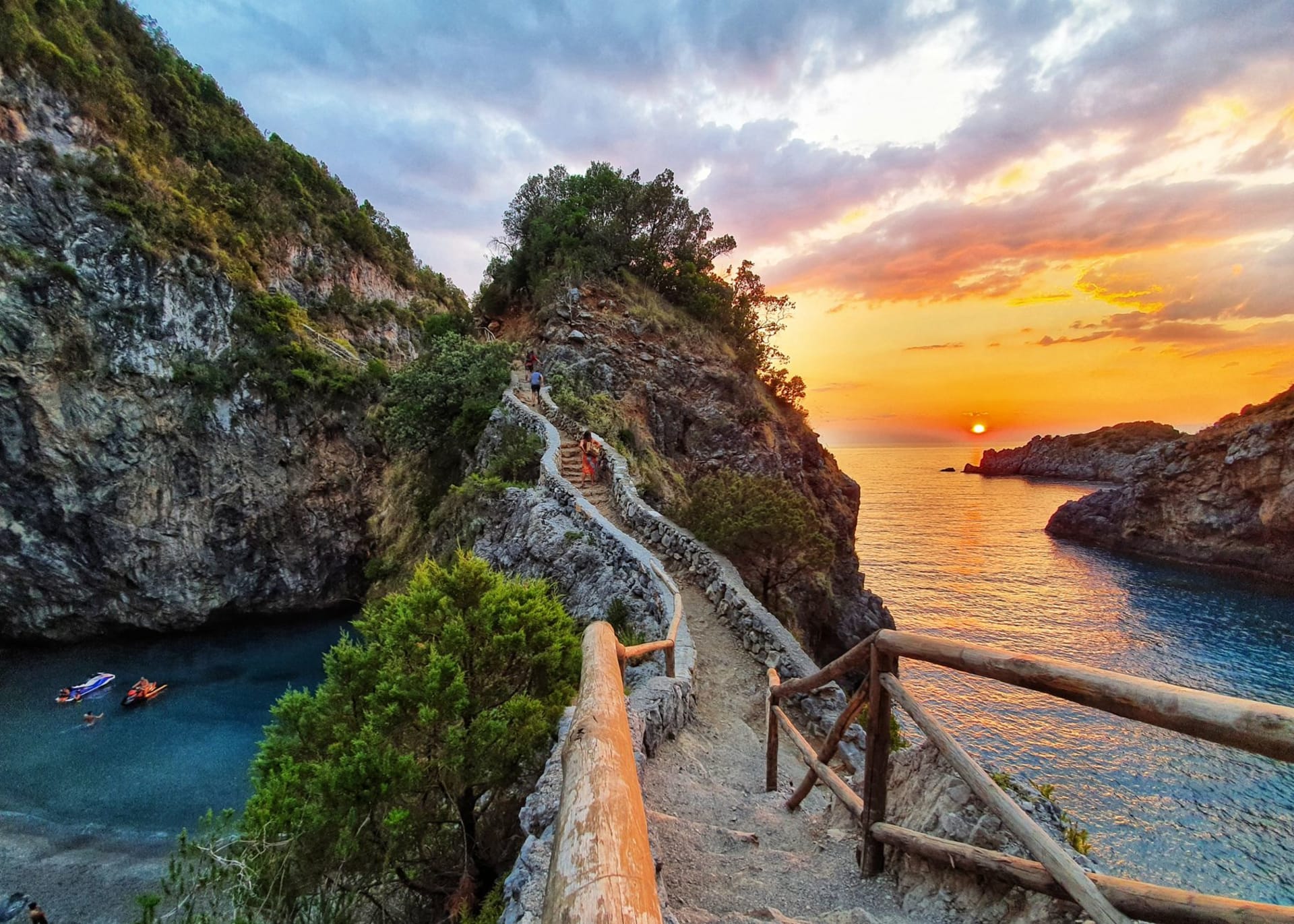
Sentiero degli Dei
"There's a moment on the ridge where the whole coast is below you and you realize you've been looking at it wrong the entire time."
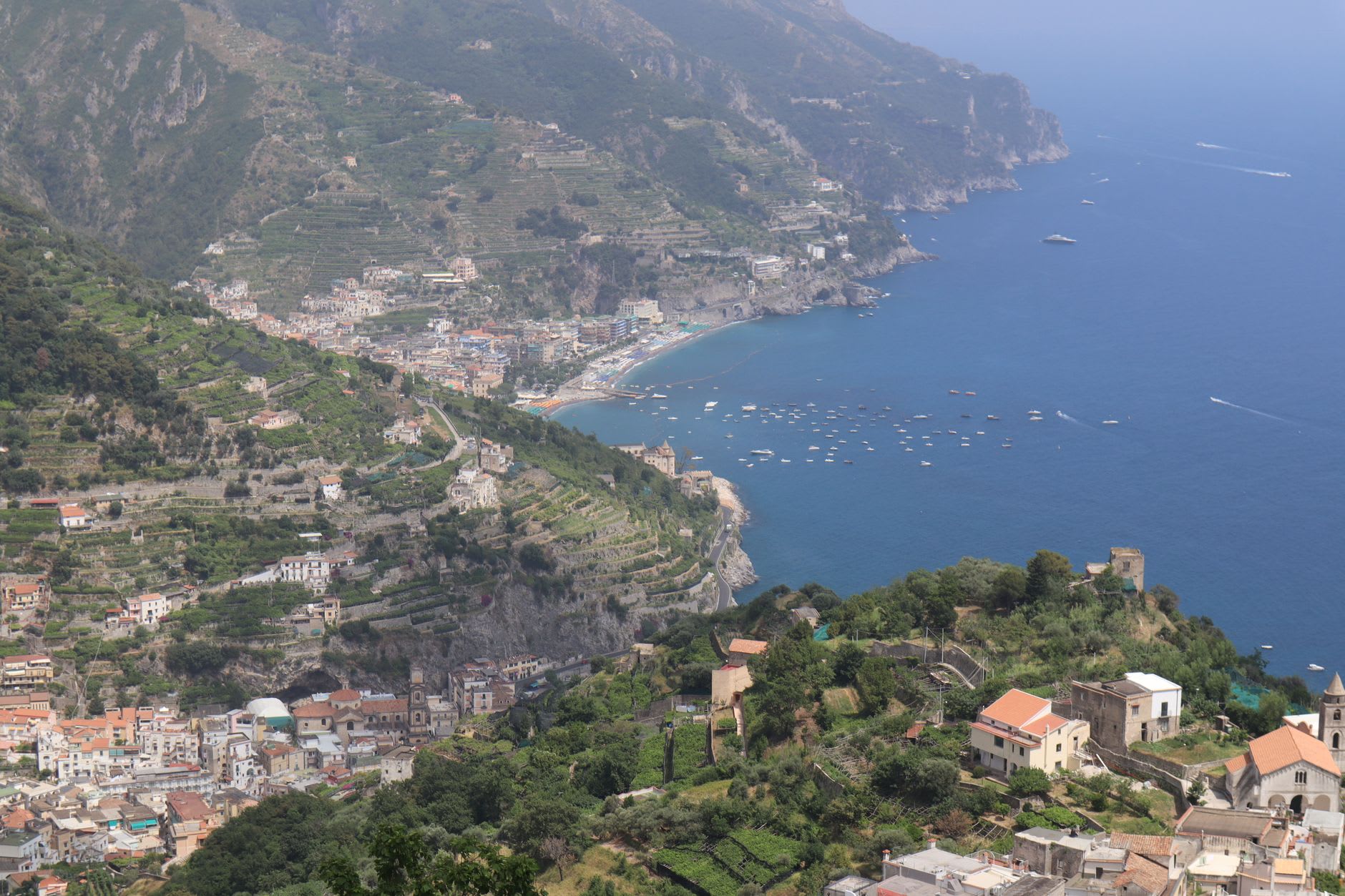
The standard thing is to start from Agerola and walk downhill to Nocelle, the hamlet above Positano, which takes about three hours and deposits you with just enough energy left to navigate the four hundred steps down to the village itself. I did it the other way once — up from Nocelle — and I don’t recommend it unless leg pain is your preference. From Agerola the trail begins along a ridge, and within the first twenty minutes the coast is already appearing below through gaps in the maquis: a blue-gray line of sea, the pale buildings of Praiano against the cliff, and Positano laid out like a scale model far below. The morning light comes from the east and rakes across the cliff faces, throwing the limestone into relief and turning the sea a shade of silver-blue that belongs to early hours and nowhere else.
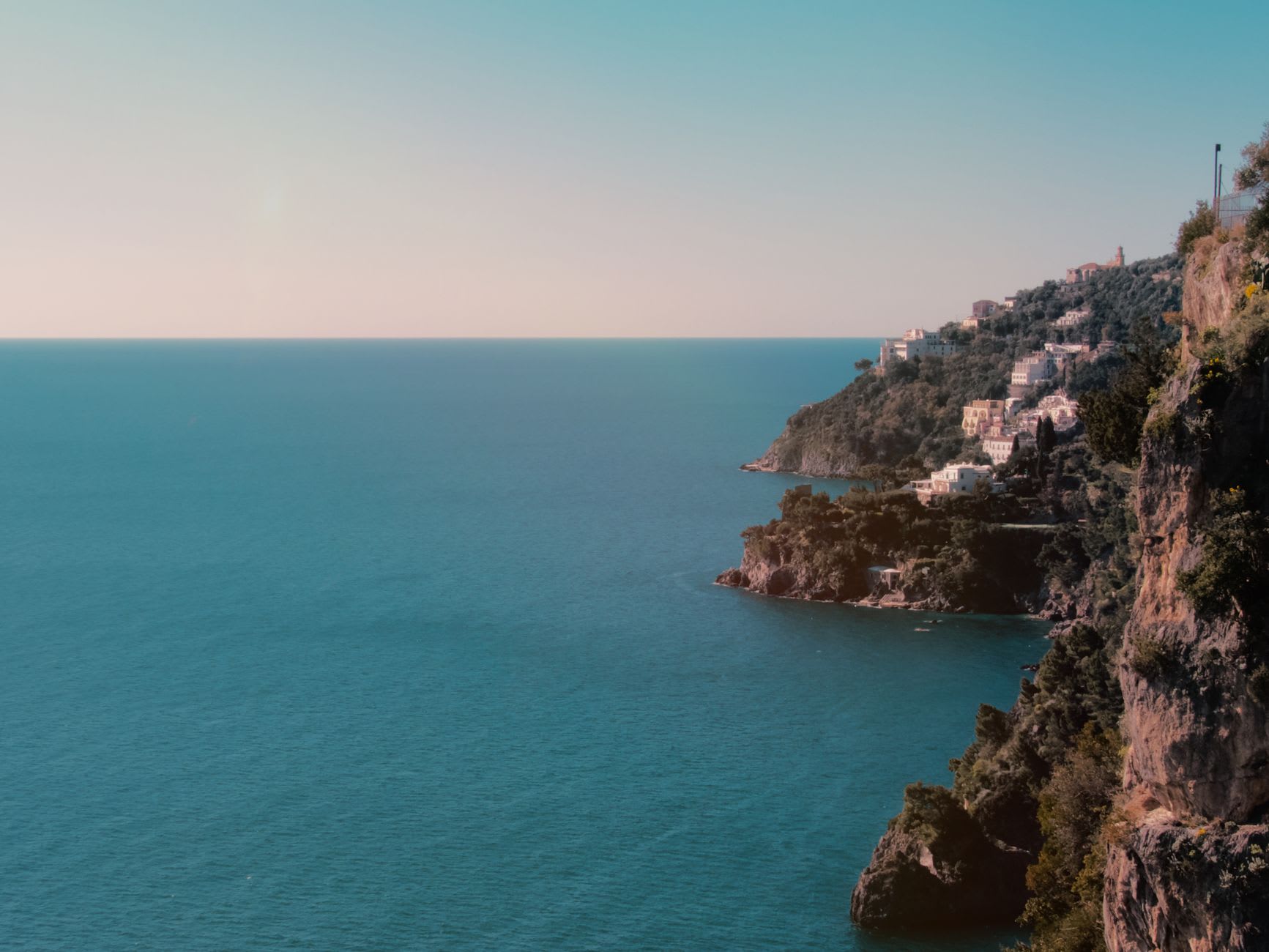
The trail — the Sentiero degli Dei, the Path of the Gods — follows the ridge at about four hundred to six hundred meters above sea level for most of its length. It was named, according to the local legend, because the gods used it to reach the shore when they wanted to swim. This is implausible and irrelevant. What matters is the view, which is the thing the coast itself denies you. When you’re in Positano or Amalfi, the coast’s drama is partly hidden from you — you’re inside it. From up here you see the whole shape of the thing: the way the cliffs fold and break, the gorges that cut into the mountain, the sequence of villages from Positano west toward the horizon, and the sea spreading south without obstruction toward invisible Africa.
The path itself is rocky limestone underfoot, occasionally steep at the traverses, with a few sections where the cliff drops abruptly to your left and the drop is serious. It is not a technical trail — no climbing, no ropes — but it is a real trail that requires proper footwear and some attention to footing. In May the hillside is covered in rockrose and wild thyme and the occasional patch of asphodels, and the smell of the herbs crushed underfoot mixes with something colder and saltier coming off the sea, a combination that I’ve never encountered anywhere else. Bees work the flowers. Hawks ride the thermals off the cliff faces below. At one point I stopped to watch a falcon — or something falcon-shaped — stoop below the ridge line and drop toward the sea, and by the time it disappeared I’d been standing still for five minutes.
The midpoint of the trail brings a junction for a detour to the village of Nocelle itself — a cluster of houses perched on the cliff, a bar that opens in summer, a view from the terrace that a succession of visitors have photographed obsessively and uploaded to the internet without diminishing what it actually is. I sat there with a bottle of water and a man who turned out to be a retired schoolteacher from Positano who walks the path every week and told me he still hasn’t grown used to it.
Nocelle to Positano is the descent: four hundred and fifty steps, steep, shaded in part by lemon groves, past a series of terraced gardens and the occasional dog sleeping across the path. By the time you reach Positano’s via Cristoforo Colombo your knees know what they’ve done, and the cold beer at the first bar you reach is the best beer of the trip.
When to go: May is the month, definitively. The wildflowers are out, the heat is manageable, the path is not crowded, and the lemon blossoms on the lower sections add a smell to the walk that’s worth the trip alone. October is the other good window — clearer air, golden light, no crowds. June through September the path becomes busy, which diminishes the experience, and the heat at midday on the exposed ridge sections is punishing. Start early. Bring more water than you think you need.