
Praiano
"Everyone on the ferry was looking at Positano. I was looking at Praiano and couldn't understand why they weren't."
Praiano sits midway between Positano and Amalfi, and most traffic — both vehicular and tourist — moves through it at speed, bound for more famous destinations on either side. This is an oversight that rewards those who stop. The village clings to the flank of Monte Sant’Angelo in two parts, connected by steps and paths: the upper village around the church and piazza, and the lower section along the coast road, and below that, down another long staircase, the Marina di Praia. I arrived on the local bus from Positano, got off when everyone else seemed to be getting off, and spent the next two hours getting lost in the best way the coast offers.
The church of San Gennaro is the first thing you notice from the sea or the road — a dome of emerald-green majolica tiles that catches the afternoon sun and throws it back in a way that reads from a boat ten kilometers out. Inside it’s cool and whitewashed and contains a 16th-century painting of the Last Supper attributed to Giovanni Bernardo Lama that hangs in a gilt frame and looks exactly like something that should be in a museum but isn’t, because this is the church and the church is still using it. The sacristans will let you photograph it if you ask.
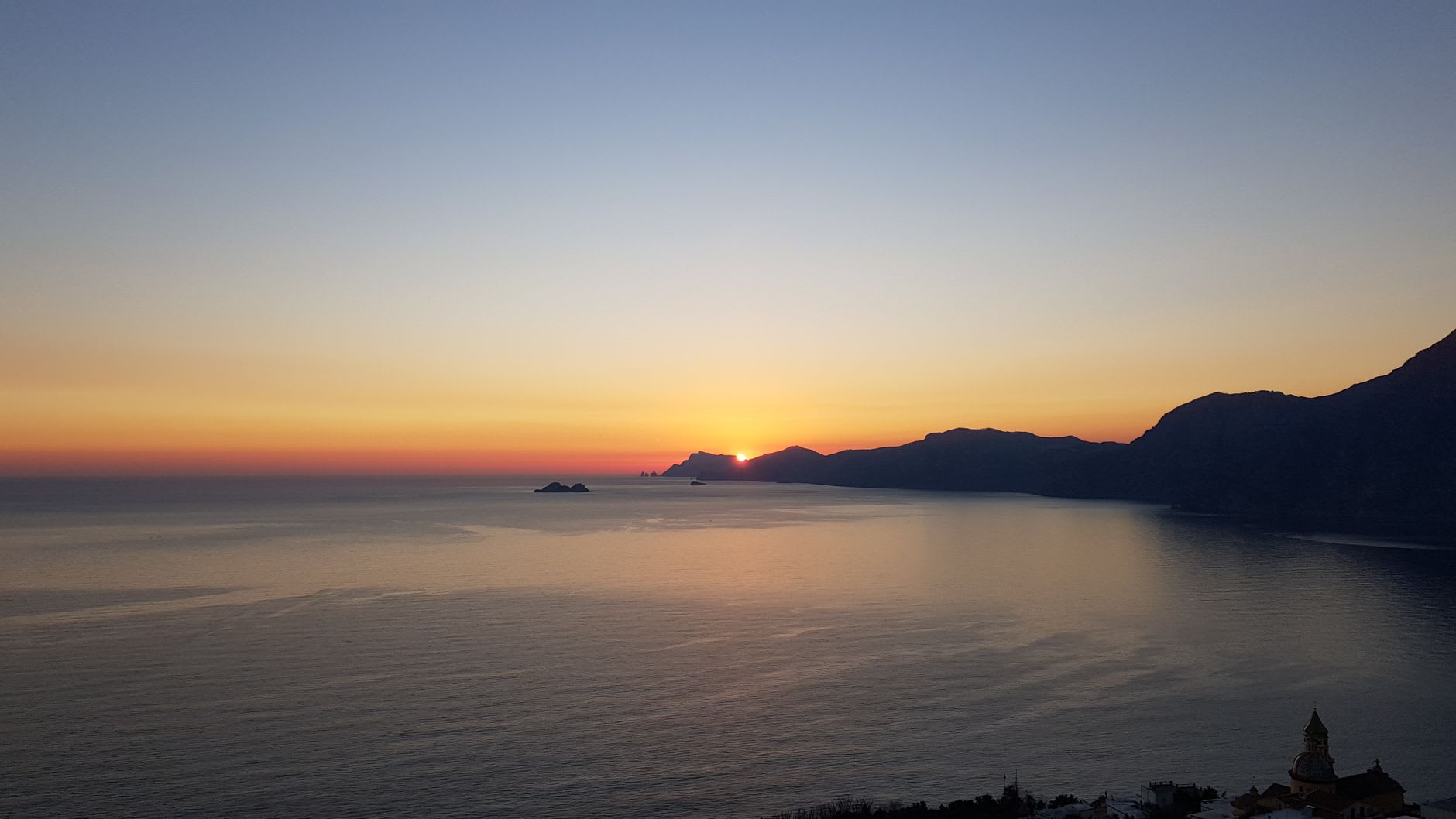
The Marina di Praia is the reason to come. From the coast road a staircase — about three hundred steps, I counted — descends through a gorge so narrow the walls are arms-width apart in places, past stacked stone houses and a small boat yard, until it opens suddenly onto a beach about thirty meters long, enclosed on three sides by cliff and on the fourth by sea. A single bar/restaurant operates there, tables literally on the beach, and in the late afternoon when the day-trippers have gone back up the stairs and the light comes down through the gap in the cliffs at a steep angle, the water in the small cove turns a shade of translucent green that I’ve tried to photograph a dozen times and cannot capture. You have to be in it.
The swimming off the small pier on the right side of the beach is excellent — deep water, a bottom of white sand that the light picks up, and you can swim out through the gorge entrance to open sea and look back at the cove from the outside. Fishing boats come back in the early evening, and the restaurant’s seafood that night will be whatever came out of that water that afternoon.
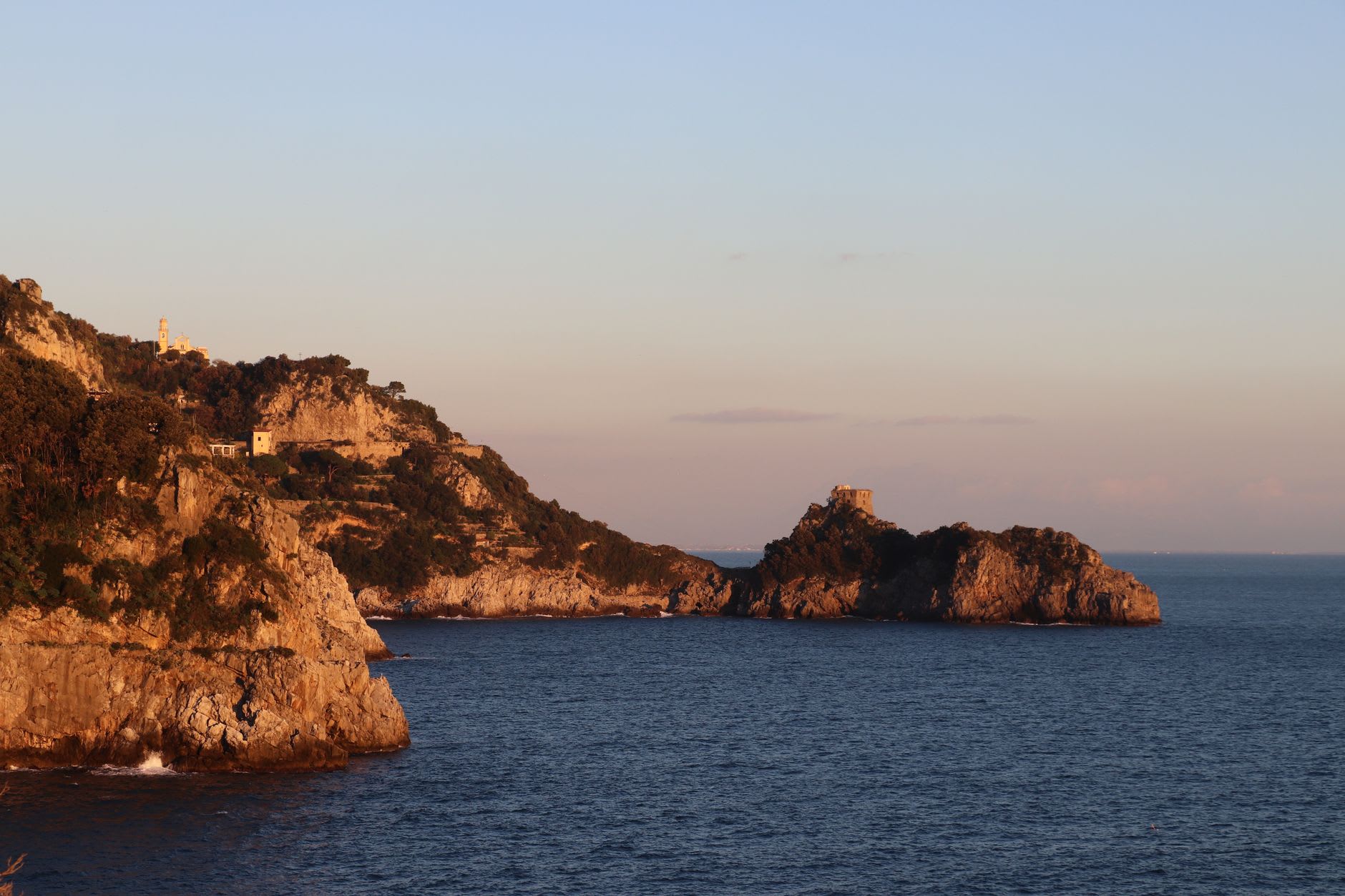
Praiano has a handful of small hotels and a yoga retreat that has sprung up in the hillside above the coast road, catering to people who come specifically for the combination of spectacular scenery and relative quiet. The restaurants in the upper village are cheaper than anything in Positano and cook more consistently for actual local tastes. I had a plate of linguine with sea urchin that tasted purely of the sea beneath us, eaten on a terrace with a view of the Galli islands floated silver in the distance. The bill was unremarkable. In Positano it would have been humbling.
When to go: May through June is ideal — the weather is warm, the gorge staircase is manageable, and the marina di Praia feels secluded in a way that August won’t allow. October is exceptional for the light and the off-season quiet. The village is peaceful even in peak summer by Amalfi Coast standards — low season here is genuine, with some restaurants closed entirely from November through March.