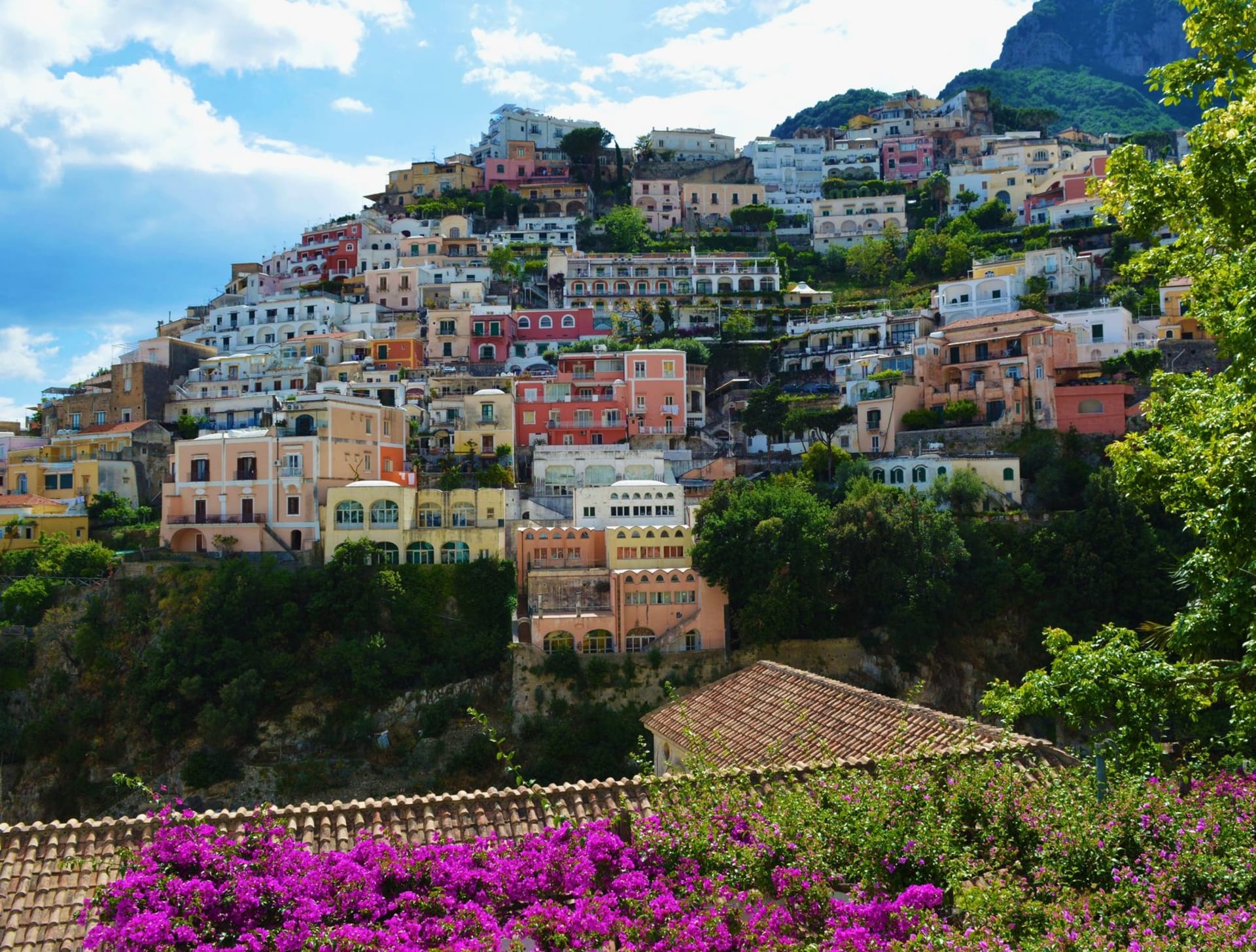
Positano
"Every postcard you've ever seen of this place is telling the truth — that's the most disorienting thing about Positano."
I arrived by ferry from Salerno on a Tuesday morning in late May, and when the boat rounded the headland and Positano came into view — the whole impossible cascade of pink and terracotta and white stacked up the cliff face — I genuinely laughed out loud. Not because it was funny. Because it was so completely, almost offensively beautiful that my body didn’t know what else to do with the information. The village looked less like a real place than like someone had taken a painter’s fever dream and pressed it into a cliff above the Tyrrhenian Sea.
The ferry docks at a small pier, and then you walk up. That’s the essential truth of Positano — everything is vertical. The main artery is the via dei Mulini, a stepped lane that winds through the village, lined with boutiques selling linen dresses in sea-washed colors, ceramics stacked in doorways, and the smell of jasmine mixing with espresso and salt air. By mid-morning in summer the lane is impassable with tourists, but I arrived in the sharp early light before the cruise ship crowd and had twenty minutes of near-solitude to walk it, pausing to look between buildings at the sea below, which was so blue it looked painted.

The beach — the Spiaggia Grande — is pebbly and in July would be packed shoulder to shoulder with paying sun-loungers. In late May it was pleasantly busy, the pebbles hot underfoot, the water cold and astonishing when I went in. The real pleasure of the beach is not lying on it but swimming out far enough to turn around and look back at the village from the sea, which is when the scale of the thing hits you. Those buildings don’t just sit on the cliff — they lean over it, trusting the rock beneath them in a way that seems to defy reasonable engineering. A plate of spaghetti alle vongole at a table on the terrace of a restaurant above the beach, eaten while watching a boat move slowly along the headland, is worth whatever it costs. And it will cost a lot. Positano has the most beautiful setting on the coast and prices to match.

What I hadn’t expected was how much I liked the quieter, upper part of the village — the streets above the church of Santa Maria Assunta, where the ceramic-tiled dome catches the afternoon light like a dish collecting the sun, and the lanes become narrower and less boutique-lined. Up here a few old women sit at doorways. Cats sleep on warm stone. The view from the terrace of a small bar I found by accident — looking south to the Faraglioni sea stacks and the island of Capri floating in the distance — was the moment I stopped trying to be unsentimental about Positano and simply accepted that it had earned every bit of its reputation.
When to go: The shoulder months are everything here. May gives you lemon blossoms, swimmable water, and manageable crowds. October brings golden afternoon light, cheaper accommodation, and the strange pleasure of a famous place caught in its off-season exhale. July and August: the beauty remains, but the village is overwhelmed and the roads are impassable. Go early or late and you’ll understand why people keep coming back.