Cetara
"Everything here smells faintly of anchovies, and I mean that as a compliment of the highest order."
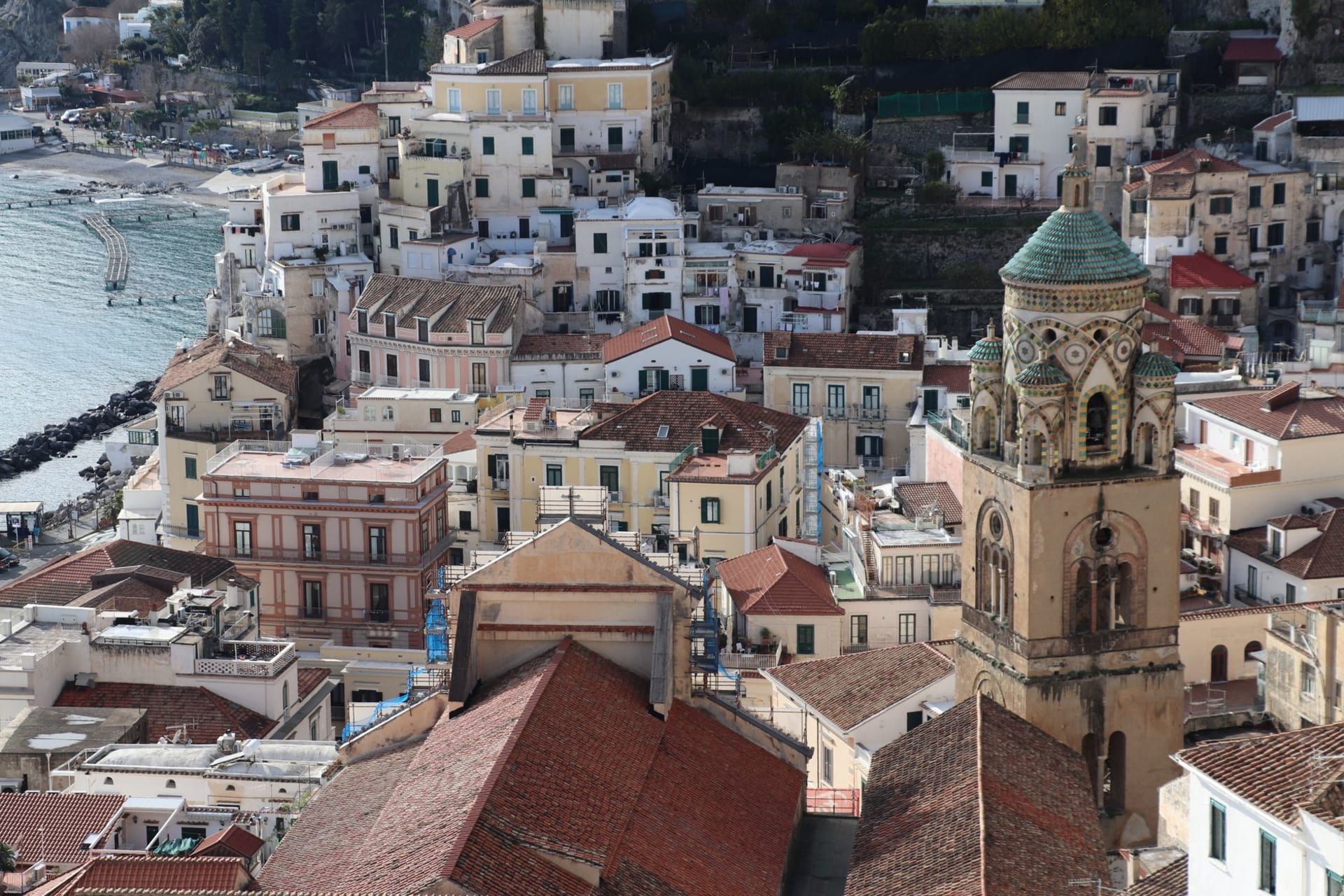
Cetara is where the coast stops performing. It’s still beautiful — the tight harbor, the ochre and rust-red houses climbing behind it, the church tower with its majolica tiles catching the sun — but it’s the kind of beautiful that hasn’t been arranged for your benefit. The fishing boats in the harbor are working boats, not decorative ones. The nets drying on the sea wall have actual dried seaweed caught in them. The bar by the dock is full, in the morning, of men who have been out since before dawn. I arrived on a Tuesday in late October, walked from the bus stop through the small tunnel in the cliff and out onto the seafront, and felt the temperature drop about five degrees in the register of tourism. Cetara doesn’t need me. I found this enormously appealing.
The town’s claim on culinary history is the colatura di alici — a condiment made from anchovies packed in salt and pressed under weights for months, the liquid that drains from the process collected and bottled. It is the direct descendant of garum, the Roman fish sauce that once flavored the entire Mediterranean world. The process here hasn’t changed in any meaningful way since the medieval guilds codified it, and the colatura that comes out of the small family operations in Cetara is one of those intensely particular products that doesn’t travel well in concept but lands immediately in practice. You smell it before you open the bottle: deep, oceanic, ancient. A few drops on pasta with garlic and parsley and the dish becomes something from another century.

The tuna tradition is equally important here. For centuries Cetara was one of the centers of the Mediterranean bluefin tuna fishery, and though the industrial scale of that trade is gone, the reverence for tuna persists in the cooking. At Acquapazza — the best restaurant in town, which is to say one of the best fish restaurants on the entire coast — the tonno al sesamo with sesame crust and a side of the local caponata was the best thing I ate all week. The owner came out to explain where the fish had come from and how it had been caught, which is the kind of conversation that Cetara restaurateurs have because they mean it, not because they’re performing transparency.
Walking the streets of the village beyond the harbor — up the stepped lanes into the residential quarter — reveals a town that’s been inhabited continuously since the 6th century, which the stonework confirms. The vaulted passageways are cool even in summer heat. The gardens behind the houses spill thyme and rosemary over the walls. Children play on the same stones their grandparents played on. The church of San Pietro Apostolo at the top of the main steps has a painting of the Annunciation worth the climb.

The beach at Cetara — the Spiaggia di Cetara — is to the west of the harbor, a stretch of coarse sand and pebble that is almost entirely given over to local residents and gets almost none of the Amalfi tourist traffic. In October I swam there with perhaps three other people in the water. The sea was cold and clear and tasted of open water.
When to go: September and October are ideal — the heat breaks, the harvest season for anchovies is at its peak, and the town returns to its natural state. May and June work well too. The colatura festival happens in late November, when the new bottles are opened and the town celebrates in a way that involves a lot of pasta. July and August: perfectly pleasant by coast standards, and noticeably less crowded than Amalfi or Positano, but still busier than it deserves to be.