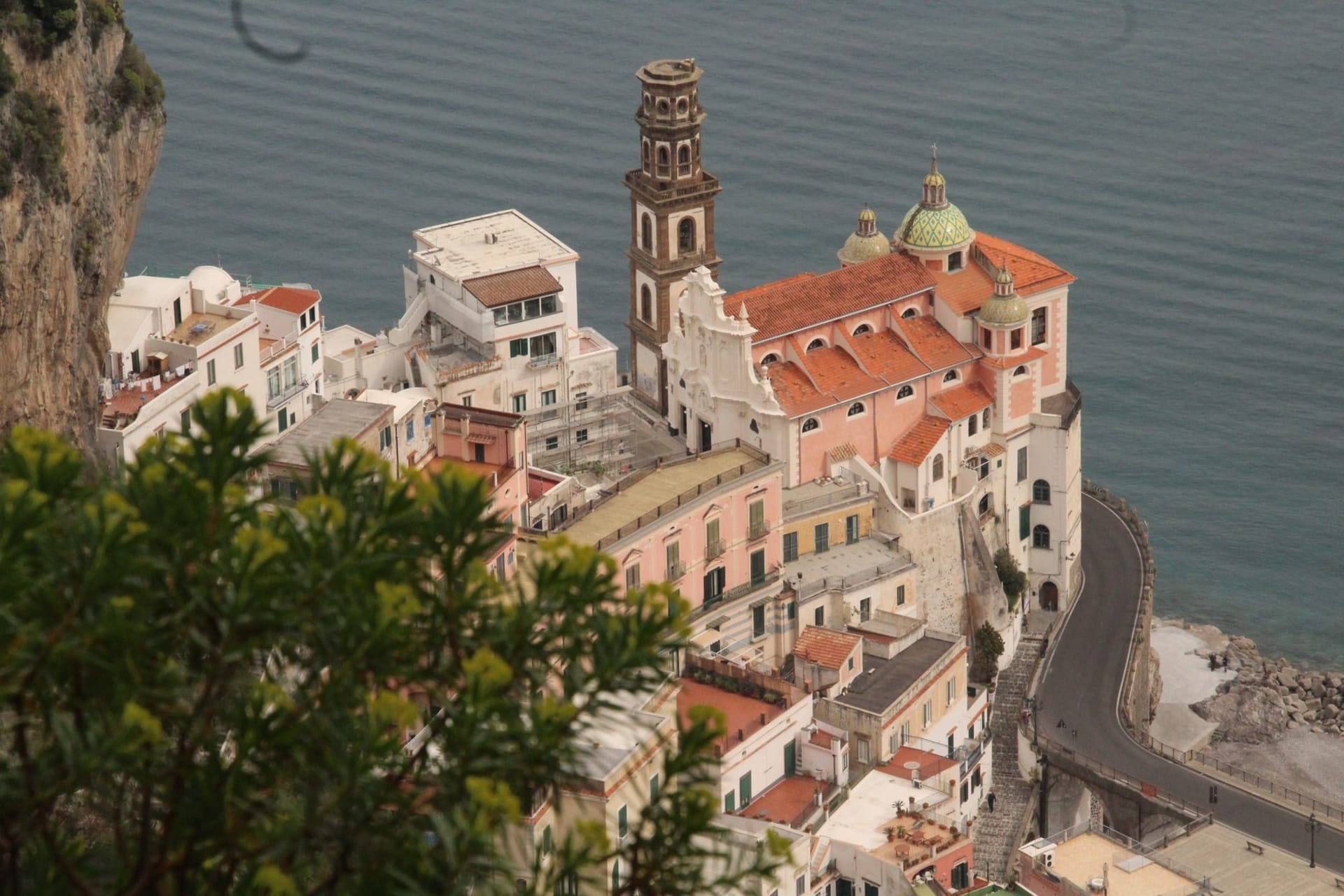
Atrani
"The washing was still out. The espresso machine was the loudest thing. I had the whole piazza to myself — in July."
You walk to Atrani from Amalfi along the coast road, through a tunnel blasted into the cliff, and then the village appears on the other side — wedged into the mouth of a gorge so narrow that the houses seem to be holding the cliff faces apart. It took me about six minutes. I had a coffee at the bar on the piazza, watched a man argue affectionately with his neighbor about football, and realized I was the only person there who wasn’t from Atrani. In July. This was not something I expected.
Atrani is technically the smallest municipality on the Amalfi Coast, and its population has been declining for decades — young people leave for Salerno and Naples, the older residents stay. What’s left is a village that operates at its own tempo with a kind of dignified disregard for what the rest of the coast is doing. The piazza — Piazza Umberto I — sits almost at sea level, a few meters from a small beach of dark volcanic sand. In the evenings, the locals use the piazza the way Italians use piazzas: as a room without a roof, a place to sit and talk and argue and let the hours pass in a way that doesn’t require justification. The bar that faces it has plastic chairs and the best coffee I drank all week.

The church of San Salvatore de’ Bireto sits at the top of a flight of stone stairs at the edge of the piazza, bronze doors from the 11th century — contemporaries of Amalfi’s famous doors but utterly uncelebrated. There’s no queue. There are no audio guides. A hand-painted sign gives opening hours that may or may not be accurate. Inside, the interior has been painted in the 18th century in shades of pale blue and rose that have faded to something almost watercolor, and the afternoon light through the small windows turns it all amber. I sat in a pew for ten minutes and listened to nothing particular.
The beach itself is narrow and a little rough, the waves here stronger than at Positano’s sheltered cove, but the swimming is good — the water is clear down to the sand and a shade of blue that has no sensible equivalent in northern Europe. A family was grilling fish on a small charcoal grill they had set up above the tide line, and the smell drifted across the whole beach. I asked where they’d bought the fish and the father pointed wordlessly to a boat pulled up at the far end of the sand.

There is one small guesthouse and a handful of apartments to rent, and eating options are limited — the one trattoria opens at eight in the evening and closes when the food runs out, which is usually around ten. The pasta al pomodoro is made with Atrani’s own particular variety of cherry tomato, sweeter and less acid than San Marzano, and you eat it at a table three meters from where the fishing boats are beached. No menu. You eat what they made that day.
When to go: Any time between April and November. The shoulder months give you the best light and the full authentic character of the place. July and August: Atrani remains quiet by Amalfi Coast standards, which tells you something important about the people who live here. The winter is cold and the sea too rough for swimming, but the village has a grey stillness then that rewards anyone who makes the detour.