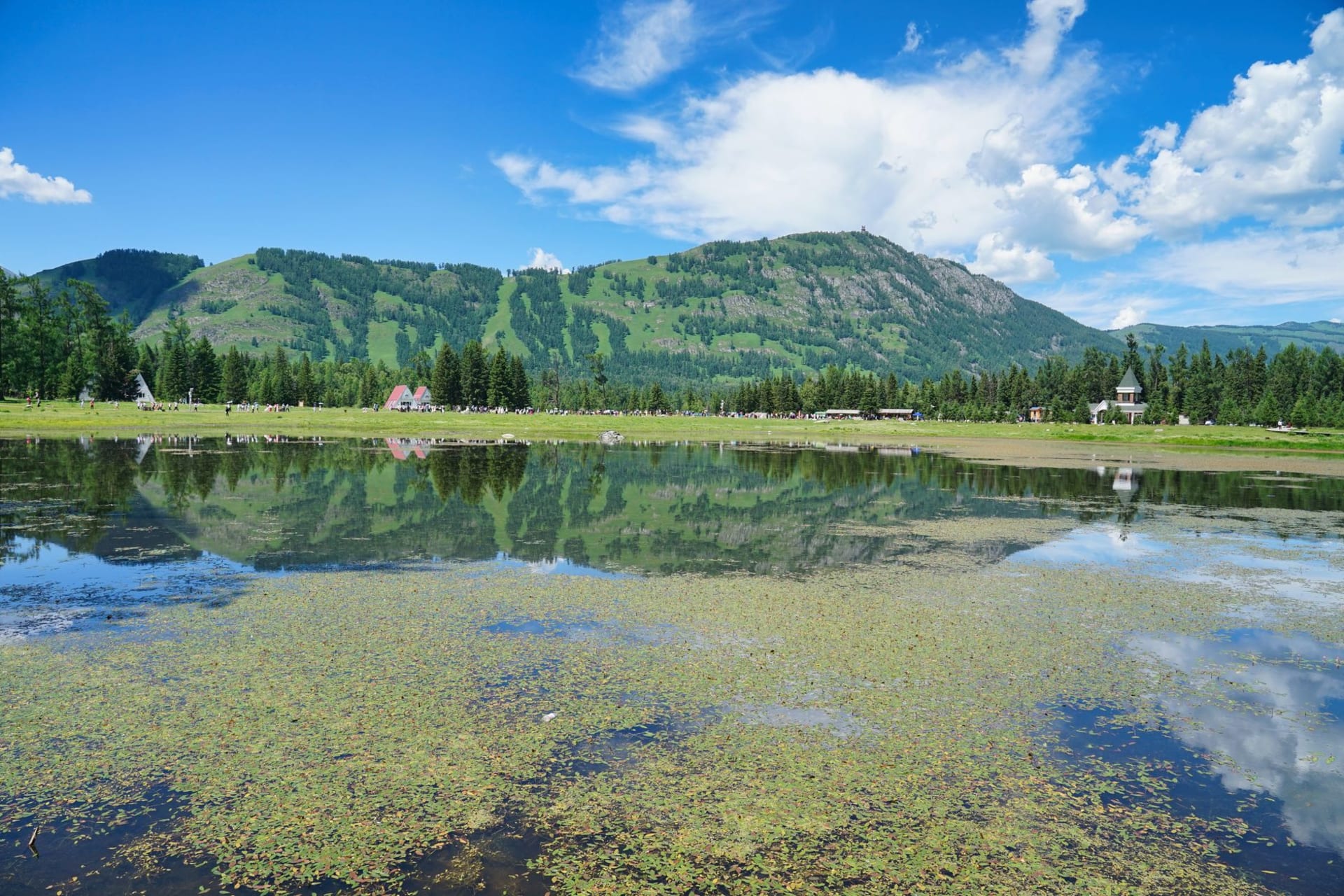
Shavlinskoye Lake
"The water here doesn't just reflect the mountains. It argues with them about which version is more real."
I arrived at Shavlinskoye on a morning when the lake was so still it took me a moment to understand what I was looking at. The granite walls — grey, pink-veined, streaked with snowmelt — dropped straight into water the colour of cold jade, and then they dropped again, perfectly inverted, into a depth that didn’t exist. For a few seconds I genuinely couldn’t tell which way was up. I sat on a flat boulder and waited for my brain to sort itself out.
Getting here took two days from the Chulyshman road — horseback the first day, on foot the second, through larch forest that smelled of resin and damp earth. My guide, a quiet man from Ust-Ulagan who spoke almost no Russian and even less English, communicated mostly in gestures toward the horizon. When we crested the final ridge and the lake appeared below us, he gave a small nod, as if we had both just confirmed a suspicion we’d been carrying.
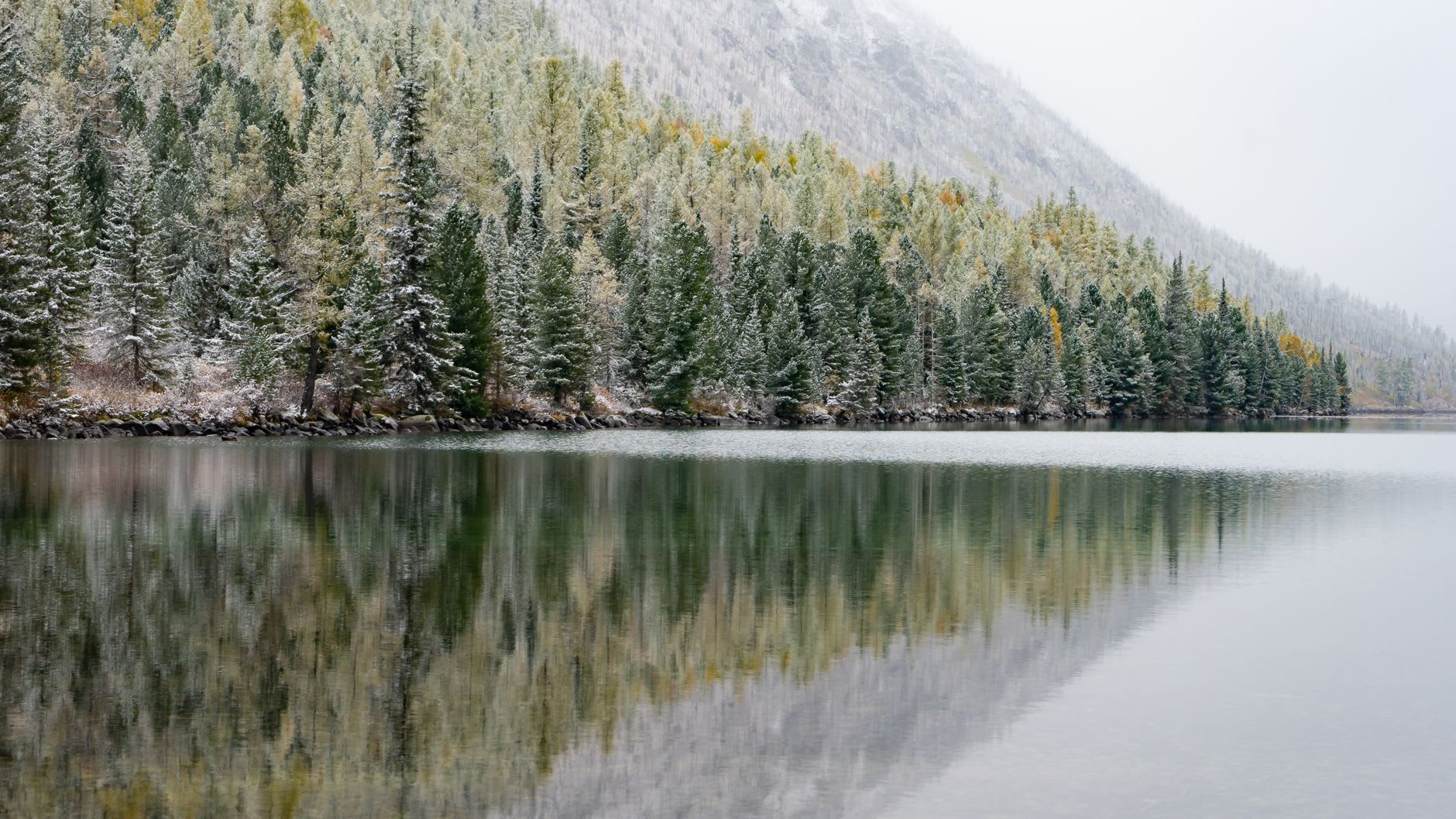
The lake sits at roughly 1,919 metres, below the three pointed Shalvar summits that catch cloud the way a ship’s mast catches wind. By afternoon the peaks had disappeared into a grey ceiling, and the water shifted from jade to pewter to something closer to charcoal. This mutability is half the point. You cannot see the same lake twice; you can only visit the version that happens to be there when you are. I spent two nights camped on the northeastern shore and watched it change maybe a dozen times. I stopped trying to photograph it after the first day. The camera always lied.
The water is cold enough to steal your breath at any hour. I swam on my second morning anyway, partly out of principle and partly because the man from Ust-Ulagan had clearly been watching to see if I would. The shock of it — that immediate, total cold — was the most awake I had felt in months. On the shore afterward, drinking tea from a battered metal cup, steam rising off my arms in the thin mountain air, I thought about how the main text I’d read on the plane described Mongol shamans considering this terrain sacred. Standing there with wet hair freezing at the ends, the religious instinct made complete sense.
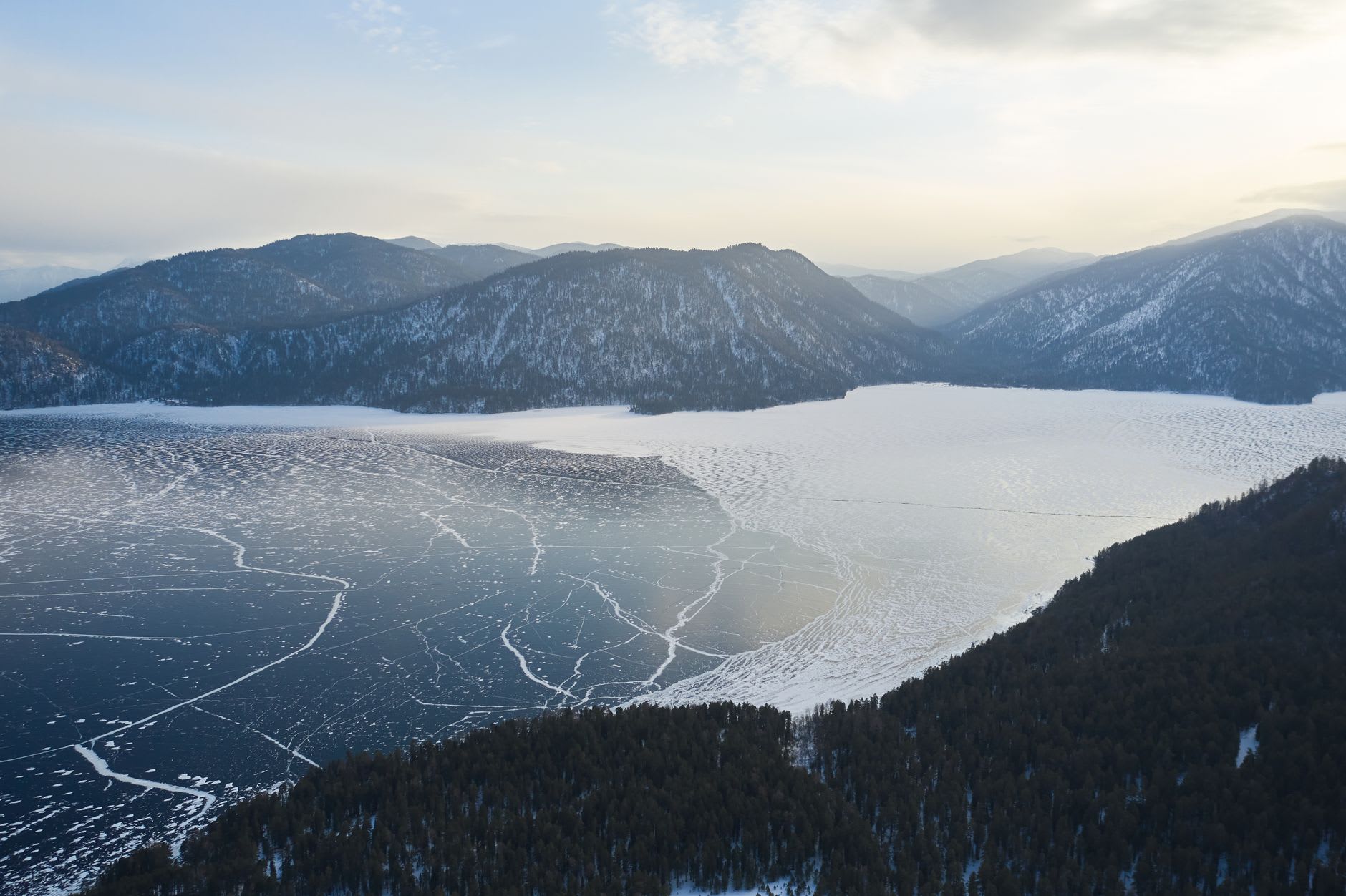
The approach itself rewards attention. The valley trail passes through meadows thick with violet gentians and yellow cinquefoil, and in the upper larch zone the trees grow sparse enough that the light falls through them in long tilted shafts. There are no signs. There are almost no people. The route requires a horse or serious legs and a willingness to ford two rivers where the water runs above the knee in July. None of that is a deterrent. All of it is instruction.
When to go: Late July to mid-August is ideal — snow has retreated from the high passes, the larch is fully green, and wildflowers carpet every meadow. Do not attempt the route after mid-September without local knowledge of current conditions; the passes close with little warning.