Asia
Altai Mountains
"I came for the mountains. I stayed because the silence had texture."
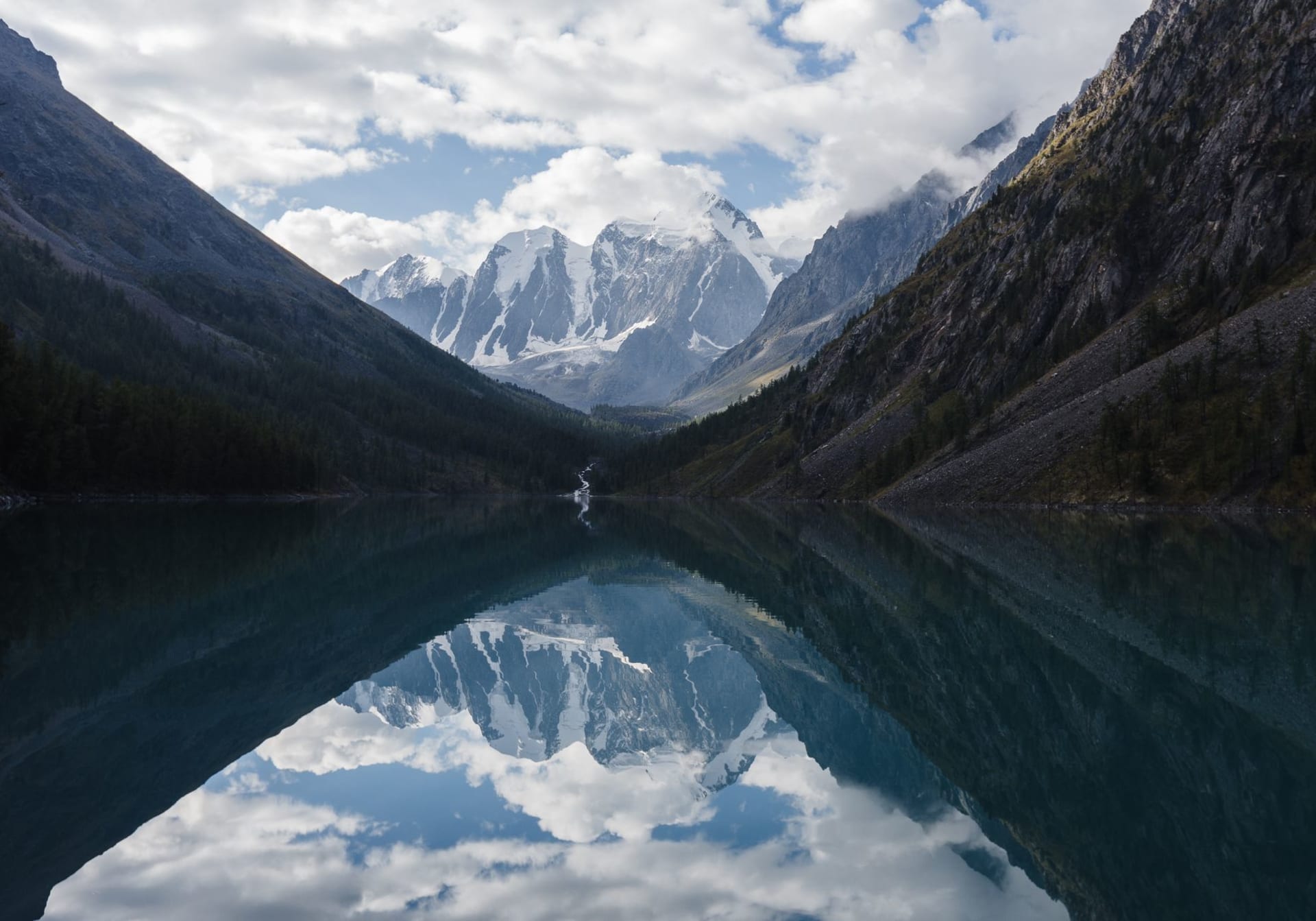
The first thing I noticed was not the mountains. It was the absence. No hum of traffic, no wifi notification, no background noise that city life teaches you to stop hearing. Standing at the edge of Shavlinskoye Lake on my third day in the Russian Altai, with a wall of snow-dusted granite rising straight out of the water, I understood why Mongol shamans considered this terrain sacred. It is not beautiful in the way a postcard is beautiful. It is overwhelming in the way a fact is overwhelming.
Getting here is the point. You fly into Gorno-Altaysk, then drive hours on roads that transition from asphalt to gravel to suggestion. The Chuya Highway — one of the most dramatic drives on earth — cuts through steppe and canyon before depositing you at Kosh-Agach, a spare frontier town at 1,800 meters where the cafes serve plov and fermented mare’s milk with equal indifference. From there, you go further in on horseback or foot. That friction is not a flaw in the trip; it is the trip. The people I met who had done it — a geologist from Novosibirsk, a couple of Kazakh herders moving their sheep to lower pasture — all shared the same weathered calm. The Altai has a way of rearranging your priorities.
The landscape shifts constantly. Alpine meadows thick with edelweiss give way to bare scree fields, then to the turquoise shock of glacial meltwater. The Belukha massif — at 4,506 meters the highest point in Siberia — presides over everything, half-hidden in cloud most days, which only makes the moments it reveals itself more surreal. I ate dried venison with a Tuvan family near the Ukok Plateau, slept in a wooden cabin that smelled of pine resin and woodsmoke, and watched the Milky Way emerge with a clarity I had not seen since the Sonoran Desert.
When to go: Late June through early September is the only real window. Snow lingers on the high passes into June, and by October conditions can turn hostile fast. July and August are peak season — which in the Altai means you might share a trail with a handful of other people rather than none. Late August is ideal: wildflowers still out, rivers lower and easier to ford, first hints of autumn gold on the larch.
What most guides get wrong: They frame the Altai as a trekking destination, which reduces it to logistics — kilometers, elevation gain, gear lists. The Altai is better understood as a political and cultural crossroads wearing the disguise of wilderness. Four countries meet here; Turkic, Mongolian, Russian, and indigenous Altaian cultures overlap in ways that reward curiosity more than mileage. Talk to people. Learn three words of Russian. Ask about the petroglyphs. The mountains are the backdrop; the story is older than the stone.