Multinskiye Lakes
"Four lakes, connected by water and by the particular feeling that you're walking deeper into something that doesn't have a name yet."
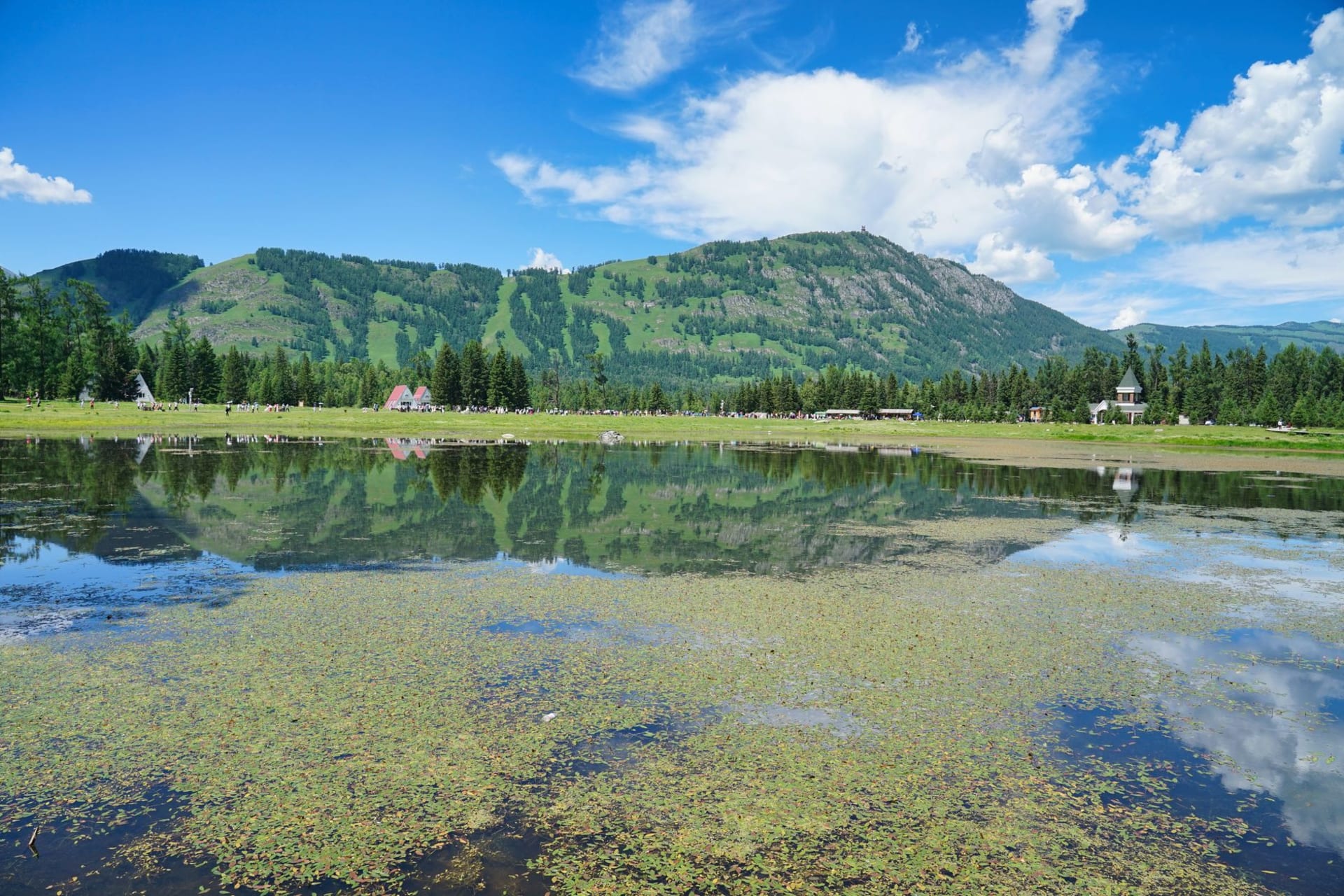
The Multinskiye Lakes hide themselves. This is not a figure of speech. The access road from Ust-Koksa ends at the village of Multa, and from there you walk — first through dairy farming country, then through pine forest, then through sub-alpine scrub, with each transition marking an increase in the kind of quiet that has weight to it. The Lower Lake appears first, at about 1,700 metres, and it stops you. It is big and still and surrounded by forest that comes all the way to the water’s edge on three sides. You think: this is it. This is the destination. Then you ask your guide if this is the last lake and he looks at you with something like pity.
The Lower Lake connects by a short rushing river to the Middle Lake, which is narrower and deeper and a noticeably darker blue, the peaks behind it more assertive. Then another river, another twenty minutes of walking, and the Upper Lake opens ahead — the largest and the highest, ringed by granite ridges that are bare and pale grey, with permanent snowfields on the northern faces and no forest left, just low heath and the particular cold that comes at altitude in the open. The Upper Lake has a colour I cannot categorise: somewhere between the turquoise of the Katun and the deep blue of a winter sky, and it changes minute by minute as the light moves across the ridges.

I spent three nights in a wooden shelter at the Middle Lake, which some previous travellers had turned into a modest but functional camping hut with a metal stove, a stack of dry wood, and a battered pot. The evenings were cold enough to need the stove even in August. I cooked instant noodles that I had been dismissive of in the shop at Ust-Koksa and ate them with genuine gratitude. Outside, the lake held the last light long after the ridges had gone dark, as if it was collecting illumination rather than reflecting it.
The wildlife at the Multinskiye Lakes is real in the way that wildlife in truly remote areas is real — not photogenic and positioned for a camera but suddenly, unremarkably present. On my second morning I found a bear had been through the camp overnight, which I deduced from the disorder around the food bag I had hung from a tree. On the walk to the Upper Lake I disturbed a golden eagle from a rock no more than ten metres away; it rose with a noise of wind through feathers that I felt in my chest. A family of Siberian ibex — three adults and two young — appeared on a ridge above the Upper Lake and watched me for several minutes before deciding I was not worth further observation.

The fourth lake in the system — the so-called “Remote” lake, Dalnee — requires another three hours of difficult walking beyond the Upper Lake, across high tundra and boulder fields. I did not make it there. The guide who knows this area told me it sits in a cirque above the treeline with no shelter and is visited by perhaps a dozen people a year. Next time, I said. He didn’t look convinced.
When to go: Late July through August is the optimal window. The access trail becomes passable for horses by late June, and the wooden shelter at the Middle Lake offers basic refuge. September brings spectacular autumn colours but also the risk of early snowfall closing the upper sections.