Ribeauvillé
"Three castles, three ruins, zero regrets — the climb earns the wine at the bottom."
There is a particular pleasure in choosing a destination for the ruins above it rather than the village itself, and then finding the village entirely compelling on its own terms. That was Ribeauvillé. I’d come for the three castles on the ridge — Girsberg, Saint-Ulrich, and Haut-Ribeaupierre, strung along the forest like the vertebrae of something old and broken — and ended up spending most of my time in the Grand Rue eating Munster on bread and drinking something gold from a cup a winemaker had pressed into my hand without warning.
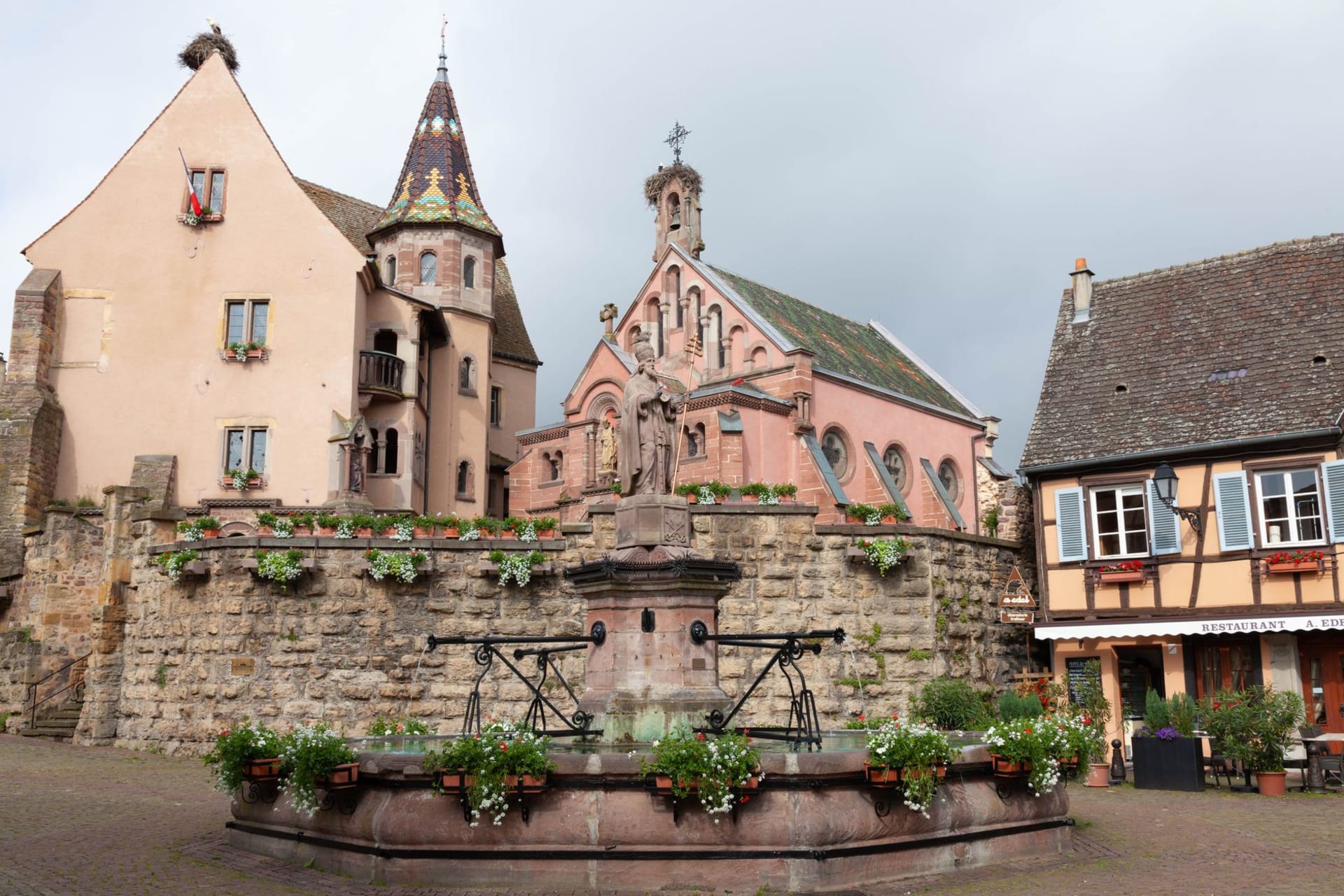
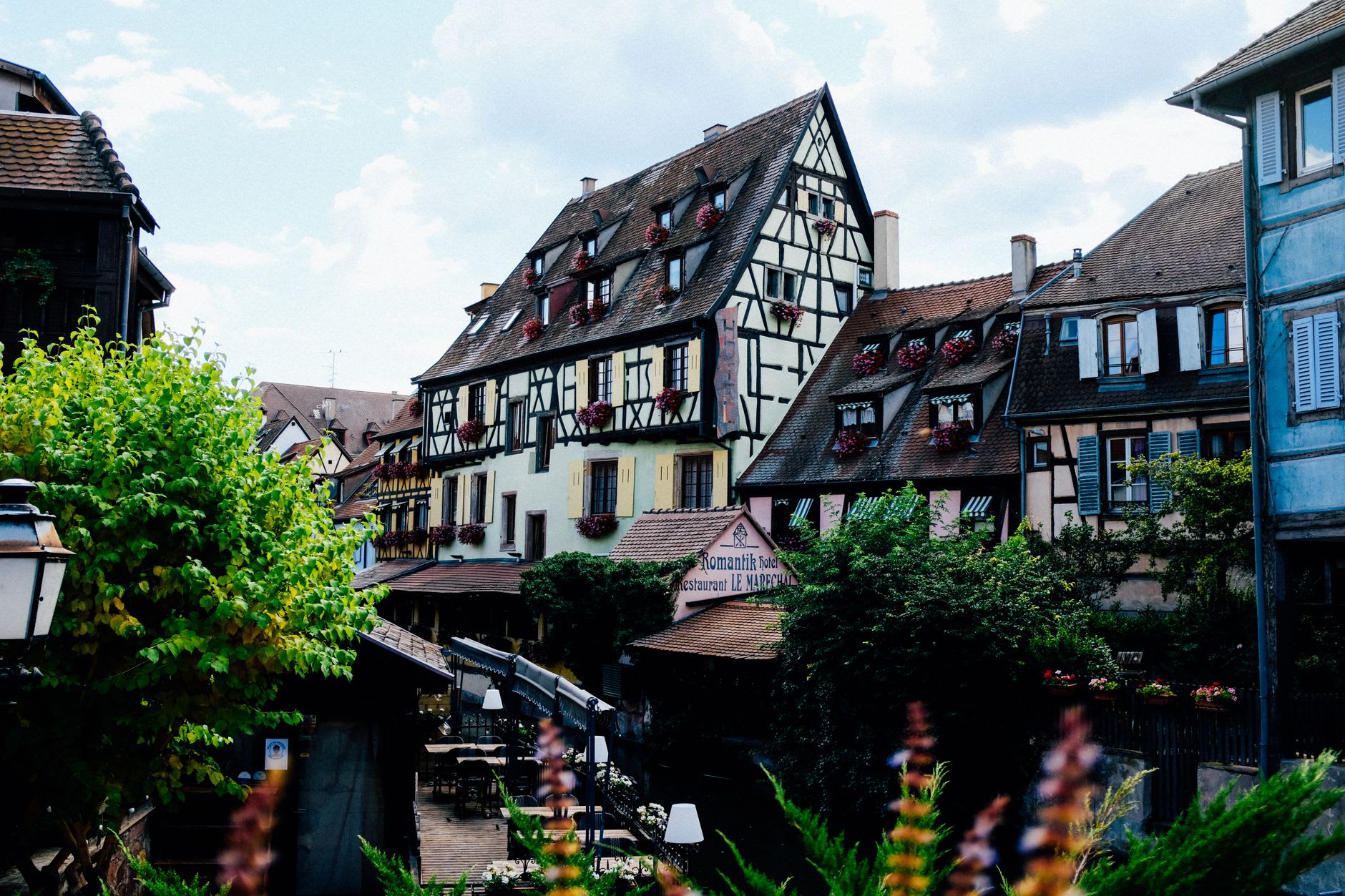
The Grand Rue runs from the fountain at its lower end to the Butchers Tower at its upper, and it is the axis around which Ribeauvillé organizes itself. Half-timbered facades, flowers in the windows, a wine shop every thirty meters — this sounds like every Alsatian village, and in some ways it is, but Ribeauvillé has a slight roughness to it that I found appealing. The tourists are there but they haven’t fully colonized it. The fountain in the upper square is still where the locals gather rather than perform. The market on Tuesday mornings is for buying vegetables, not for photographing them.
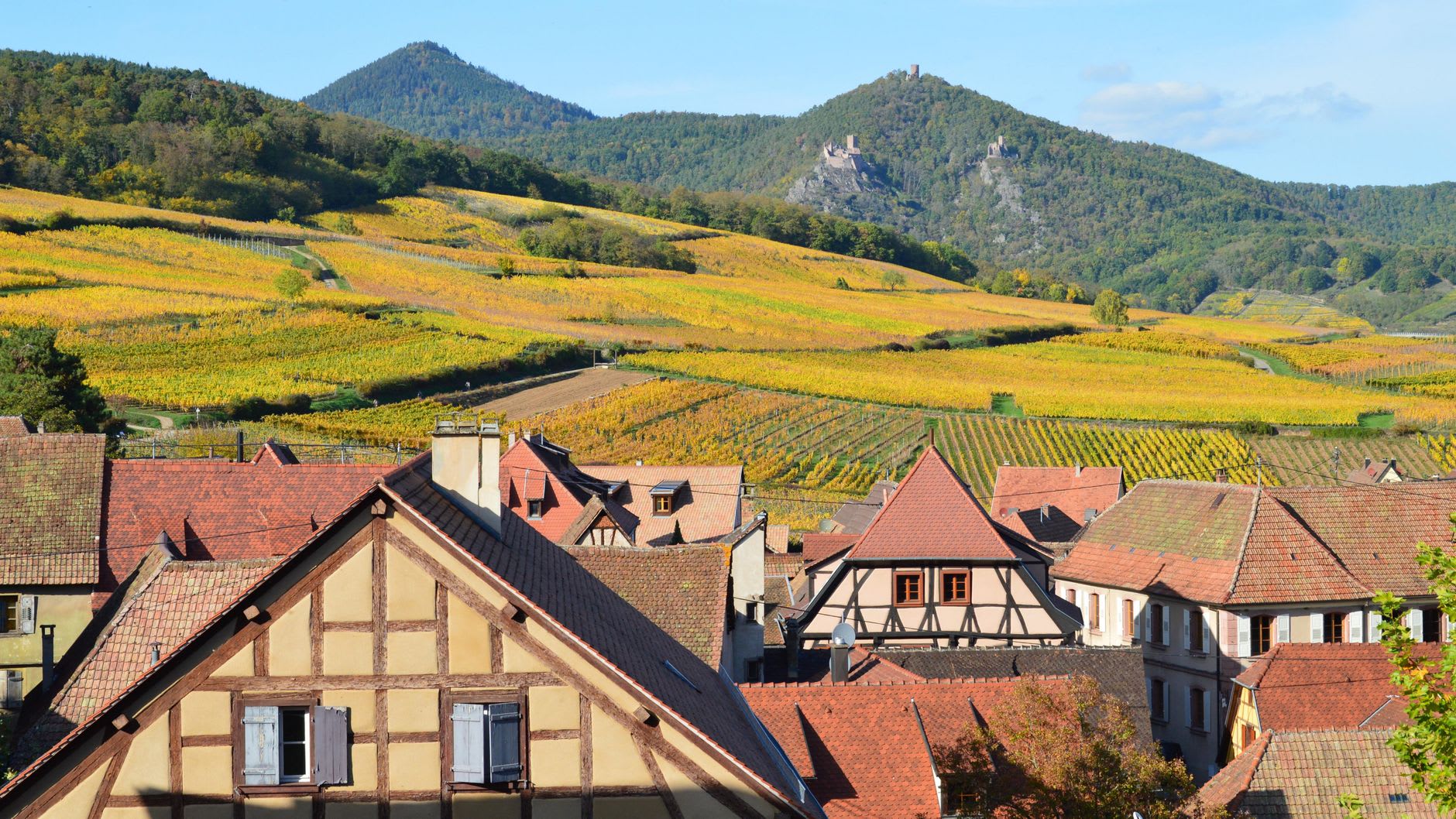
The path to the castles starts at the north end of the village and climbs steeply through forest for about an hour before the first ruins appear. I went on an overcast morning in October, and the light through the beech trees was the best light I found anywhere in Alsace — diffuse and golden-grey, casting the sandstone ruins in a color that matched the fallen leaves exactly. Saint-Ulrich is the most complete, with intact walls and a great hall roofless to the sky. From the upper rampart I could see the Rhine plain stretching east toward Germany, a flat expanse of industrial and agricultural land that makes the Vosges foothills feel like the edge of something much older.
The descent returns you to the village properly hungry and grateful for the proximity of winstubs. I ate at one whose name I never registered — I just followed the sound of cutlery and the smell of choucroute through a door — and sat at a shared table with a couple from Strasbourg who told me the best winemaker in the area was a man named Trimbach. Trimbach is headquartered in Ribeauvillé and produces the Riesling Clos Sainte-Hune, possibly the most famous single-vineyard Alsatian wine in existence and priced accordingly. But their entry-level Riesling, sold direct from the estate, is extremely good and entirely affordable, and the tasting room is calm and professional.
In September, Ribeauvillé hosts the Pfifferdaj — the festival of pipers — one of the oldest popular festivals in Alsace. The town fills with musicians and costumed guilds and the fountains run with wine rather than water for a single extraordinary day. I missed it by three weeks and nobody I asked seemed particularly sympathetic about this. The woman at the winstub suggested I come back next year and said it with the confident finality of someone who understood entirely why that was a reasonable plan.
When to go: September for the Pfifferdaj and harvest energy. October for quieter castle walks with the best autumn color. April and May for blossom in the vineyards below the ruins. Avoid the August weekend peaks.