Europe
Alsace
"The one corner of France that never quite agreed to being France."
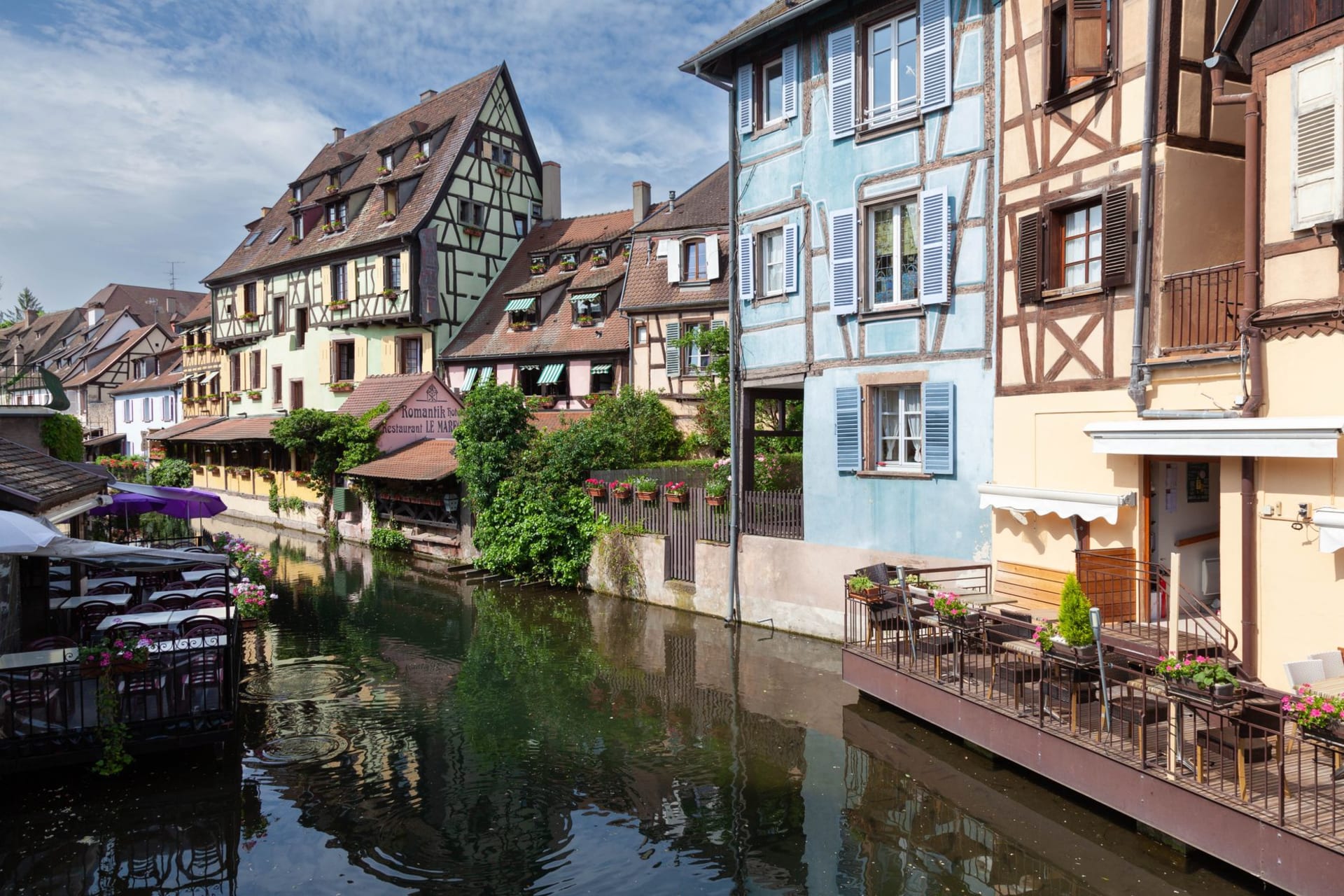
I came to Alsace in November, which everyone told me was wrong. Too cold, too grey, too off-season. What they meant was that the German tourists hadn’t arrived yet, the wine route wasn’t choked with rental cars, and I could walk into any winstub in Colmar at noon and find a table without planning two weeks ahead. The first thing I ordered was a tarte flambée — paper-thin crust, crème fraîche, lardons, onions — paired with a glass of Sylvaner so dry it was almost savory. Outside the window, the canal reflected a row of half-timbered houses painted the particular muted colors you only find when a place has been rebuilt and repainted over four different political regimes. I ate slowly. Nobody rushed me.
Colmar gets all the attention, and it earns some of it — La Petite Venise is genuinely beautiful even when ringed with cameras — but the Alsace I kept returning to was the villages along the Route des Vins. Riquewihr, Ribeauvillé, Eguisheim: each one small enough to walk in twenty minutes, each one with a different character and a different winemaker worth tracking down. In Eguisheim I found a domaine where a woman in her seventies was pressing the last of the Gewurztraminer harvest herself, and she poured me three different wines from three different plots of the same hillside without charging me a euro. She wanted to talk about the terroir. I stayed two hours. This is what Alsace does — it pulls you sideways into conversations and cellars when you thought you were just passing through.
The food is the other thing. Alsace is not diet cuisine. Choucroute garnie — sauerkraut braised in Riesling with three different cuts of pork and a sausage situation that requires negotiation with the waiter — is the kind of dish that makes you reconsider your afternoon plans. Baeckeoffe, a slow-cooked meat and vegetable stew sealed under a pastry lid, is even more so. The combination of French technique and German portions produces something neither country would have invented alone. Eat it with a demi-carafe of Pinot Gris and no commitments until evening.
When to go: March to April for blossom without crowds. October for harvest season and the best Gewurztraminer tastings. November is underrated — quieter, colder, and the winstubs are at their most welcoming. Avoid July and August: the Route des Vins becomes a procession.
What most guides get wrong: They treat Alsace as a day trip from Strasbourg, or worse, a Christmas market destination. The villages along the wine route deserve two or three nights each. And the wines — Riesling, Gewurztraminer, Pinot Gris — are among the most undervalued in France. Drink them with the local food and in that order. The Riesling first, always.