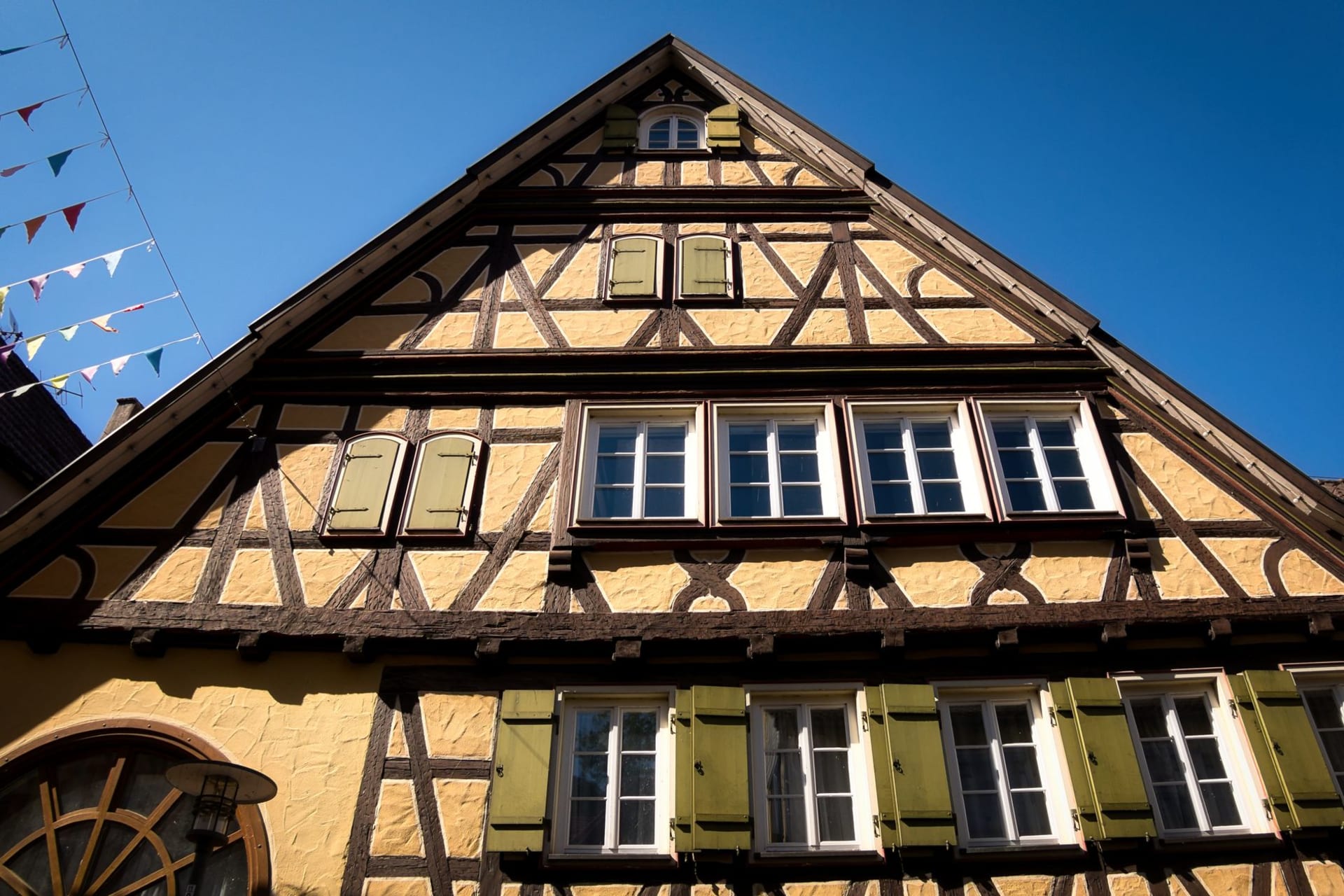
Obernai
"The square in Obernai has been a market since the Middle Ages. Stand there long enough and you understand why some places become towns."
Obernai has a specific quality I kept trying to identify as I walked around it on a Friday morning with the market still in full swing: it feels like a place that works. Not a museum, not a tourist product, but a functioning town where people bring their vegetables to sell and buy their coffee and argue with their neighbors about parking, and where the medieval architecture is simply the setting rather than the main event. The Kapellturm, the octagonal bell tower that stands beside the covered market, rings the hour with a sound that seems to have a physical weight. Nobody looks up when it rings. They’ve stopped hearing it the way you stop hearing the traffic on your own street.
The Place du Marché is the center — broad, flanked on one side by the Renaissance Hôtel de Ville and on another by the Kapellturm, with the six-bucket well in the corner. The well is sixteenth century and has six buckets because it served six different households simultaneously, which tells you something about how water rights worked in medieval Alsace that no history book quite conveys. It is beautiful in the way functional things sometimes are, polished and worn by use. On market mornings it gets surrounded by stalls selling produce, Munster cheese, and saucisses fraîches, and it holds its dignity anyway.

Obernai produces beer as well as wine — Kronenbourg was founded here in 1664, though it has long since been absorbed into a multinational and brewed elsewhere — and there is still a functioning microbrewery in the town. The combination of being both on the wine route and in the hop country of the northern Vosges foothill gives Obernai a slightly different identity from the pure wine villages further south. You can eat choucroute with a local bière blonde here and nobody thinks the choice unusual. This is a small liberty that I appreciate.
The town is also the gateway to Mont Sainte-Odile, the pilgrimage site on the plateau above, and on weekend mornings the road up the mountain fills with cars and hikers. I preferred to walk it: the GR5 trail from Obernai to the convent is about an hour and a half through forest, and arriving on foot carries a different quality than pulling into the parking lot. The forest here is Vosges sandstone country, the trees tall and close, the light filtering pink through pine needles in the hour before noon.
Back in town, the rue du Général Gouraud has the best concentration of winstubs, and the one I found in the corner of a courtyard near the Kapellturm served the best tarte flambée of my entire trip. The crust had been cooked long enough to char slightly at the edges, the crème fraîche was still cool against the heat of it, and the lardons were the thick-cut local kind, not the supermarket cubes. I ordered it twice. The woman who brought it the second time did not raise an eyebrow, which I took as a sign that this was entirely normal behavior in Obernai.

The vineyards directly around Obernai produce primarily Pinot Blanc and Sylvaner — reliable, food-friendly whites that don’t get discussed the way the grand cru Rieslings do but are exactly what you want with a plate of flammekueche on a market morning. Buy a bottle and a piece of Munster and go sit in the square and watch the Kapellturm cast its shadow across the cobblestones.
When to go: Friday mornings for the market, year-round. October for harvest. Spring is beautiful — the hop gardens flower in May and the vineyards in April. Summer is busy but the town is large enough to absorb it without becoming unbearable.