Colmar
"La Petite Venise is a tourist cliché that earned itself honestly — the water just makes the half-timbering better."
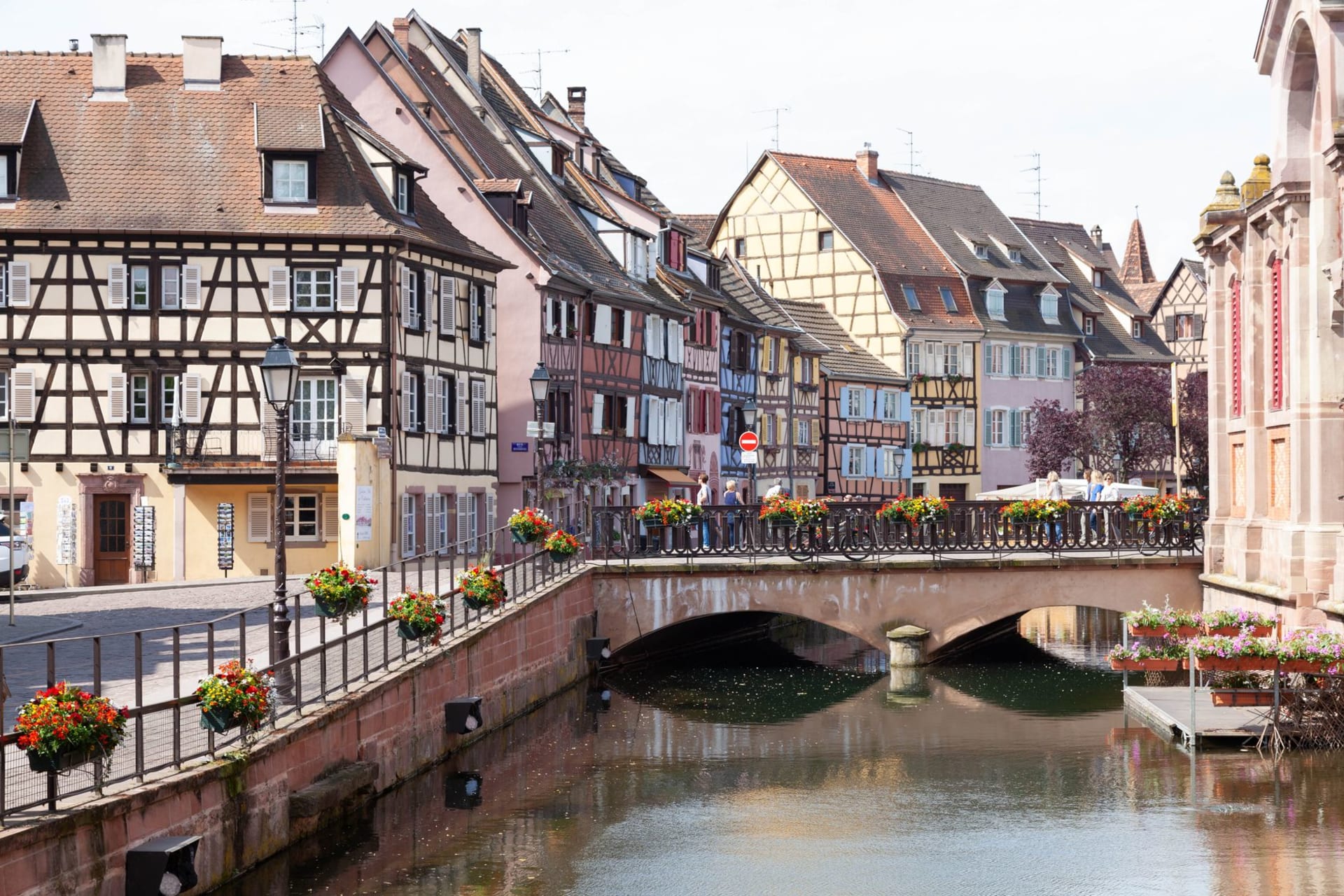
I arrived by train on a grey Tuesday in November when Colmar was exactly what I needed: empty of the crowds that fill it in summer, open and slightly sleepy, the winstubs already lit against the early dark. The walk from the station into the old town takes maybe fifteen minutes past nothing remarkable, and then suddenly the half-timbering starts and doesn’t stop. Buildings painted ochre, rust, terracotta, sage — colors you don’t associate with northern France but that feel completely right here, as though the French influence brought the palette and the German sensibility brought the construction logic underneath.
La Petite Venise is the part everyone comes for, and I understand why. The canals that thread through the Krutenau quarter reflect the facades with unusual fidelity when the water sits still, doubling the buildings and deepening the colors. In summer it’s shoulder to shoulder. In November I walked the waterfront at nine in the morning with three other people, two of whom were locals walking dogs, and I just stood there for a while letting the silence and the light do their work.

The Unterlinden Museum is the thing that surprised me most. I went for the building — a converted Dominican convent with beautiful Gothic cloisters — and found myself spending two hours in front of the Isenheim Altarpiece, Matthias Grünewald’s sixteenth-century painted panels depicting the Crucifixion with a physicality that felt almost contemporary. The colors have aged toward ochre and the bodies are distorted by suffering in a way that photography cannot prepare you for. It is one of the most unsettling and profound paintings I’ve encountered in Europe, and it lives in a mid-sized provincial city in Alsace.
The market hall near the covered market runs weekday mornings, and this is where Colmar becomes purely practical and entirely wonderful. Cheesemakers from the Munster Valley, wine producers from the Route des Vins, bakers with Kugelhopf — the brioche-like cake studded with almonds and rum-soaked raisins that sits in every boulangerie window in Alsace — and stalls selling fresh tarte flambée dough. I bought a length of Munster cheese that smelled powerful enough to have its own zip code and ate it that evening with a half-bottle of Pinot Blanc from a producer whose name I wrote down on a receipt I later lost.
Eat at a winstub, not a restaurant. The distinction matters here. A winstub — literally a wine parlor — has wooden panics and low ceilings and serves choucroute garnie and baeckeoffe and flammekueche to people who live in Colmar, not to people photographing Colmar. Find one near the covered market, arrive at noon, order the choucroute, and drink whatever the house Riesling is.

The covered market itself deserves a full morning. Inside, under its iron-and-glass roof, you find the complete vocabulary of Alsatian food: foie gras from local farms, fresh pasta sold by weight, whole smoked pork loins, jars of preserved duck confit, sauerkraut in barrels. The vendors are local and patient and entirely unbothered by your lack of French if you manage a polite bonjour at the start. I bought enough to eat for three days and could barely carry it back to the hotel.
When to go: November through March for the authentic, quiet Colmar. October for harvest energy. Avoid mid-December unless you genuinely want Christmas markets — they’re famous, they’re beautiful, and they’re crowded beyond any pleasure I can personally manage.